
500 Empty Helmets: Ai Weiwei’s Mushrooms
Greetings Warriors,
Every once in a while, I come across a piece of art that doesn't need much explanation before it makes me stop and think. Ai Weiwei's newest installation, Mushrooms, did exactly that to me. There are no complicated figures, no enormous painted battle scene and no graphic depiction of violence. Instead, there are simply 500 combat helmets sitting empty in Sydney. Yet somehow, those empty helmets might say more about the world we are living in than an image of an actual battlefield ever could.
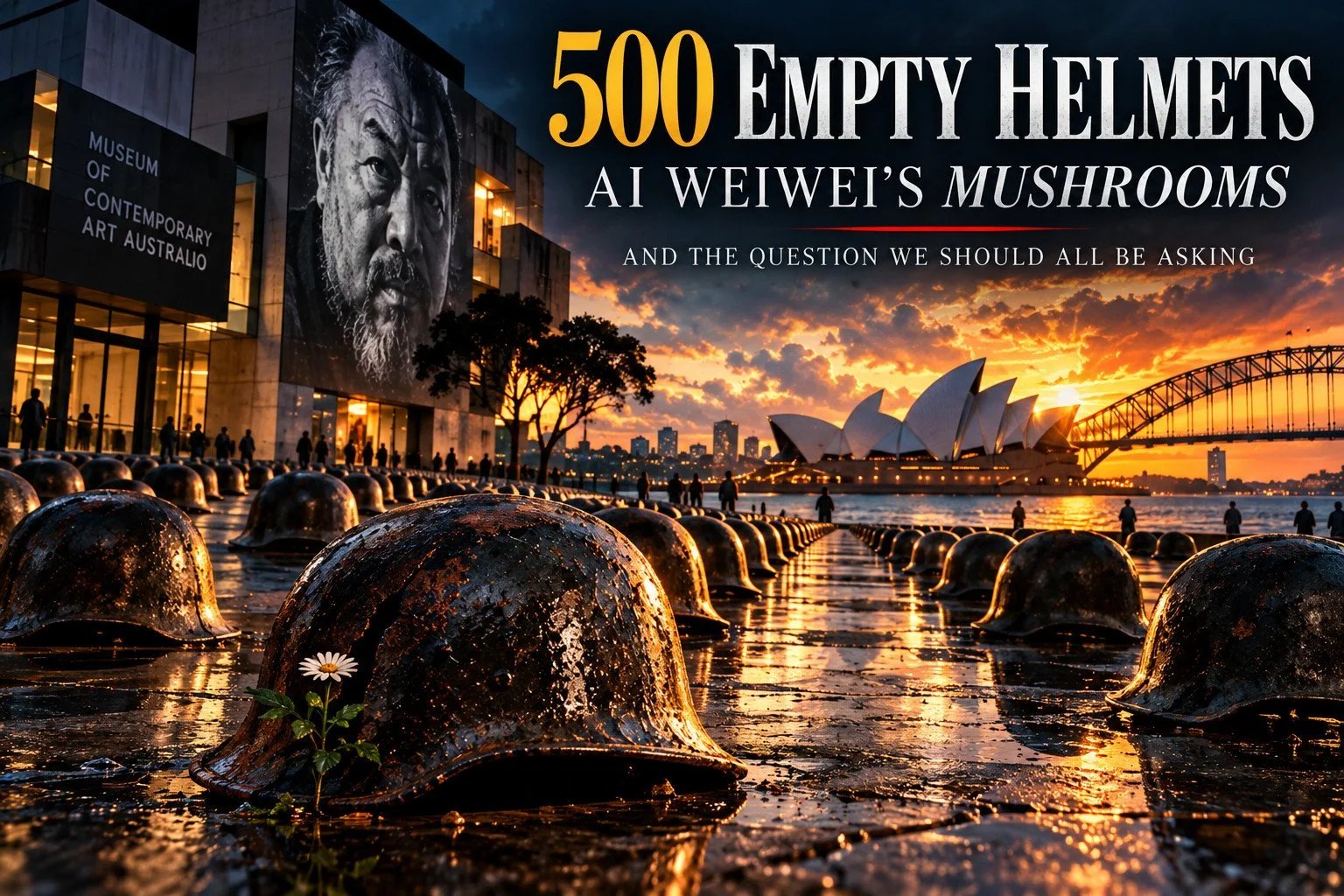
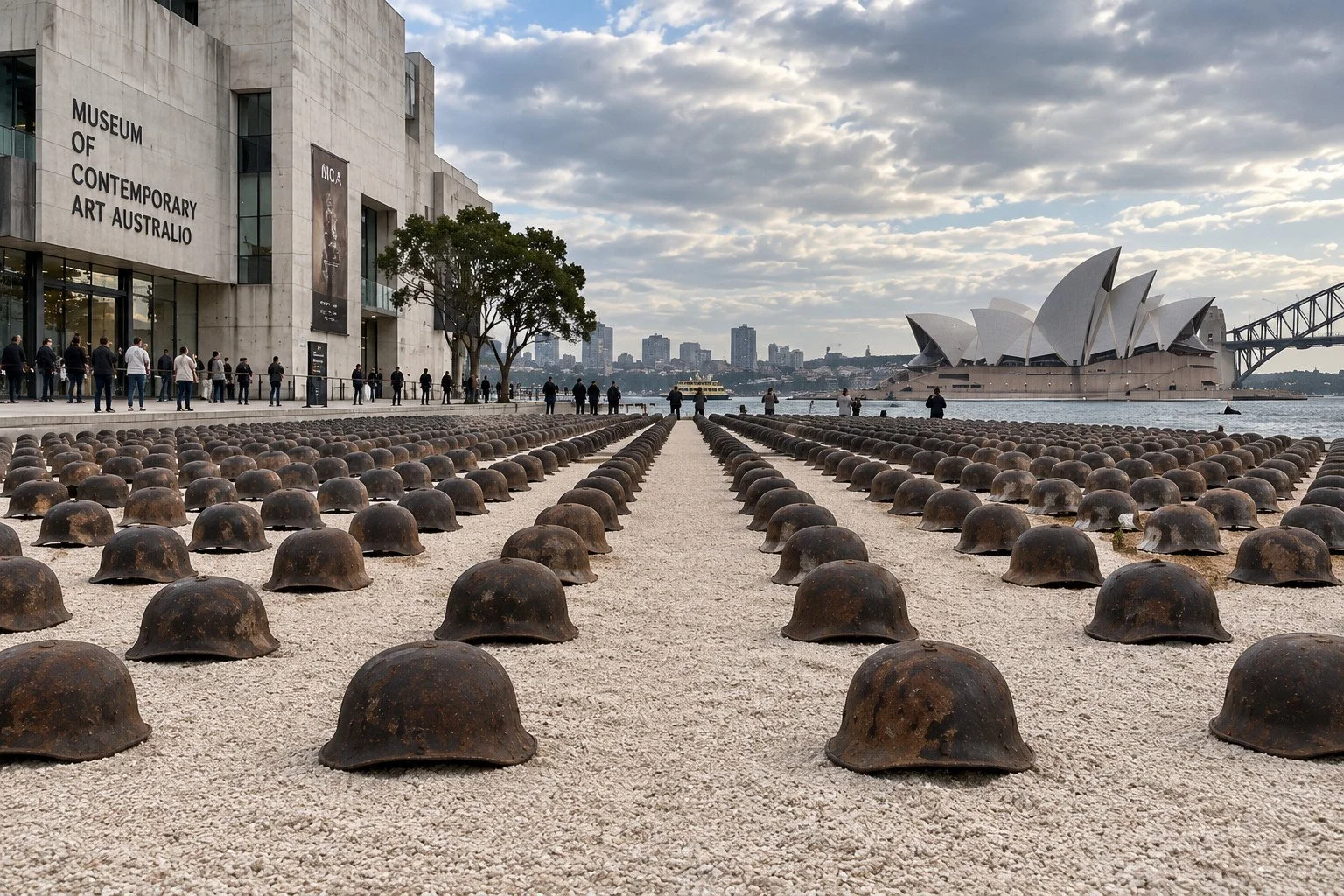
Unveiled on September 25, 2026, outside the Museum of Contemporary Art Australia, Mushrooms consists of 500 cast-iron combat helmets arranged in ten uniform rows. Ai Weiwei describes the work as a metaphor and a warning about humanity's response to crisis and our uncertainty about the future. The title itself carries several meanings: mushrooms grow in darkness, the shape evokes the terrifying image of a nuclear mushroom cloud, and Ai has explained that the Chinese term can also suggest endless delay.
The more I looked at the installation, however, the less I thought about helmets.
I started thinking about the people who aren't inside them.
And then I started thinking about us.
Between the wounds of war and the whispers of love lies the battlefield of the heart. These pages bleed passion, ache with loss, and stand defiant in hope. Step inside, where swords clash with sonnets, and discover that even in chaos, love dares to bloom.
Where love, loss, fear, hope, and memory quietly coexist. Love is not always loud or perfect; sometimes it is heavy, tender, and aching, shaped by time and experience. These words were born from moments of connection and moments of absence, from caring deeply and learning how to let go. Within these pages is an attempt to honor love in all its forms—the kind that holds us together, the kind that breaks us open, and the kind that teaches us how to keep going.
Five Hundred Helmets and Five Hundred Missing People
There is something incredibly powerful about an empty helmet. A helmet is designed to protect the most vulnerable part of the human body, which means its existence already acknowledges danger. Someone puts one on because somewhere in their mind exists a very basic human thought: I want to survive. But when the person disappears and only the helmet remains, the meaning changes completely.
One helmet can make you imagine one soldier. You might wonder who wore it, whether that person had children, what language they spoke, what they feared or whether someone was waiting for them to come home. But place 500 helmets together and something strange begins to happen. The individual starts disappearing into the group. You stop seeing 500 possible human stories and begin seeing a formation, an army, a number. That transformation fascinates me because I think it says something uncomfortable about how we experience suffering today. One person suffering can break our hearts. Ten thousand people suffering becomes a statistic.
Ai's installation gives us no soldiers and no names. We are left with objects representing the people who would normally occupy them. For me, that absence is precisely what makes the artwork powerful. Sometimes what an artist chooses not to show becomes the loudest part of the work.

"Potion Number 9" is an enthralling piece of abstract art that captures the essence of mystery and transformation. The artwork serves as a visual representation of alchemy, blending ethereal forms and vibrant colors to create a potion of visual enchantment.
Why Call It Mushrooms?
At first, Mushrooms sounds like a strange name for an installation composed entirely of military helmets, but the contradiction is intentional. Ai connects the title to organisms growing in darkness, nuclear mushroom clouds and a Chinese expression suggesting prolonged delay. Suddenly something seemingly harmless becomes connected to destruction, hesitation and the possibility of renewal.
That idea of delay particularly caught my attention.
The inspiration for the installation traces partly to Germany's announcement, shortly before Russia's full-scale invasion of Ukraine in February 2022, that it would provide Ukraine with 5,000 military helmets. The offer was widely criticized at the time as inadequate given the scale of the threat Ukraine faced. Ai has made clear, however, that Mushrooms is not simply a political joke about that episode. He describes the work more broadly as an examination of how poorly leadership can understand the human condition and the dangers approaching society.
That takes the artwork somewhere much more interesting for me.
Because suddenly the helmets aren't only about Ukraine.
They aren't only about Russia.
They aren't only about Germany.
They aren't even only about war.
They become symbols of what happens when humanity recognizes a crisis but keeps waiting for someone else to deal with it.
Have We Become Numb to Human Suffering?
This is the question that stayed with me the longest.
Have we become numb to suffering?
Think about how you use your phone on an average day. You open social media and see someone's vacation. Scroll. Someone posts a beautiful painting. Scroll. A politician says something controversial. Scroll. Someone shows you their dinner. Scroll. A building has been destroyed somewhere in the world. Scroll. Someone posts a meme. Scroll. A child is crying in the aftermath of war. Scroll. Advertisement. Scroll. Funny video. Scroll.
Within sixty seconds, your brain may move from laughter to death to food to war to art to entertainment.
That is an incredibly strange way for a human being to experience reality.
Our ancestors might have lived their entire lives knowing only the tragedies occurring within their immediate communities. We now carry the suffering of almost the entire planet inside our pockets. Every conflict, earthquake, bombing, famine, shooting and humanitarian disaster can appear on a six-inch screen while we are sitting comfortably on the couch.
I don't believe this necessarily makes us uncaring people. I think sometimes it simply becomes too much.
The mind adapts.
And that adaptation scares me.

When Tragedy Becomes Content
There is something about social media that increasingly troubles me. Everything eventually becomes content.
Art becomes content.
Love becomes content.
Birthdays become content.
Relationships become content.
War becomes content.
Death becomes content.
Someone's worst day can appear directly underneath someone's best day. And because everything is delivered through the same screen, in the same feed, using the same scrolling motion, our minds can begin treating completely different experiences as though they belong to the same emotional category. A photograph of someone's new painting receives a like. A photograph of someone's lunch receives a like. A photograph showing the aftermath of a bombing receives a like. Then we keep scrolling. I have caught myself doing it.
That is why I'm not writing this from some moral pedestal pretending that everyone else has become insensitive while I somehow remain perfectly compassionate. I'm part of this system too. There have been moments when I have seen something terrible online, felt sadness for a few seconds and then continued scrolling. Ten seconds later I might be looking at art. Thirty seconds later I might be laughing. Five minutes later I might have forgotten what I saw. When I really think about that, it bothers me.
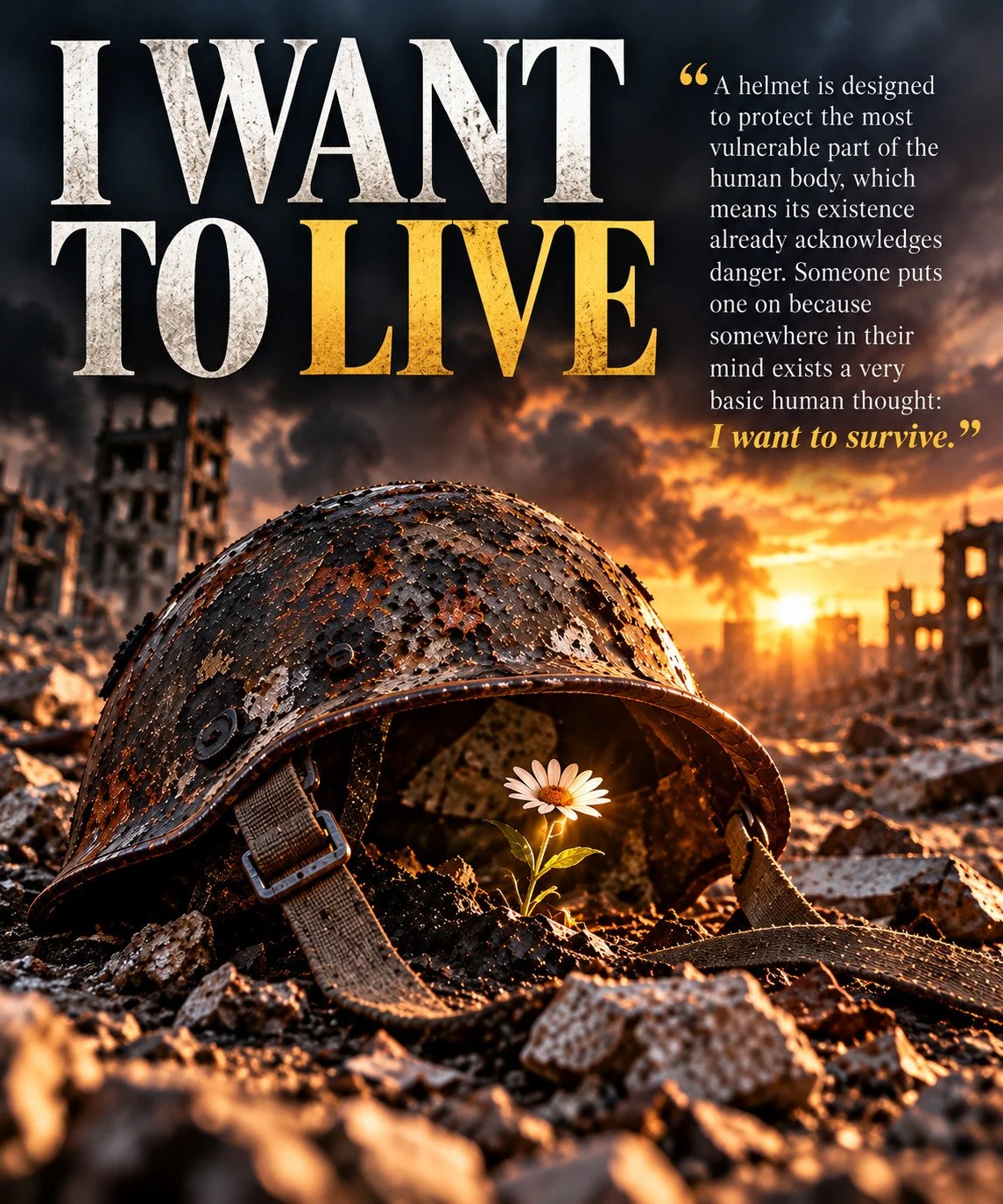
The Helmet Says, “I Want to Live”
This is where Mushrooms becomes particularly meaningful to me. A weapon exists to hurt someone. A helmet exists because someone doesn't want to be hurt. That distinction matters. Every helmet represents protection. Behind every piece of armor is the acknowledgement that the human body is fragile. No matter what flag someone fights beneath, no matter what language they speak and no matter what uniform they wear, underneath the equipment is still a human being made of flesh, bones, memories, fears and hopes.
The helmet almost becomes a silent statement; I want to live.
Yet when Ai multiplies that object 500 times, something happens. Individual survival becomes collective vulnerability. I see 500 reminders that civilization is far more fragile than we sometimes imagine. Ai himself has warned that the sense of civilization and security people become accustomed to can disappear quickly. He has connected today's uncertainty not only to warfare but also to rapid technological development, artificial intelligence, materialism and weakening reflection on the value of human life. That last part stayed with me. The value of human life. Maybe that is what this artwork is really asking us to reconsider.

War Beside Paradise
There is another element of Mushrooms that I find visually fascinating: where it sits.
These 500 combat helmets aren't sitting on an actual battlefield. They are installed outside the Museum of Contemporary Art Australia on Sydney's harborfront. The work is part of the Neil Balnaves Tallawoladah Lawn Commission and is scheduled to remain there for seven months. Think about that contrast, the beautiful harbor with Tourists checking out architecture, boats crossing the water, and people walking around enjoying their day.
And then boom 500 combat helmets. That feels almost like a representation of the modern world itself. Somewhere, someone is drinking coffee. Somewhere else, someone is hiding from an explosion. Someone is celebrating a birthday while someone else is burying a family member. Someone is complaining about traffic while someone else is wondering whether their home will still exist tomorrow morning.
All of these realities exist simultaneously. Yet we mostly experience the world immediately surrounding us. Until something forces us to look beyond it. Sometimes that something is art.
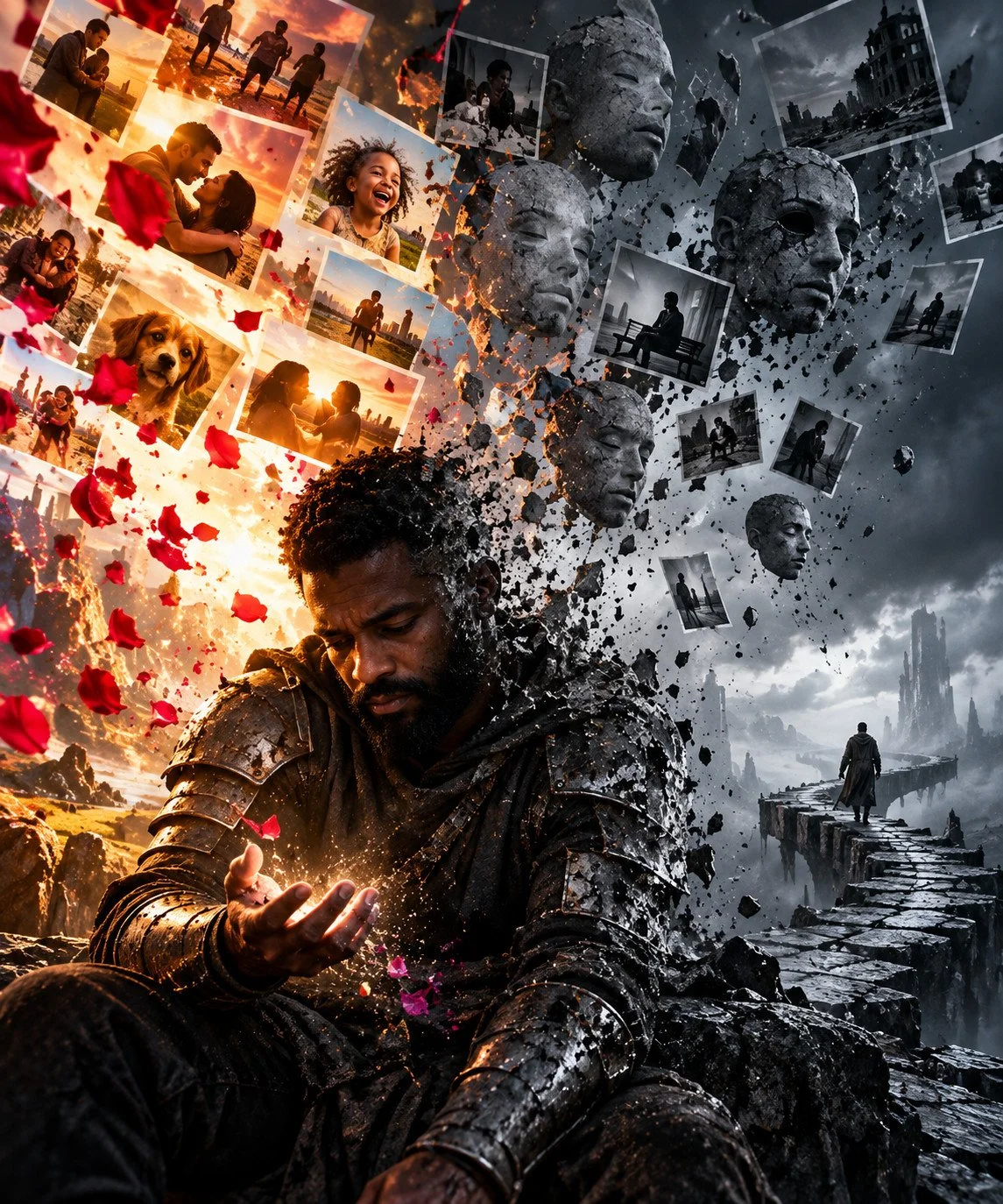
What Happens When We See the Truth and Stop Feeling It?
Recently, I wrote about truth and the strange reality social media has created around us. I questioned how algorithms, AI, personal perspectives and online relationships are changing our understanding of what is real. But Ai Weiwei's Mushrooms made me think about another problem. Maybe recognizing truth isn't enough. We can know that wars are happening and innocent people are suffering, refugees are leaving their homes, families are being destroyed. The information is available.
But what happens when we see those truths so frequently that they stop affecting us?
That might be one of the strangest contradictions of our age.
We have unprecedented access to human suffering while simultaneously developing unprecedented tools for escaping it.
See something uncomfortable?
Scroll.
Mute.
Block.
Change the channel.
Open another app.
Watch something funny.
The suffering hasn't disappeared.
We have.
Final Thoughts: Don't Scroll Past Humanity
Warriors, perhaps the biggest warning inside Mushrooms isn't about any particular government, country or conflict. Maybe the warning is about us.
The danger isn't simply that terrible things continue happening in the world. Humanity has lived with war, violence and suffering for thousands of years.
The danger is that we become so accustomed to seeing suffering that eventually we stop seeing the people inside it. Numbers grow larger while the individuals become smaller. Eventually the statistics become easier to process than the human beings they represent. That is why I keep returning to those empty helmets. Five hundred reminders that behind every statistic is someone who laughed, loved, worried, dreamed and wanted another tomorrow.
Ai Weiwei calls Mushrooms a warning. Maybe we should treat it like one.
Because perhaps the opposite of compassion isn't hatred. Perhaps it is something far quieter… indifference. And in a world where tragedy is constantly competing with entertainment for our attention, protecting our ability to care may become one of the most important battles we fight.
Until next time, Warriors.
Keep creating. Keep questioning. And most importantly, never allow a number to make you forget the human being behind it.