
George Lucas Spent $1 Billion to Challenge What We Call Art
Greetings Warriors,
When most of us hear the name George Lucas, our minds immediately travel to a galaxy far, far away. We think about Darth Vader breathing in the darkness, Luke Skywalker staring toward two suns, Princess Leia standing defiantly against an empire, Yoda teaching us that size has very little to do with strength, and spaceships racing across a screen while John Williams' music makes everything feel larger than life.
George Lucas changed cinema. But at 82 years old, Lucas may be attempting something equally ambitious outside of filmmaking. He wants to change what we call art.
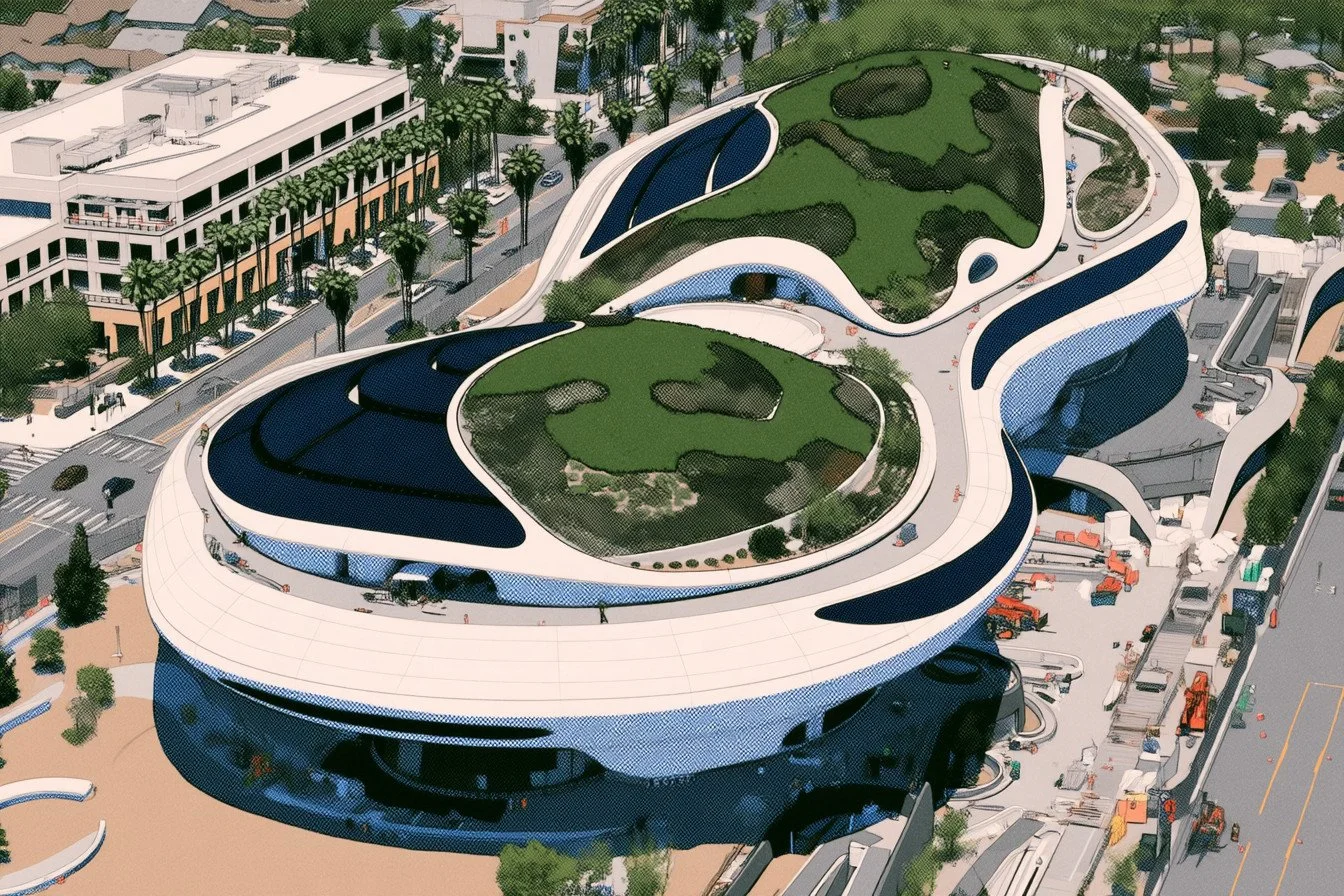
On September 22, 2026, the Lucas Museum of Narrative Art opens its doors to the public in Los Angeles after approximately 17 years of planning, rejection, redesigns, legal battles and an investment of around $1 billion. Built in Exposition Park near Lucas' alma mater, the University of Southern California, the futuristic museum is filled largely with works assembled by Lucas and his wife and co-founder, businesswoman Mellody Hobson.
And this isn't simply a giant monument to Star Wars. Yes, there are spaceships, Yoda, and Princess Leia. But there is also Frida Kahlo, Diego Rivera, Norman Rockwell, Banksy, comic art, photography, illustration, murals, cinematic design and objects many traditional museums might historically have dismissed as commercial or popular culture.
Lucas calls his creation a "temple to the people's art." Warriors, that statement immediately caught my attention because underneath the billion-dollar building and Star Wars memorabilia is an argument I have been fascinated with for years.
Who decides what deserves to be called art? And perhaps more importantly: Who gave them that power?
Between the wounds of war and the whispers of love lies the battlefield of the heart. These pages bleed passion, ache with loss, and stand defiant in hope. Step inside, where swords clash with sonnets, and discover that even in chaos, love dares to bloom.
Where love, loss, fear, hope, and memory quietly coexist. Love is not always loud or perfect; sometimes it is heavy, tender, and aching, shaped by time and experience. These words were born from moments of connection and moments of absence, from caring deeply and learning how to let go. Within these pages is an attempt to honor love in all its forms—the kind that holds us together, the kind that breaks us open, and the kind that teaches us how to keep going.
George Lucas Spent 17 Years Fighting to Build His Museum
The Lucas Museum didn't simply appear overnight because a billionaire filmmaker decided he wanted somewhere to display his collection. The journey took roughly 17 years. Lucas originally explored building his museum in San Francisco and later Chicago, reaching significant planning stages before both possibilities collapsed. Eventually, Los Angeles became the museum's home, and construction began in Exposition Park.
Lucas himself has said the project "almost broke my will." I love that quote. Not because I enjoy watching people struggle, but because sometimes we look at extremely successful people and assume everything becomes easy once you reach a certain level.
George Lucas created Star Wars. He created Indiana Jones with Steven Spielberg. He founded Lucasfilm. His ideas helped transform filmmaking technology, visual effects and modern popular culture. Yet even George Lucas can spend nearly two decades trying to bring one dream into existence. There is a lesson in that. Success doesn't eliminate resistance. Money doesn't eliminate rejection. Reputation doesn't guarantee everyone will understand your vision. Sometimes you still have to fight for the thing you believe should exist. Lucas kept fighting.
Now, after years of setbacks, the building is finally here. Designed by Chinese architect Ma Yansong, the approximately 300,000-square-foot structure looks almost like a giant spacecraft or cloud floating above Exposition Park. The museum and surrounding landscape are designed to feel like an experience rather than simply a box filled with paintings.
And inside that strange futuristic structure, Lucas is trying to dismantle an idea that has existed inside the art world for generations. The hierarchy separating "high art" from "popular art."

"Potion Number 9" is an enthralling piece of abstract art that captures the essence of mystery and transformation. The artwork serves as a visual representation of alchemy, blending ethereal forms and vibrant colors to create a potion of visual enchantment.
Frida Kahlo Meets Star Wars — And That's the Point
Imagine walking through a museum and encountering a rare Frida Kahlo self-portrait, you continue walking and there are murals by Banksy and Diego Rivera. Then illustration, comic art, and Norman Rockwell. Walk further and you see movie costumes, concept designs. And eventually you are standing beneath a Naboo starfighter. That sounds almost chaotic. But that is exactly the point. The Lucas Museum refuses to accept the traditional boundaries separating fine art from popular visual culture.
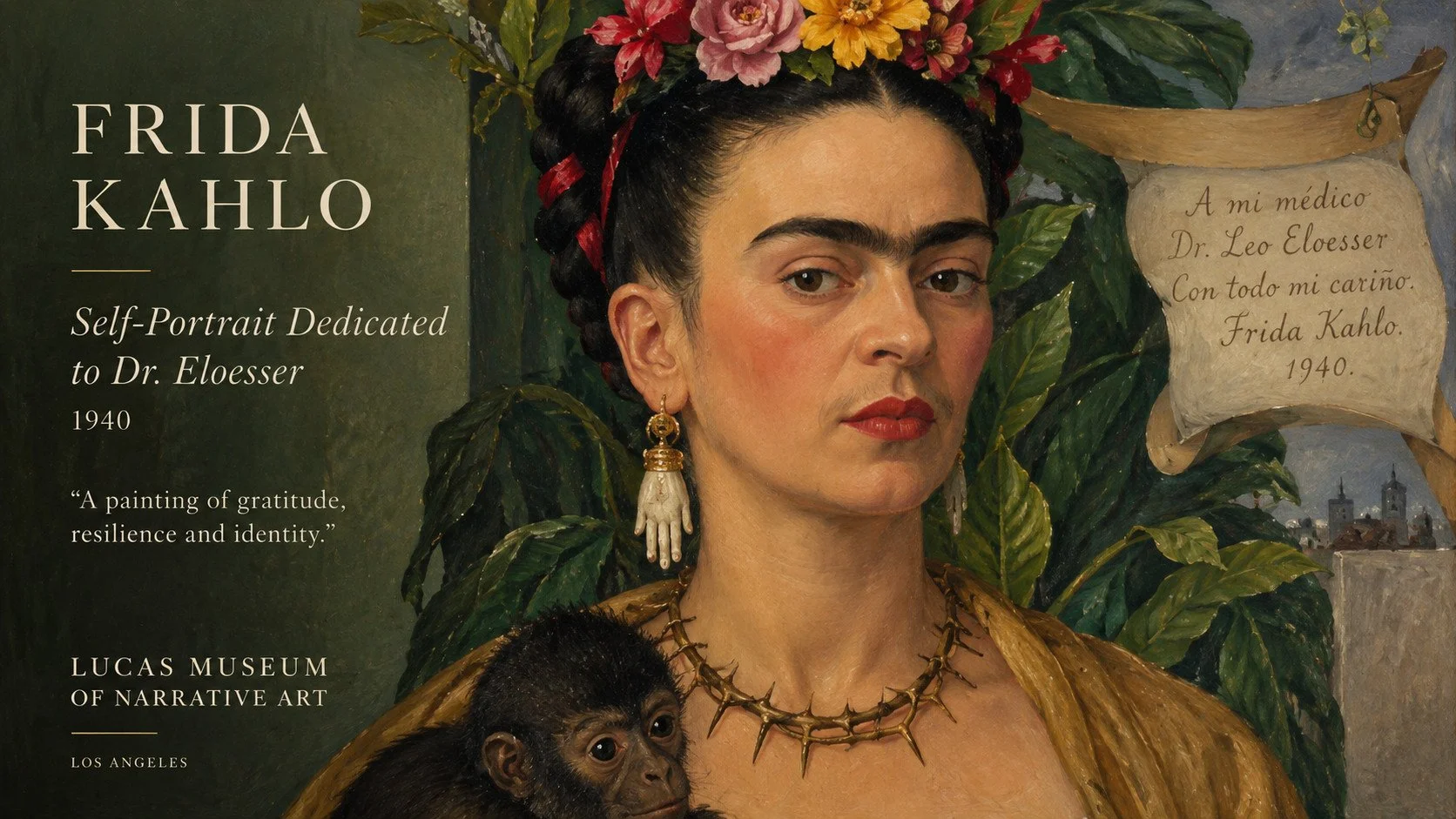
One of its treasures is Kahlo's 1940 Self-Portrait Dedicated to Dr. Eloesser, acquired by the museum in 2020. The painting depicts Kahlo wearing flowers in her hair and a thorn necklace, with earrings given to her by Pablo Picasso. It is dedicated to physician Leo Eloesser, whom Kahlo described in the work as her doctor and best friend.
Nearby visitors can encounter something completely different: Cassius Marcellus Coolidge's famous imagery of dogs playing poker. Think about that combination. Frida Kahlo and Dogs playing poker Inside the same serious art museum.
Some people are going to hate that. I absolutely understand why. Traditional museums have spent centuries developing systems of scholarship, preservation and connoisseurship that help us understand why certain artworks matter historically. Not everything automatically becomes important simply because someone hangs it on a museum wall.
But Lucas is asking another question.
Why can't both exist?
Why can't we admire Michelangelo and comic-book illustration?
That is where the Lucas Museum becomes much more interesting than a celebrity vanity project. It's challenging the hierarchy itself.
The Art World Has Always Had Gatekeepers
Warriors who have followed my writing know this subject fascinates me because art has always had gatekeepers. Academies once decided what proper painting looked like. Salons decided whose work deserved to be shown. Critics decided which movements deserved intellectual respect.
Galleries decided which artists deserved representation. Museums decided which objects belonged inside the history of art. Collectors decided what became valuable. And throughout history, artists repeatedly challenged those systems. The Impressionists were rejected. Van Gogh struggled for recognition. Photography spent years fighting to be taken seriously as art. Abstract artists were mocked. Street art was vandalism until wealthy collectors wanted it. Digital art was treated like something less important because it existed on a screen.
Then NFTs arrived, and suddenly people who had ignored digital artists for decades became very interested once those same works began selling for enormous amounts of money. I have always found that fascinating. Sometimes the artwork doesn't change. The permission changes. Someone important decides the thing deserves attention, and suddenly everyone begins looking at it differently. Lucas appears to understand this phenomenon very well. His museum contains more than 40,000 works and deliberately mixes fine art with comics, illustration, cinematic material and commercial imagery. That decision has already generated debate over whether the museum is breaking down outdated cultural hierarchies or simply mixing categories that museums traditionally kept separate for good reason.
I don't think everyone needs to agree with Lucas. In fact, disagreement is healthy. But I love that the museum forces us to have the conversation. Because art shouldn't be afraid of questions.
Banksy Belongs Here — But Do Comic Books and Movie Props?
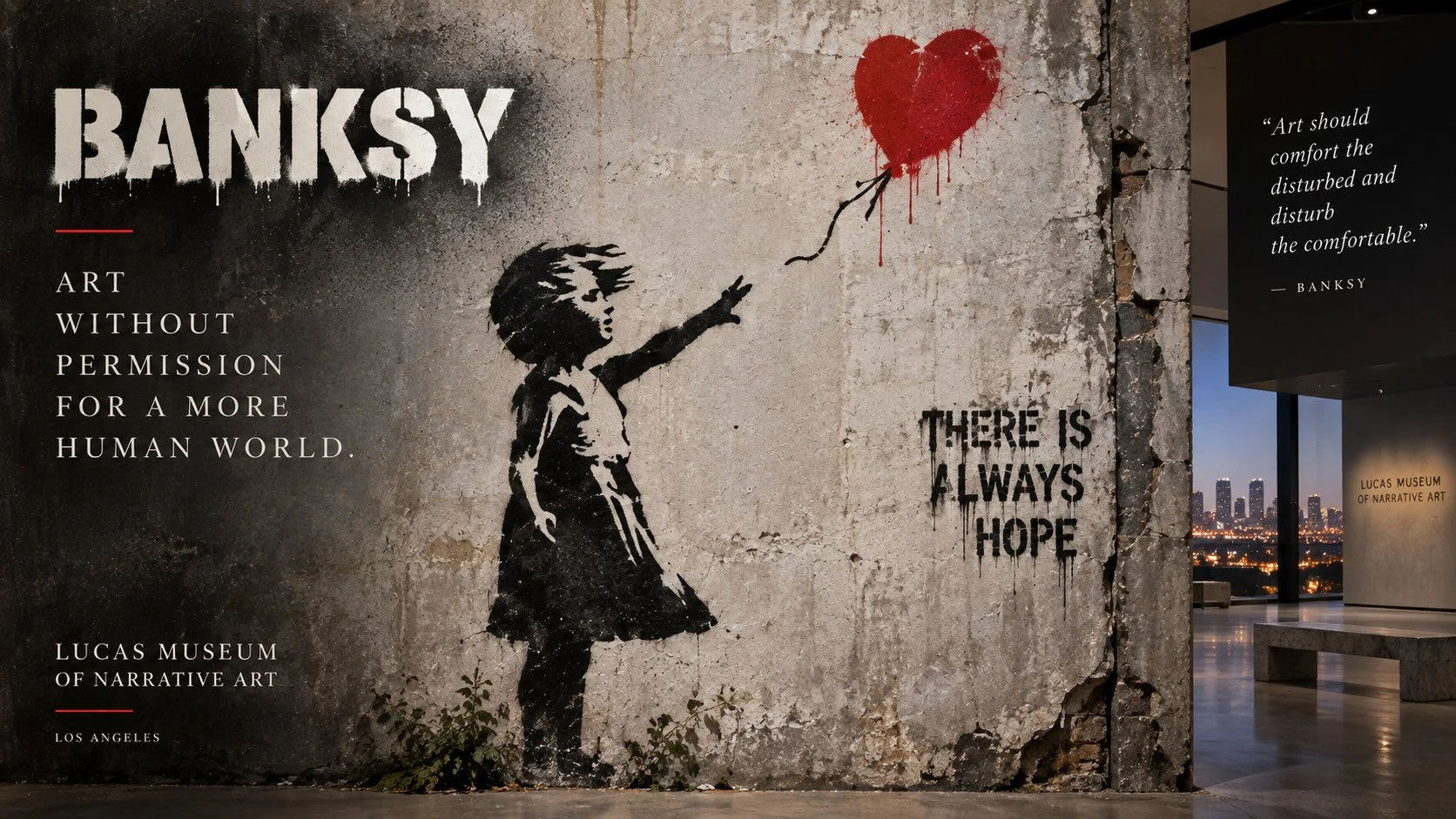
One of the museum's more surprising attractions comes from Banksy. Two walls contain stenciled murals by the famously elusive street artist, including imagery associated with his famous balloon girl. According to AP, Banksy worked directly with Lucas on his contribution to the museum. Nearby are politically engaged murals by artists including Judith Baca and Diego Rivera.
Think about Banksy's journey through the art world. His work originated on streets and walls where authorities might remove or paint over it. Today people literally cut Banksy works out of buildings. Auction houses sell them for millions. The art didn't suddenly become art when wealthy people discovered it. Society's relationship with the work changed. That brings us back to comics and cinema.
If an illustrator creates an image capable of influencing generations of visual culture, why should the fact that it originally appeared inside a commercial publication automatically make it less artistically interesting? If hundreds of artists collaborate to design an imaginary world for a movie, are their drawings somehow artistically meaningless because the final product appears on a cinema screen?
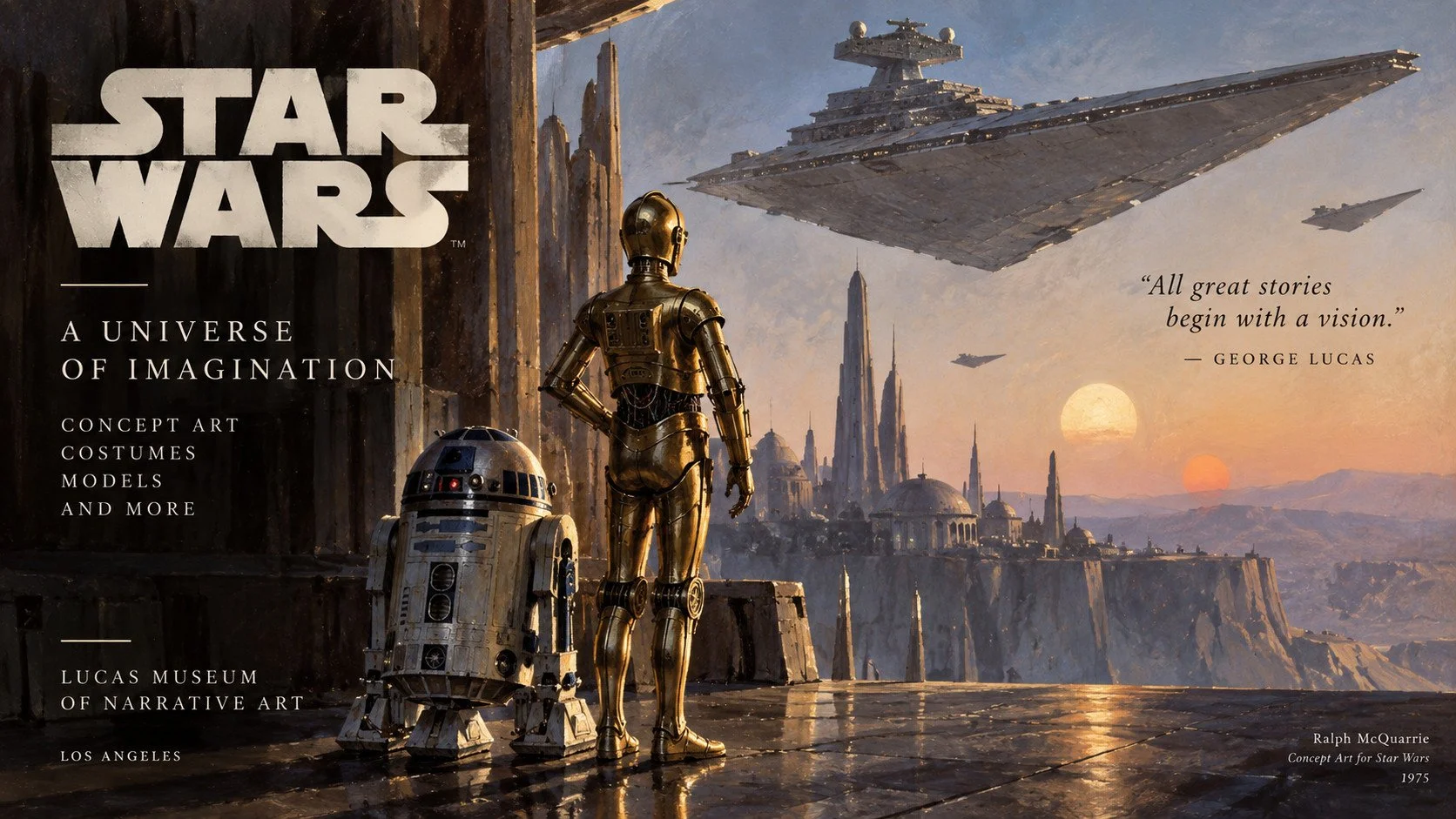
Consider Star Wars itself, someone had to imagine Darth Vader before Darth Vader existed. Someone had to draw the costumes and sculpt creatures that existed only inside people's imaginations. Those are creative acts.
The fact that millions of people eventually saw the results doesn't automatically make them less creative. If anything, those images became part of our shared visual language.
George Lucas Is Building a Museum for Storytelling
The name tells us exactly what Lucas is attempting. It isn't the George Lucas Museum. It is the Lucas Museum of Narrative Art. That's the thread connecting seemingly unrelated objects inside the building. Lucas isn't arguing that every comic illustration should be judged according to the same criteria as a Renaissance painting. Instead, the museum asks us to consider how human beings have used images to tell stories.
We've been doing that for thousands of years before cinema, people painted stories. Before modern museums existed, churches were covered in visual narratives explaining biblical stories to populations that often couldn't read. Ancient civilizations carved stories into stone. People painted animals and human figures on cave walls long before anyone invented the word "museum." Human beings think in stories. We always have.
Lucas simply built his career using one of the newest storytelling technologies: cinema. That is why architect Ma Yansong's approach to the museum is interesting as well. He has described architecture itself as narrative and storytelling, with the museum's plaza, roof and central oculus designed to create different emotional experiences as visitors move through the site.

George Lucas May Have Built Something Bigger Than Star Wars
I originally approached this story expecting to write about George Lucas opening a giant museum. The more I learned about it, the less interested I became in the billion-dollar price tag. The money makes a great headline.
Star Wars makes a great headline. Frida Kahlo makes a great headline.
Banksy makes a great headline. But underneath all of those names is a question much more interesting to me.
Who owns the definition of art?
Maybe nobody should.
George Lucas spent his life telling stories through images. Some critics considered those stories entertainment. Millions of people considered them unforgettable. Children watched Star Wars and became filmmakers.
Artists watched those worlds and started drawing. Engineers watched those machines and became fascinated with technology. A piece of popular entertainment became part of global culture.
Does cultural impact automatically make something fine art?
Not necessarily.
But cultural impact certainly deserves to be studied. That is where I think Lucas may have found something important. The Lucas Museum doesn't need to prove that Darth Vader belongs beside Michelangelo. It simply needs to create another door. A door where a child who doesn't care about Renaissance painting might enter because they love Star Wars.
Maybe that child encounters Banksy or Frida Kahlo, then Norman Rockwell. Then something completely unexpected catches their attention.
And suddenly they are looking at art differently. That is powerful.
Because sometimes the hardest part isn't teaching people to love art.
It's simply getting them through the door. George Lucas spent roughly 17 years and $1 billion building his door.
Some critics will love what is on the other side. Others will absolutely hate it. Good.
Art should make us argue occasionally. It should make us reconsider the rules we inherited. It should force us to ask why one object is protected behind museum glass while another equally influential image is dismissed as entertainment.
George Lucas spent decades taking audiences to imaginary galaxies.
Now he is attempting something different. He's asking us to look at the images surrounding our own lives and reconsider whether the boundaries between fine art, popular art, illustration, cinema and storytelling were ever as solid as we believed.
Maybe the museum will change how institutions think about narrative art.
Maybe it won't. History will decide that. But Lucas has already accomplished something worth discussing. He built a billion-dollar museum around a question.
What is art?
And Warriors, after thousands of years of creating it, humanity still can't completely agree on the answer. Maybe that's exactly what makes art so beautiful. Until next time, Warriors.
If you enjoyed this article, you can read more below:
Frida Kahlo Controversy: Why Mexico vs Spain Is Sparking a Cultural Debate