
500 Empty Helmets: Ai Weiwei’s Mushrooms
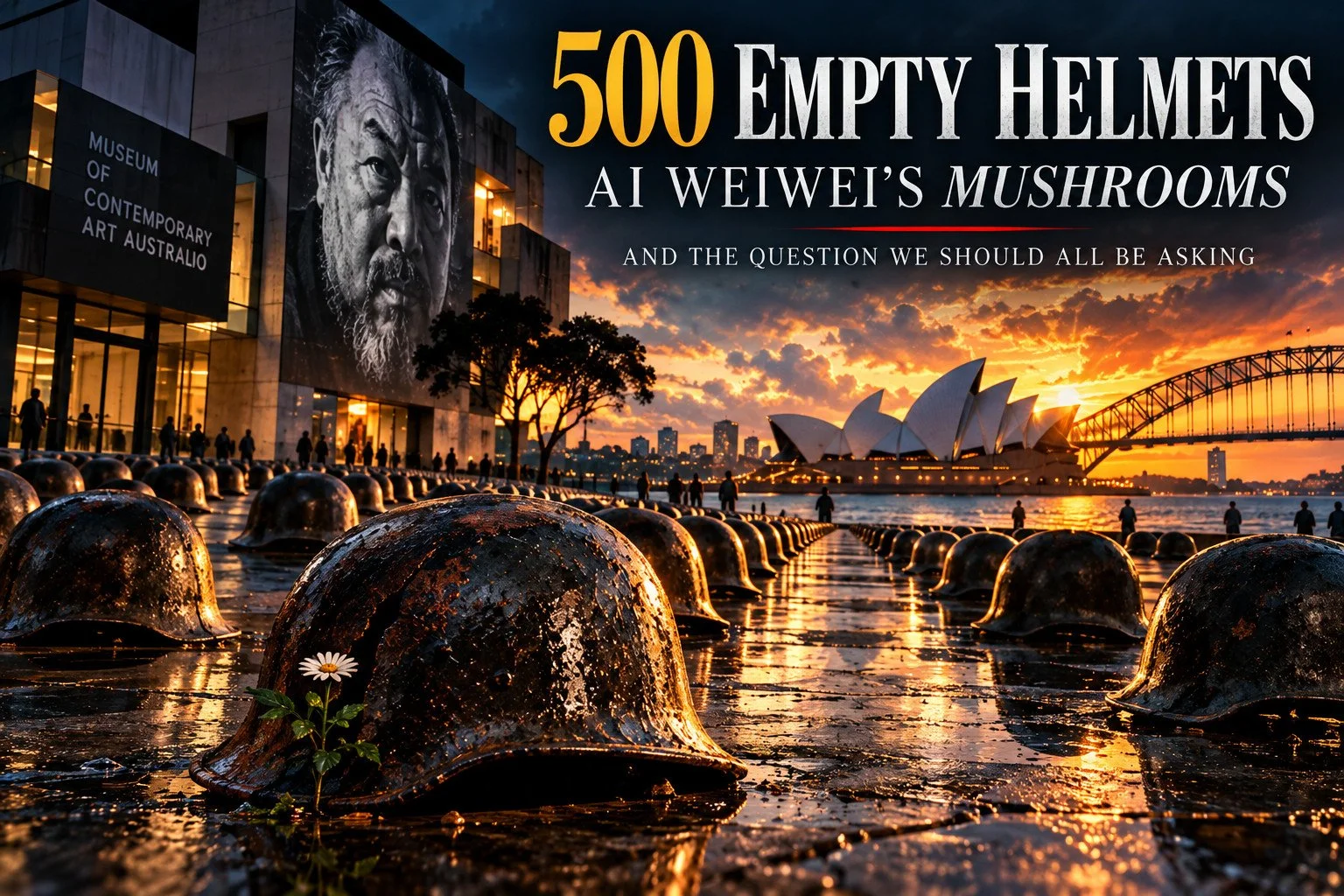
Every once in a while, I come across a piece of art that doesn't need much explanation before it makes me stop and think. Ai Weiwei's newest installation, Mushrooms, did exactly that to me. There are no complicated figures, no enormous painted battle scene and no graphic depiction of violence. Instead, there are simply 500 combat helmets sitting empty in Sydney. Yet somehow, those empty helmets might say more about the world we are living in than an image of an actual battlefield ever could.
Unveiled on September 25, 2026, outside the Museum of Contemporary Art Australia, Mushrooms consists of 500 cast-iron combat helmets arranged in ten uniform rows. Ai Weiwei describes the work as a metaphor and a warning about humanity's response to crisis and our uncertainty about the future. The title itself carries several meanings: mushrooms grow in darkness, the shape evokes the terrifying image of a nuclear mushroom cloud, and Ai has explained that the Chinese term can also suggest endless delay.
The more I looked at the installation, however, the less I thought about helmets.
I started thinking about the people who aren't inside them.
And then I started thinking about us.
George Lucas Spent $1 Billion to Challenge What We Call Art
When most of us hear the name George Lucas, our minds immediately travel to a galaxy far, far away. We think about Darth Vader breathing in the darkness, Luke Skywalker staring toward two suns, Princess Leia standing defiantly against an empire, Yoda teaching us that size has very little to do with strength, and spaceships racing across a screen while John Williams' music makes everything feel larger than life.
George Lucas changed cinema. But at 82 years old, Lucas may be attempting something equally ambitious outside of filmmaking. He wants to change what we call art.
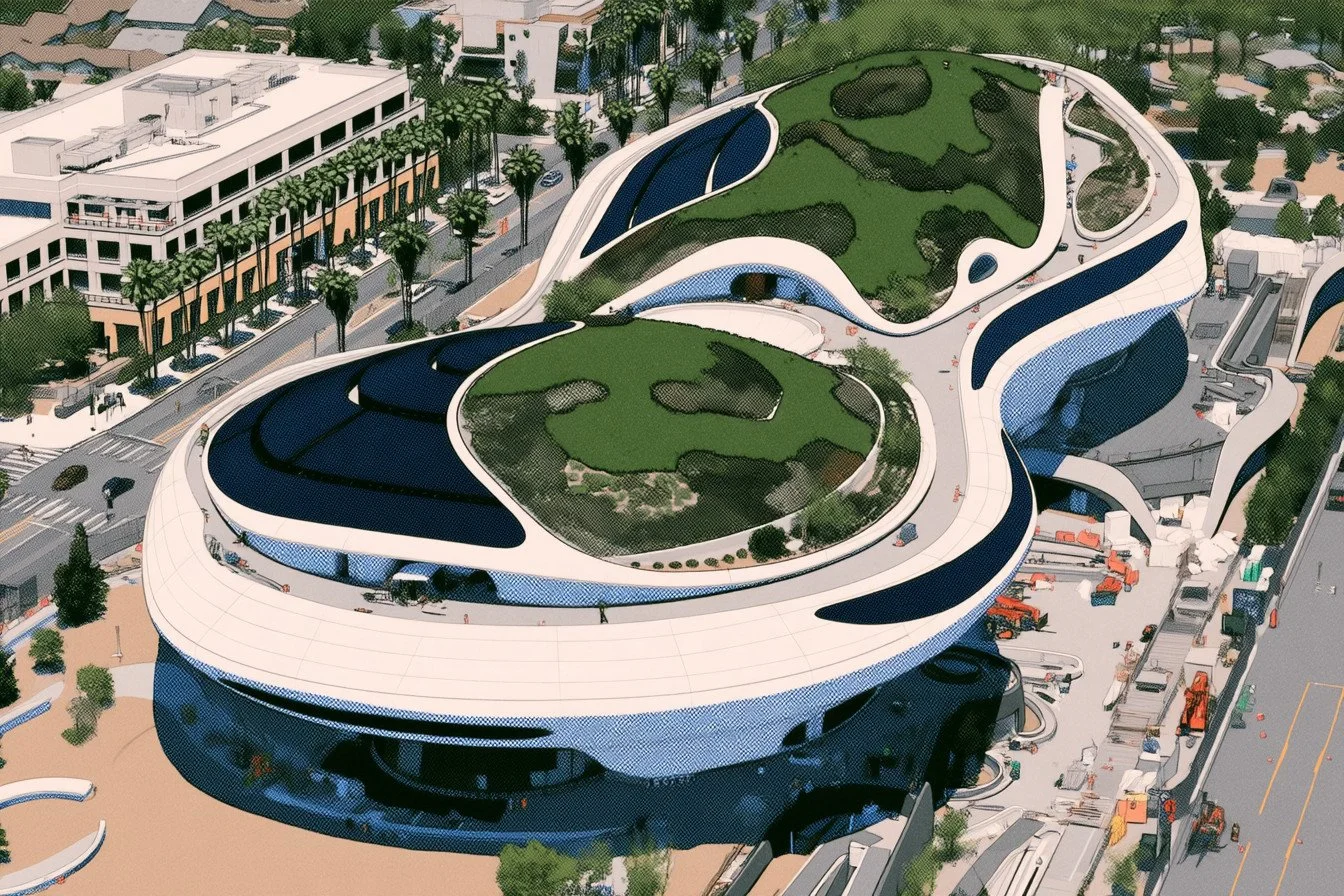
On September 22, 2026, the Lucas Museum of Narrative Art opens its doors to the public in Los Angeles after approximately 17 years of planning, rejection, redesigns, legal battles and an investment of around $1 billion. Built in Exposition Park near Lucas' alma mater, the University of Southern California, the futuristic museum is filled largely with works assembled by Lucas and his wife and co-founder, businesswoman Mellody Hobson.
And this isn't simply a giant monument to Star Wars. Yes, there are spaceships, Yoda, and Princess Leia. But there is also Frida Kahlo, Diego Rivera, Norman Rockwell, Banksy, comic art, photography, illustration, murals, cinematic design and objects many traditional museums might historically have dismissed as commercial or popular culture.
Lucas calls his creation a "temple to the people's art." Warriors, that statement immediately caught my attention because underneath the billion-dollar building and Star Wars memorabilia is an argument I have been fascinated with for years.
Who decides what deserves to be called art? And perhaps more importantly: Who gave them that power?
Van Gogh Painted Himself Broken — 137 Years Later, His Hidden Self-Portrait Returns
There are moments in life when everything seems to fall apart at once, when the mind is exhausted, the body is wounded, friendships disappear, and the future looks nothing like what we imagined it would become. Most of us would probably want to hide during those moments, close the door, disappear from the world for a while and return only when the wounds have healed.
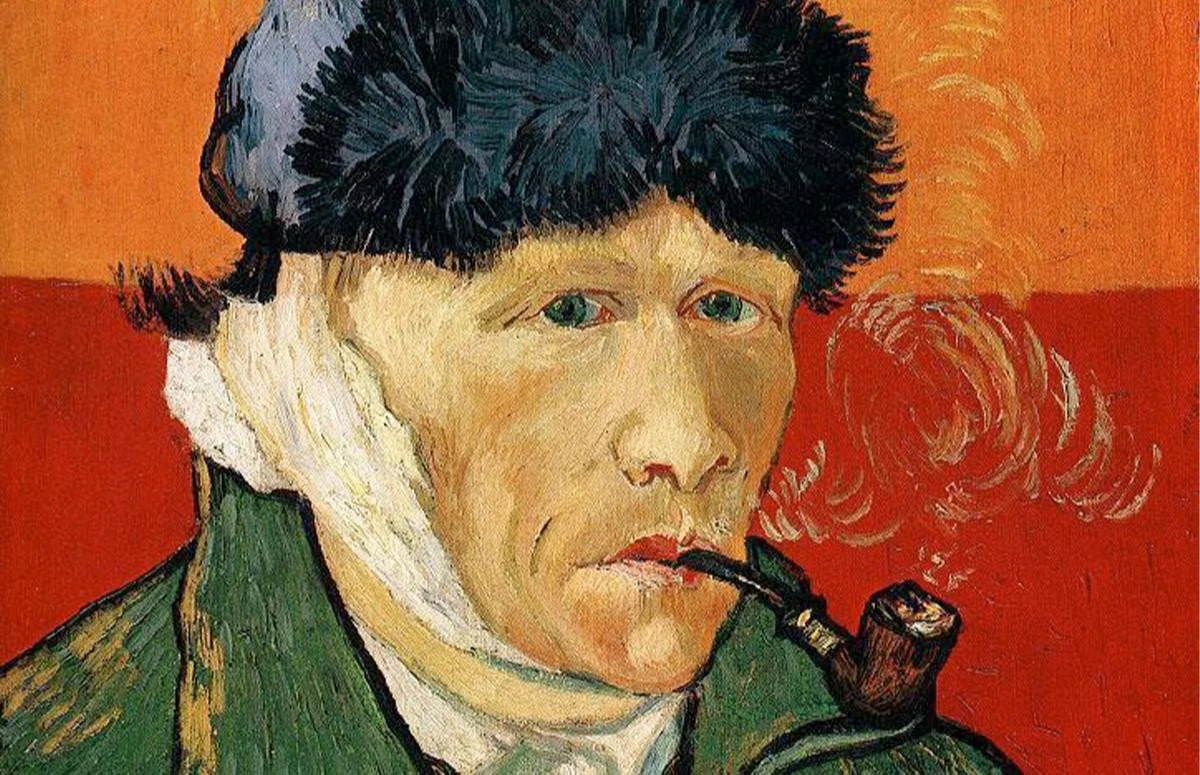
Vincent van Gogh did something different. He looked into a mirror. His ear was wrapped beneath an enormous white bandage. His face looked tired and pale. His relationship with fellow artist Paul Gauguin had collapsed spectacularly, the dream of building an artistic community in southern France was falling apart, and Van Gogh had just experienced one of the most infamous psychological crises in the history of art.
Yet he picked up his brush. And he painted himself exactly as he was.
Wounded, tired, imperfect, but still standing. The result was Vincent van Gogh's Self-Portrait with Bandaged Ear and Pipe, painted in Arles in January 1889, only weeks after the horrifying incident in which Van Gogh mutilated his ear.
Now, nearly 137 years later, this deeply personal painting is preparing for another remarkable chapter in its already extraordinary life. After decades largely hidden from temporary exhibitions, the privately owned Van Gogh masterpiece is returning to public view in Paris at the Fondation Louis Vuitton, where it will appear in the exhibition Gustave Fayet: Collector–Designer, Icons of Modern Art beginning October 9, 2026.
It has not appeared in a temporary exhibition since 1990 and has not been exhibited in France since 1937. And Warriors, that alone would make this a great art story. But once you discover everything this painting has survived—the breakdown of Van Gogh and Gauguin, the death of Van Gogh, the rise of its value, Nazi looting, Hermann Göring, a secret journey into Switzerland, postwar restitution and decades inside one of the world's great private collections—the painting begins to feel almost as resilient as the man who painted it.

Renoir Museum Robbed: Inside the $10 Million French Riviera Art Heist
Imagine breaking into the final home of one of history's greatest Impressionist painters before sunrise, cutting through a fence, entering through the garden, removing four paintings from the walls and disappearing before police can catch you. This isn't the plot of the next Netflix art-heist movie. It happened.
On the morning of September 8, 2026, two thieves broke into the Musée Renoir in Cagnes-sur-Mer on the French Riviera and targeted four paintings by legendary French Impressionist Pierre-Auguste Renoir. The alarm sounded at approximately 5:48 a.m., police arrived only five minutes later, and yet the thieves still managed to escape.
They didn't get everything they came for. Two paintings were abandoned in the museum's gardens as the burglars fled, apparently forced into a rushed escape by the alarm and rapid police response. But two Renoir paintings remain missing.
The works targeted during the robbery have been valued at approximately €9 million—around $10.5 million—turning what might sound like a bizarre early-morning burglary into one of the biggest art-crime stories of 2026.
Warriors, the more I read about this robbery, the stranger the story becomes, because the thieves didn't simply steal paintings from another museum.
They stole Renoirs from Renoir's home. And one of those paintings had already survived one of the darkest chapters in European history.
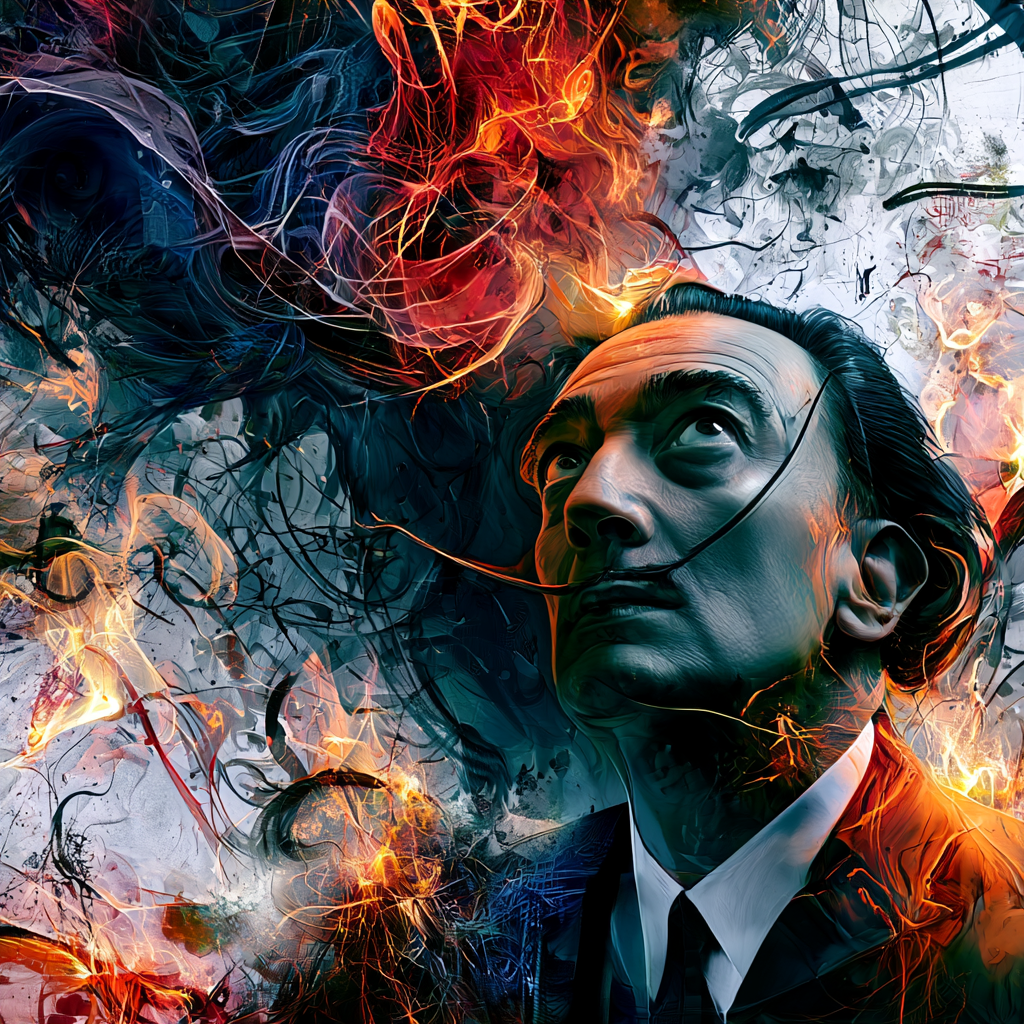
Would Dali Use AI?
I’m going to ask you a question that sounds simple—but if you sit with it long enough, it starts to itch at your brain like a half-finished dream.
What would Salvador Dalí do with AI?
Not the clean, polished answer. Not the safe museum-approved take. I mean really—drop him into 2026 with Midjourney tabs open, Sora rendering in the background, prompts flying like spells—and watch what happens.
Would he reject it?
Would he embrace it?
Or would he do what he always did… twist it into something so strange that we wouldn’t even recognize the tool anymore?
I’ve been thinking about this a lot lately. Especially watching the art world wrestle with AI like it’s some kind of invading force. You’ve got one side calling it the death of art, the other side calling it the future, and somewhere in between—you’ve got artists just trying to survive another platform collapse, another shift in the ground beneath their feet.
So let’s walk this out together, because this isn’t just about Dalí.
This is about us.
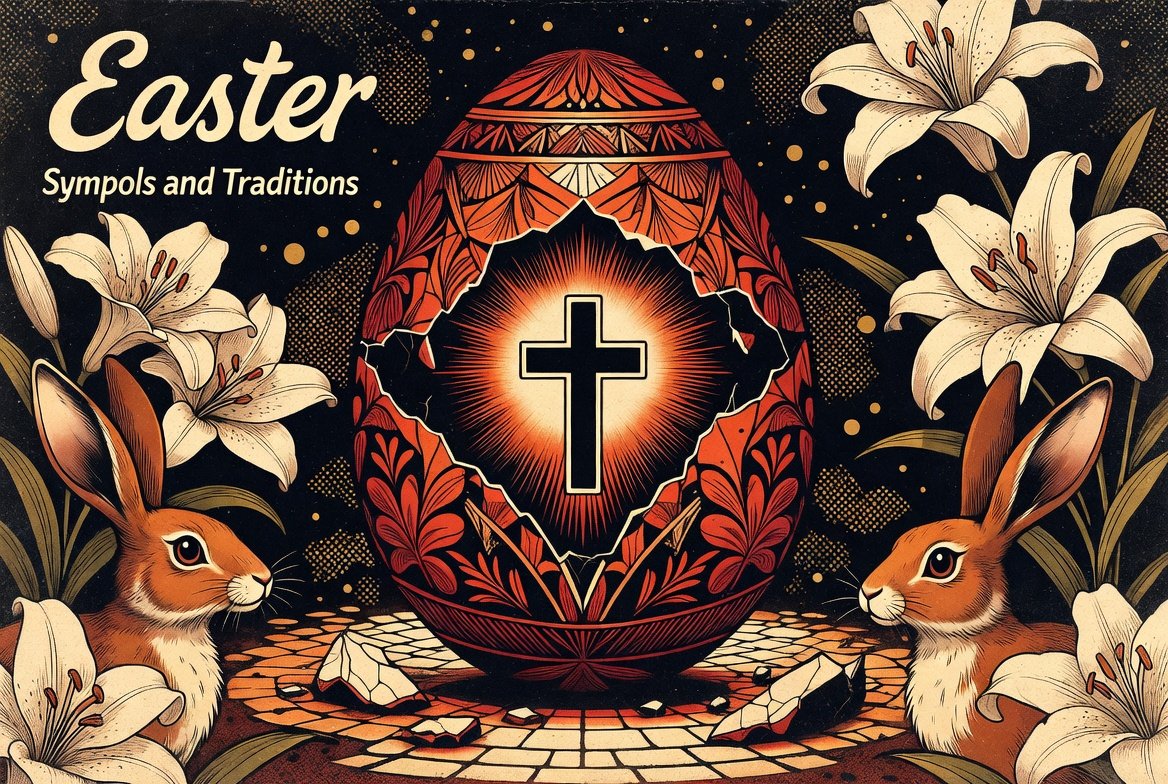
The History of Easter and Its Timeless Influence on Art
I felt compelled—almost pulled—to write about the history of Easter and how this powerful story has inspired some of the most beautiful art the world has ever seen. I’m no historian or art expert, just a guy who respects the warrior mindset of turning darkness into light and who sees art as a way to capture hope, resilience, and triumph. Easter’s message of resurrection hits different when you’ve faced your own battles. So here we go—my breakdown of Easter’s history and its deep connection to art.
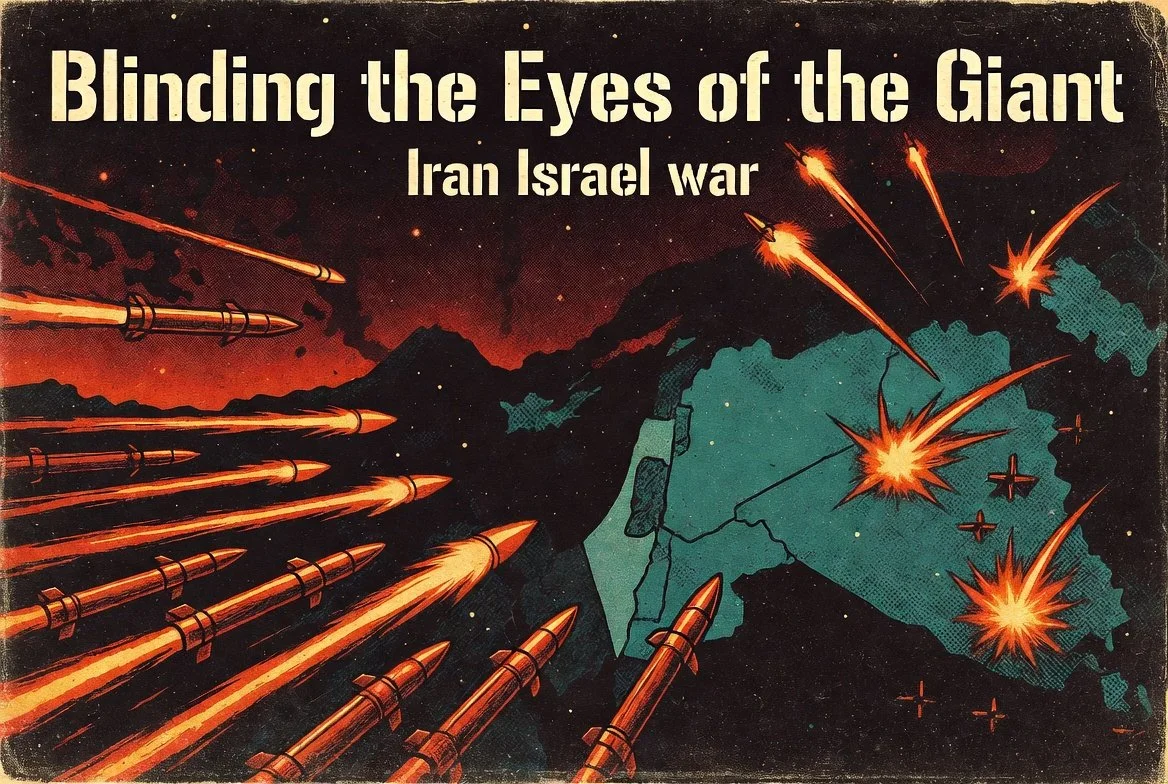
The Symphony of War (Iran, Israel, United States)
I want to start this off by saying this isn’t my typical talking point I would usually write. I normally keep things focused on my journey and the NFT space. But right now—watching the unfolding Iran Israel war and the broader US Iran conflict—I felt compelled, almost pulled, to put these thoughts down. Not as a military expert (I’m no strategist or all-knowing wizard), but purely from the viewpoint of how artistic this war has been from a strategy standpoint. It’s like watching a dark, intricate symphony unfold in real time: every note calculated, every movement deliberate. I’m just a guy who respects the art of outthinking a superior opponent in high-stakes environments, and what Iran is orchestrating here is pure strategic genius.
Bear in mind these are my own observations based on what I’ve studied and seen play out in the Iran US Israel war. I’m open to any criticism, corrections, or different viewpoints—drop them in the comments. I’m always here to learn and improve.
Here’s my breakdown of the strategic masterpiece unfolding:
The Rise of the Gulf Art World — Beauty, Power, and War in the Desert
For decades the gravitational centers of art were predictable — New York, Paris, London. The temples of culture were built there, the collectors gathered there, and the auctions roared like thunder through those cities.
But now something unexpected is happening.
A new art world is rising from the desert.
The Arabian Gulf — Dubai, Doha, Abu Dhabi, Riyadh — is quietly transforming into one of the most powerful cultural forces on Earth. Museums are being built at staggering scale, art fairs are multiplying, and billions of dollars are flowing into culture.
Yet just as this new art empire begins to rise…
War shadows it.
The current U.S.–Israel war with Iran has sent missiles across the region, closing museums, disrupting travel, and reminding everyone that art, like civilization itself, exists on fragile ground.
And yet — art continues.
Because art has always lived beside war.
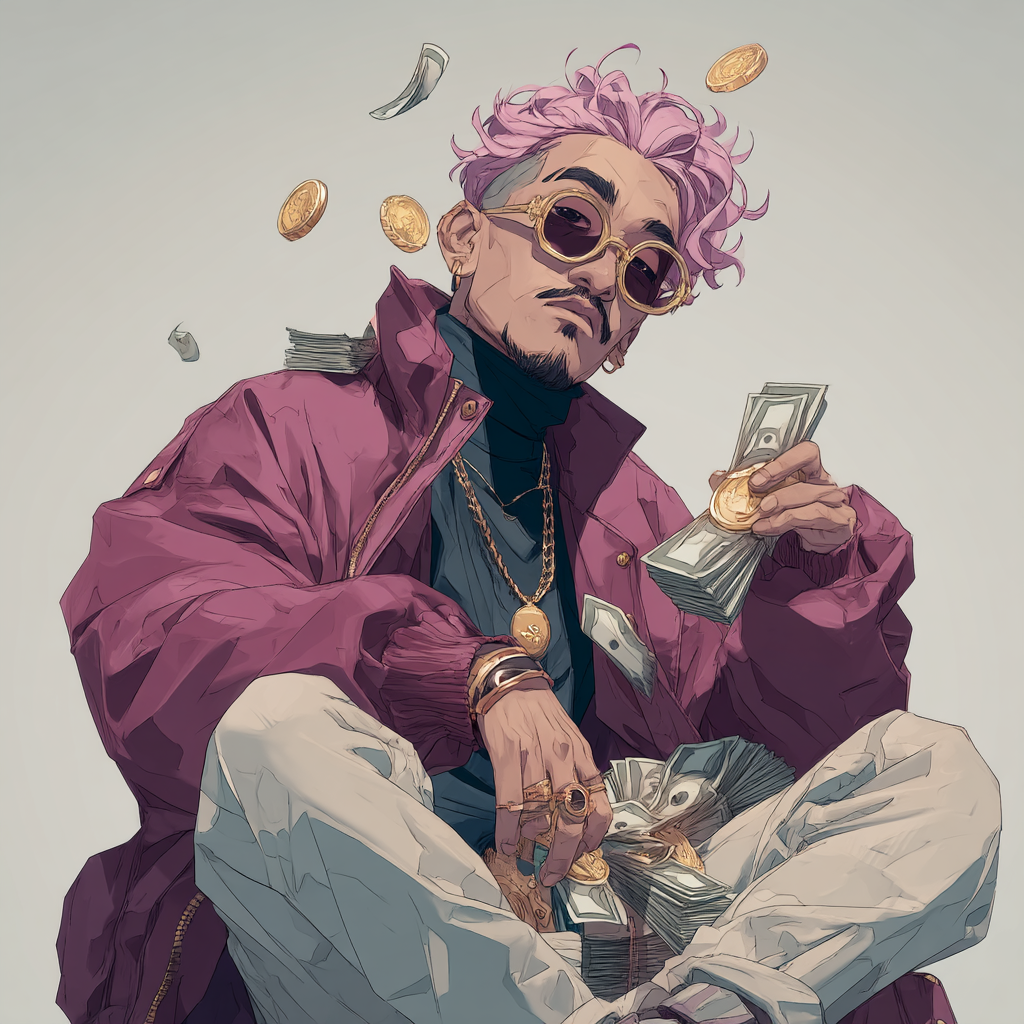
How Do Artists Make Money? A Complete Guide to Galleries, NFTs, AI, and Direct Sales
For generations, artists were told a single story: get discovered, get represented, get lucky. Galleries were the gate. Curators were the guards. Everyone else waited outside, portfolio in hand, hoping for permission.
That story is breaking.
Today, artists make money in more ways than at any point in human history. Not because the system suddenly became fair—but because artists learned how to outflank it. Galleries still matter. NFTs reshaped ownership. AI exploded production. Direct sales removed the middleman entirely.
This guide is for artists, collectors, and creators who want clarity instead of hype. No fantasies. No shilling. Just how artists actually make money today—what works, what doesn’t, and how to choose your path.
This is not about selling out.
This is about survival, leverage, and control.

Is Investing in Art the New Crypto? What You Need to Know
A few years ago, everyone was talking about crypto. Bitcoin millionaires, Dogecoin memes, NFTs — it felt like the entire world was running to stake a claim in the digital gold rush.
Is Solflare Wallet Safe? Unveiling Security Features You Need to Know
Today, let's dive into an important question that’s been floating around: Is Solflare Wallet Safe? If you’re dealing with digital assets, security should be at the top of your list. It’s the backbone of trust in any crypto wallet, and Solflare has been making waves in the space. But let’s break it down—what makes Solflare Wallet secure, and how does it compare to other options like Phantom?