
Would Dali Use AI?
Greetings Warriors,
I’m going to ask you a question that sounds simple—but if you sit with it long enough, it starts to itch at your brain like a half-finished dream.
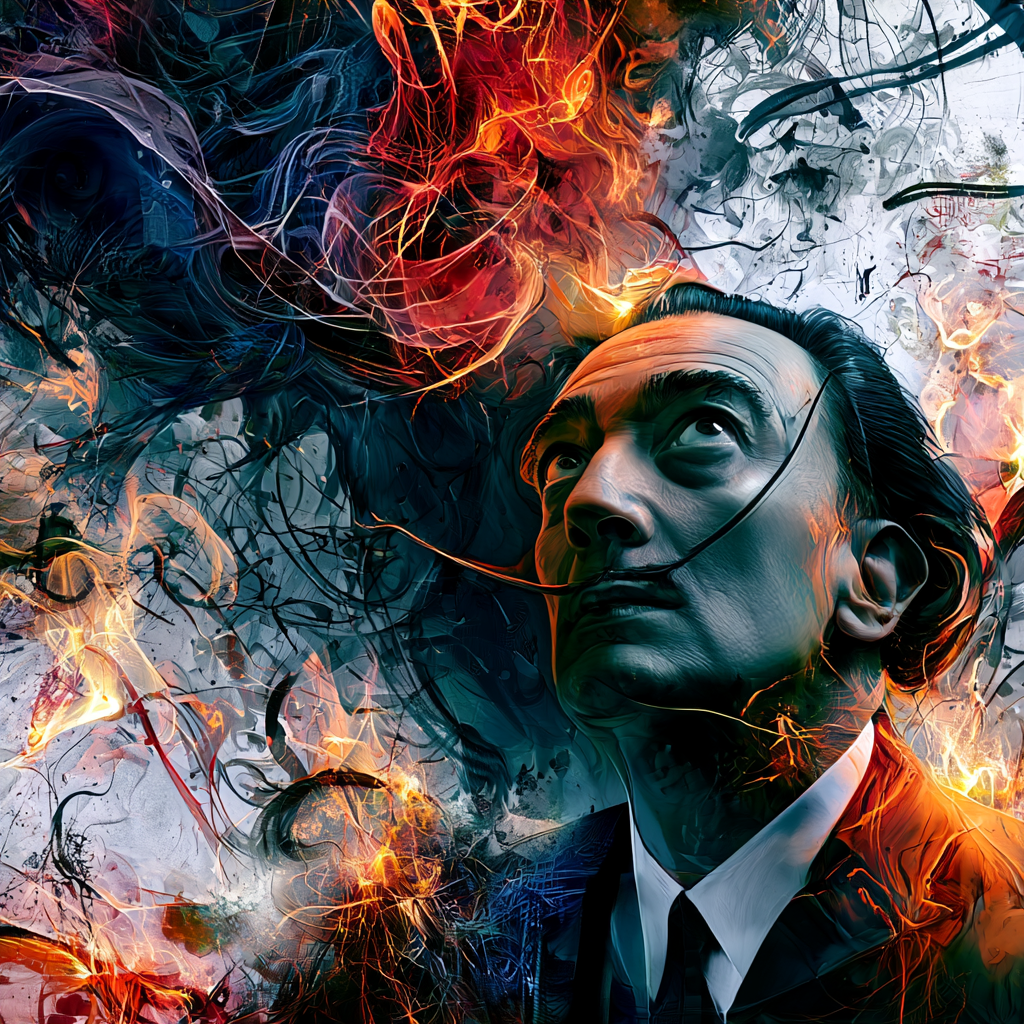
What would Salvador Dalí do with AI?
Not the clean, polished answer. Not the safe museum-approved take. I mean really—drop him into 2026 with Midjourney tabs open, Sora rendering in the background, prompts flying like spells—and watch what happens.
Would he reject it?
Would he embrace it?
Or would he do what he always did… twist it into something so strange that we wouldn’t even recognize the tool anymore?
I’ve been thinking about this a lot lately. Especially watching the art world wrestle with AI like it’s some kind of invading force. You’ve got one side calling it the death of art, the other side calling it the future, and somewhere in between—you’ve got artists just trying to survive another platform collapse, another shift in the ground beneath their feet.
So let’s walk this out together, because this isn’t just about Dalí.
This is about us.
Between the wounds of war and the whispers of love lies the battlefield of the heart. These pages bleed passion, ache with loss, and stand defiant in hope. Step inside, where swords clash with sonnets, and discover that even in chaos, love dares to bloom.
Where love, loss, fear, hope, and memory quietly coexist. Love is not always loud or perfect; sometimes it is heavy, tender, and aching, shaped by time and experience. These words were born from moments of connection and moments of absence, from caring deeply and learning how to let go. Within these pages is an attempt to honor love in all its forms—the kind that holds us together, the kind that breaks us open, and the kind that teaches us how to keep going.
The Man Who Wouldn’t Follow Rules
Before we even touch AI, we need to understand one thing. Dalí didn’t respect boundaries.
This is the same man who painted melting clocks in The Persistence of Memory and said, in his own way, “Reality is negotiable.” He didn’t just paint what he saw—he painted what the mind couldn’t quite explain.
Surrealism wasn’t about beauty. It wasn’t about technique. It was about disrupting perception. Dreams. Hallucinations. Double meanings. Psychological traps hidden inside images. Dalí didn’t want you to understand his work right away. He wanted you to feel unsettled first, then slowly realize that something deeper was pulling at you.
Now ask yourself this: “What is AI doing right now?”
It’s generating images that don’t quite exist. Faces that are almost human. Landscapes that feel familiar but impossible. Compositions that look like dreams someone forgot to wake up from. That’s not a coincidence, it’s overlapping the system.

"Potion Number 9" is an enthralling piece of abstract art that captures the essence of mystery and transformation. The artwork serves as a visual representation of alchemy, blending ethereal forms and vibrant colors to create a potion of visual enchantment.
Would Dalí Use AI?
Let’s cut through the noise. Yes, without hesitation and without apology. But not in the way most people think. Dalí wasn’t loyal to tools. He was loyal to impact.
Paint was just a medium. Film was just a medium. Photography, sculpture, performance—he used whatever got him closer to the psychological effect he wanted. AI would be no different. If anything, it would be irresistible to him. Because AI doesn’t just create—it hallucinates(quite literally sometimes lol). And Dalí built his entire identity on controlled hallucination. He had a method for it—the paranoiac-critical method. A way of forcing his brain to see multiple images inside one form. A face that becomes a landscape. A body that becomes architecture. Reality folding in on itself.
AI does that instantly. No meditation. No mental strain. No waiting for the subconscious to surface. You type a prompt—and the dream appears. You already know where this is going. Dalí wouldn’t ask, “Should I use AI?”
He’d ask, “How far can I push it before it breaks people?”
The First Prompt Dalí Would Write
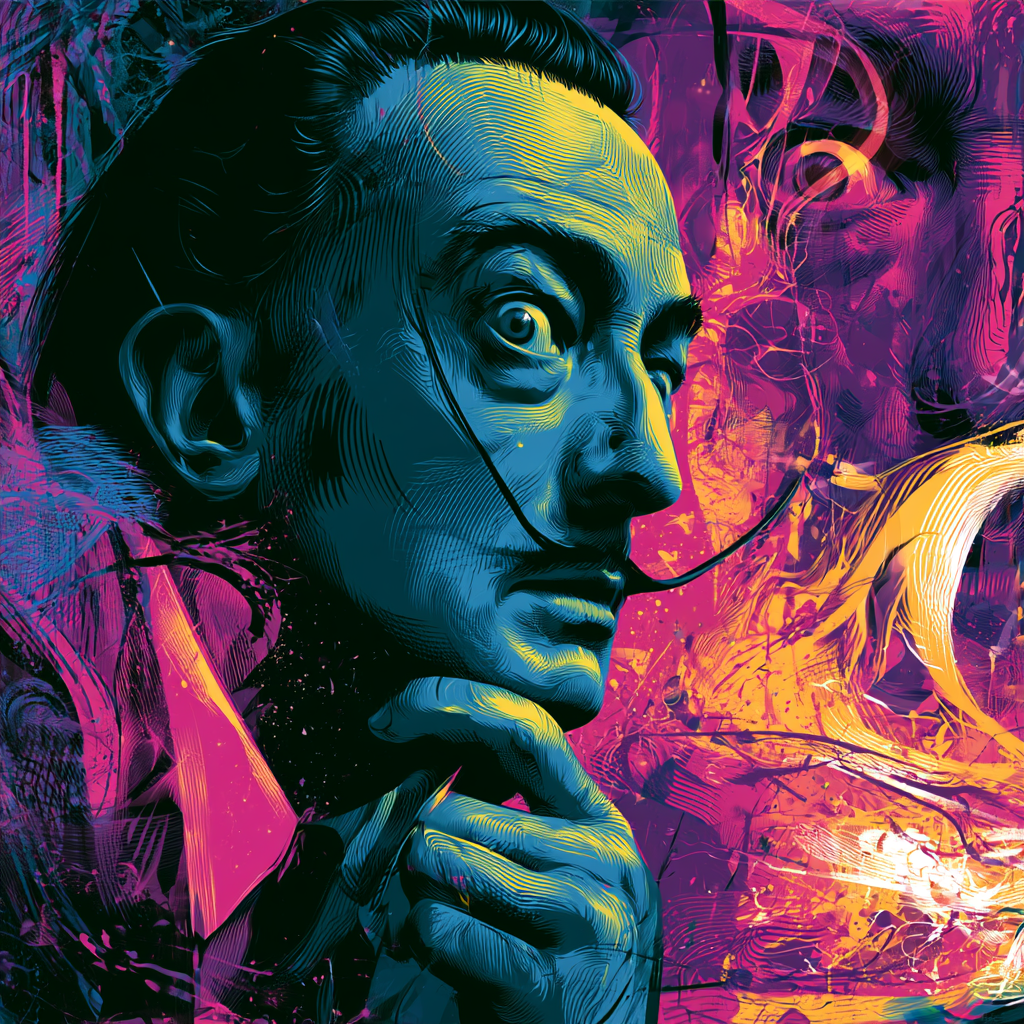
Picture this, Dalí sitting at a screen, mustache sharp as ever, eyes wide like he’s just discovered fire for the second time.
He types:
“Melting time devouring itself in a desert made of human skin, ants crawling through the veins of memory, a face hidden inside the collapse of a cathedral.”
He hits enter.
And instead of spending weeks painting, the image appears in seconds.
You think he’d be scared?
No. He’d laugh. Not because it’s perfect—but because it’s raw material.
Dalí didn’t care about first drafts. He cared about what could be extracted from them. He’d generate hundreds, no…Thousands. Each one slightly different. Slightly off. Slightly more disturbing. And then he’d do what separates a true artist from someone just pressing buttons: He’d choose.
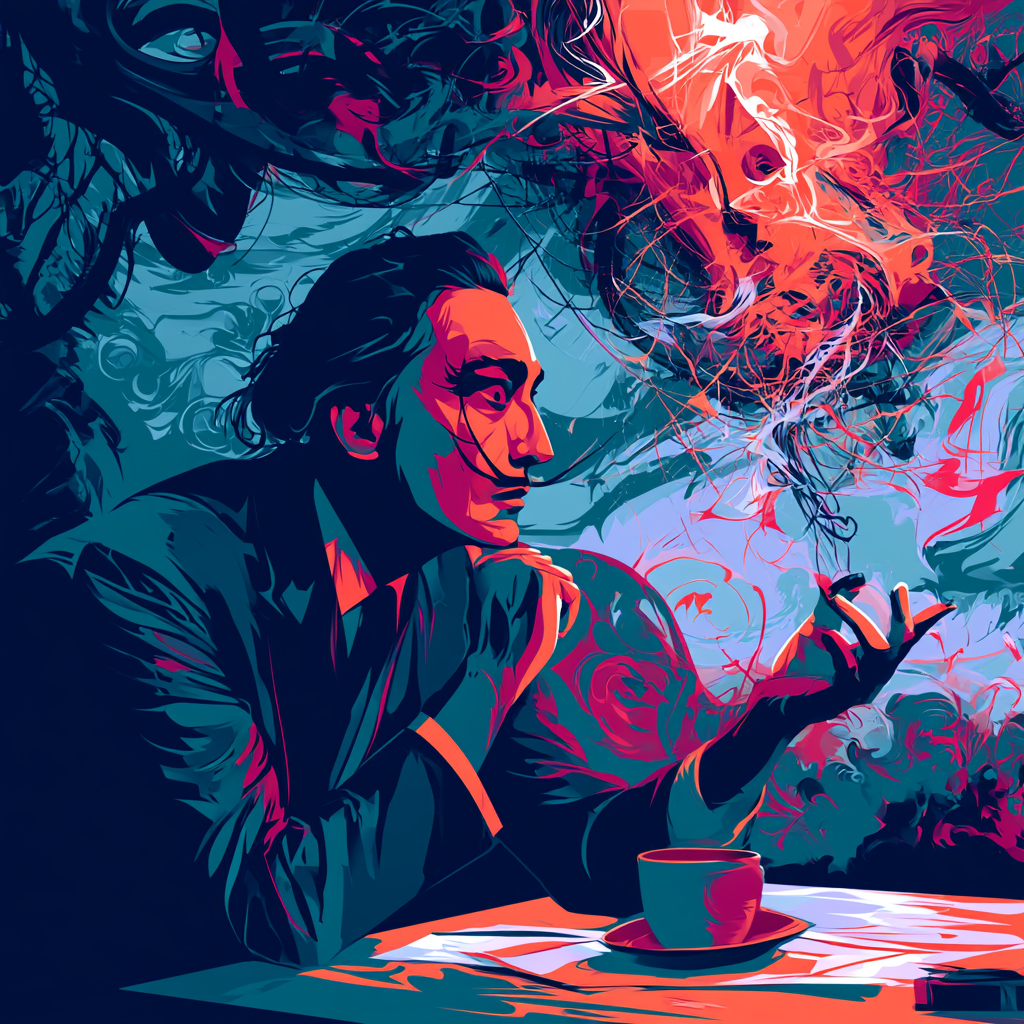
The Power of Selection
This is where people misunderstand AI art. They think the machine is the artist. But Dalí would flip that narrative immediately. He’d say:
“The machine dreams… but I decide which dream lives.” That’s authorship, selection is power, and curation is identity.
Dalí wouldn’t just generate images and post them. He’d build a myth around them. He’d take AI outputs and:
Paint over them
Distort them further
Combine multiple generations into one narrative
Turn still images into moving dream sequences
He wouldn’t stop at the tool. He’d absorb it into his process. And suddenly, AI wouldn’t feel like a shortcut. It would feel like an extension of his mind.
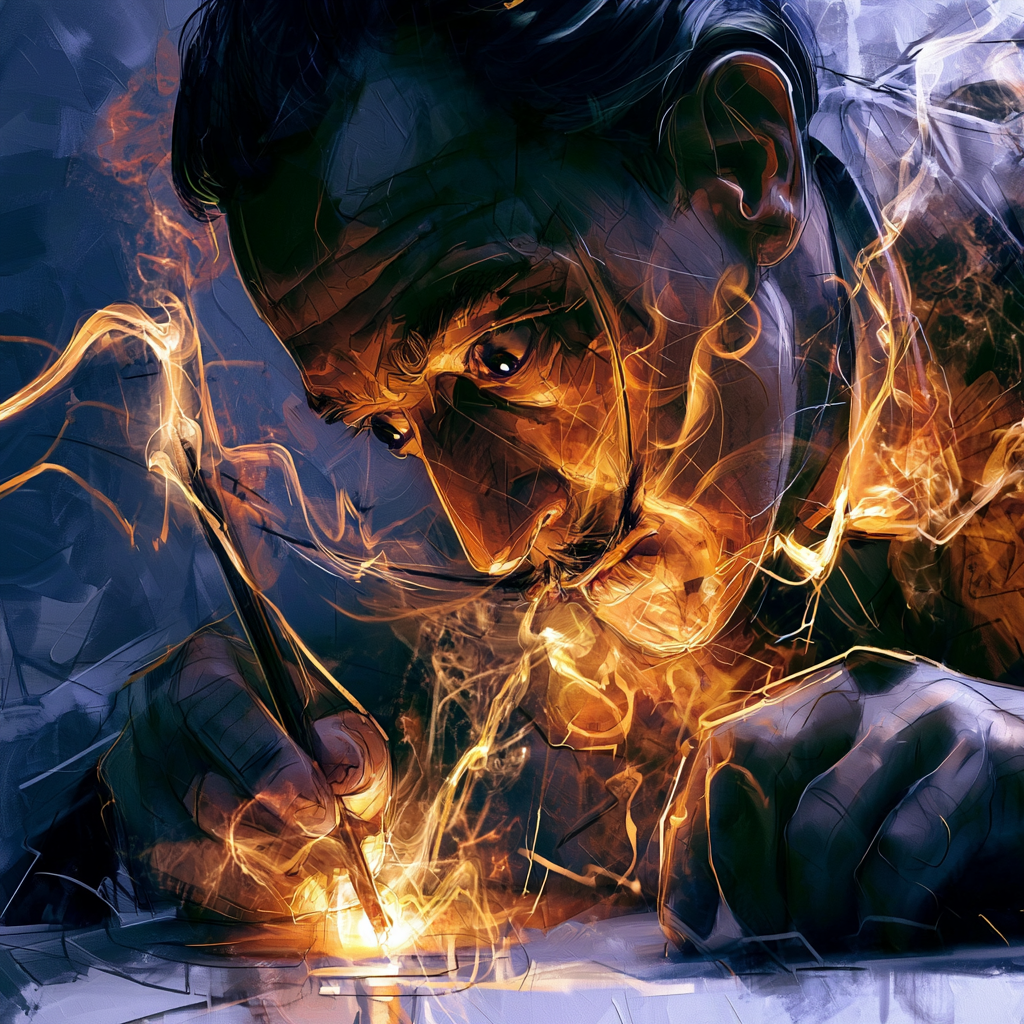
Control vs Chaos
Here’s where the tension lives. Dalí loved chaos—but he loved controlling chaos even more. AI introduces randomness, unpredictability, and glitches, and artifacts. Most people see that as a flaw. Dalí would see it as a feature. But—and this is important—he would never let the machine fully take over. Because Dalí wasn’t just creating art. He was creating Dalí!
The persona. The spectacle. The brand before branding was even a thing.
He signed his work. He performed his identity. He made himself part of the art.
So while he’d embrace AI, he’d also dominate it. He’d refine prompts like a scientist. Manipulate outputs like a magician. Reframe results like a storyteller. The final piece wouldn’t be “AI art.” It would be Dalí art made with AI. And that distinction matters more than people want to admit.

The Exhibition That Would Break the Internet
Let’s take it further. Dalí wouldn’t stop at images, he’d build experiences. Imagine walking into a gallery—not a quiet white room, but a fully immersive environment. Walls shifting, clocks melting in real time, and faces forming and dissolving as you stare at them. AI-generated visuals reacting to your movement. A room where no two people see the same thing. A dream that evolves while you’re inside it.
He’d combine:
AI visuals
Film
Sound
Performance
And create something that isn’t just viewed—it’s lived. Before people even figured out what “AI installations” could be, Dalí would already be ten steps ahead. And critics? They’d be scrambling to catch up.
The Controversy (Because Of Course There Would Be)
Let’s not pretend this would go smoothly. Dalí lived for controversy. You think the current AI debate is loud? Drop Dalí into it and watch it explode. He’d poke at both sides.
To the traditionalists:
“You fear the machine because it exposes your limitations.”
To the AI enthusiasts:
“You celebrate the tool but forget the soul.”
He might even stage something outrageous.
An exhibition titled:
“Human vs Machine.” Half the works labeled “human-made.” Half labeled “AI-generated.” Except the labels are wrong, or meaningless, or constantly changing.
People arguing in the gallery. Collectors confused. Critics writing essays trying to decode something that was never meant to be decoded.
And Dalí? Standing in the corner, smiling. Because confusion is power.
The Market Would Lose Its Mind
Let’s be honest—the art market would not know what to do with him. You’d have collectors asking:
“Is this original?”
“Is this AI?”
“Is this worth anything?”
And Dalí would respond in the only way he knew how. By making it impossible to answer. He’d sell AI-assisted works at absurd prices. Not because they’re “pure,” but because they’re Dalí. Because the market doesn’t just buy art. It buys narrative. It buys identity. It buys belief. And Dalí understood that better than most. He’d turn AI into a spectacle—and then monetize the spectacle. Just like he always did.
And What About Us?
This is where it comes back to you. To me. To every artist trying to navigate this moment. Because we’re living through something similar. Platforms are collapsing, value is shifting, and new tools emerging faster than we can process.
I’ve felt it myself. That moment when something you believed in—something that felt permanent—suddenly cracks. You start questioning everything. And it feels like both an opportunity and a threat at the same time. Dalí wouldn’t run from that tension. He’d step into it.
Final Reflection: The Dream Continues
So would Dalí accept AI as a medium? Not only would he accept it—he’d reshape it. He’d bend it, stretch it, distort it until it became something uniquely his. And in doing so, he’d remind us of something we already know but keep forgetting. Art has never been about the tool, It’s about the vision behind it and the courage to explore the unknown. The willingness to step into chaos and come back with something meaningful.
AI isn’t the end of art, it’s just another chapter. And like every chapter before it—it will reward the ones who dare to push it further than anyone else is comfortable going.
So the real question isn’t what Dalí would do. It’s what you’re going to do.
Because the tools are here. The dream is waiting. And the next move?
That’s yours, Warrior.
If you enjoyed this article, you can read more below:
Frida Kahlo Controversy: Why Mexico vs Spain Is Sparking a Cultural Debate