
Van Gogh Painted Himself Broken — 137 Years Later, His Hidden Self-Portrait Returns
Greetings Warriors,
There are moments in life when everything seems to fall apart at once, when the mind is exhausted, the body is wounded, friendships disappear, and the future looks nothing like what we imagined it would become. Most of us would probably want to hide during those moments, close the door, disappear from the world for a while and return only when the wounds have healed.
Vincent van Gogh did something different. He looked into a mirror. His ear was wrapped beneath an enormous white bandage. His face looked tired and pale. His relationship with fellow artist Paul Gauguin had collapsed spectacularly, the dream of building an artistic community in southern France was falling apart, and Van Gogh had just experienced one of the most infamous psychological crises in the history of art.
Yet he picked up his brush. And he painted himself exactly as he was.
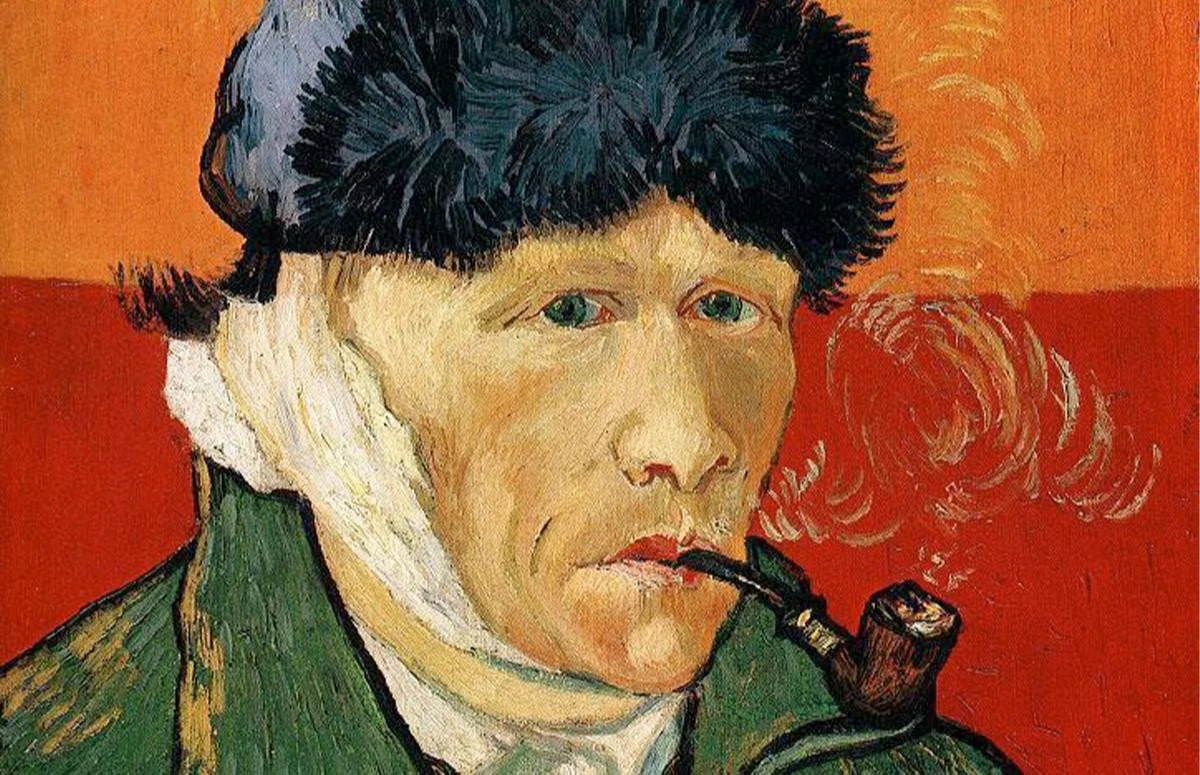
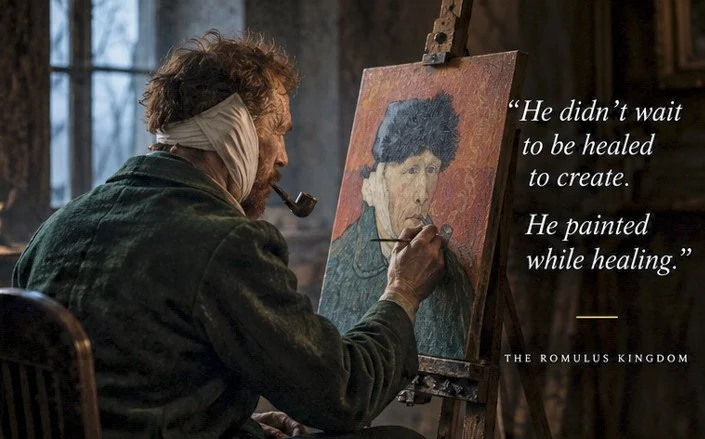
Wounded, tired, imperfect, but still standing. The result was Vincent van Gogh's Self-Portrait with Bandaged Ear and Pipe, painted in Arles in January 1889, only weeks after the horrifying incident in which Van Gogh mutilated his ear.
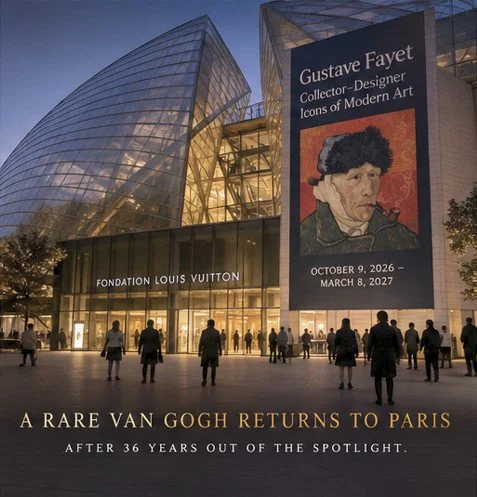
Now, nearly 137 years later, this deeply personal painting is preparing for another remarkable chapter in its already extraordinary life. After decades largely hidden from temporary exhibitions, the privately owned Van Gogh masterpiece is returning to public view in Paris at the Fondation Louis Vuitton, where it will appear in the exhibition Gustave Fayet: Collector–Designer, Icons of Modern Art beginning October 9, 2026.
It has not appeared in a temporary exhibition since 1990 and has not been exhibited in France since 1937. And Warriors, that alone would make this a great art story. But once you discover everything this painting has survived—the breakdown of Van Gogh and Gauguin, the death of Van Gogh, the rise of its value, Nazi looting, Hermann Göring, a secret journey into Switzerland, postwar restitution and decades inside one of the world's great private collections—the painting begins to feel almost as resilient as the man who painted it.
Between the wounds of war and the whispers of love lies the battlefield of the heart. These pages bleed passion, ache with loss, and stand defiant in hope. Step inside, where swords clash with sonnets, and discover that even in chaos, love dares to bloom.
Where love, loss, fear, hope, and memory quietly coexist. Love is not always loud or perfect; sometimes it is heavy, tender, and aching, shaped by time and experience. These words were born from moments of connection and moments of absence, from caring deeply and learning how to let go. Within these pages is an attempt to honor love in all its forms—the kind that holds us together, the kind that breaks us open, and the kind that teaches us how to keep going.
Van Gogh Painted Himself When He Was Still Broken
To understand this painting, we have to return to Arles, France, in December 1888. Van Gogh had moved to southern France earlier that year searching for something new. He dreamed of creating an artistic community where painters could live together, exchange ideas and inspire one another. He called his home the Yellow House. Van Gogh desperately wanted other artists to join him, and eventually Paul Gauguin arrived.
At first, this must have felt like the beginning of Van Gogh's dream. Two brilliant artists living together in southern France, discussing painting, arguing about ideas, exploring color and pushing each other creatively.
But dreams don't always survive reality. Van Gogh and Gauguin had radically different personalities and artistic philosophies, and their relationship became increasingly tense. Arguments became more frequent, emotions intensified, and by December everything began unraveling.
On the night of December 23, 1888, Van Gogh suffered the crisis that would become inseparable from his legend. After a confrontation surrounding Gauguin's departure, Van Gogh mutilated part of his left ear with a razor. The exact circumstances surrounding the incident remain debated, but what followed is undeniable: Van Gogh was hospitalized, Gauguin left Arles, and the artistic brotherhood Van Gogh had imagined collapsed.
Imagine the emotional destruction. The person you believed would help build your dream is gone. Your mental health is deteriorating. Your body is injured. People around town are beginning to view you as unstable. And the future you imagined suddenly disappears. Then, only weeks later, Van Gogh sits in front of a mirror and paints.
That is what makes Self-Portrait with Bandaged Ear and Pipe so powerful to me. He didn't wait until he was healed to create. He created while healing. There is an enormous difference. We often tell ourselves that we will begin again when everything is perfect. We will chase our dream when the money is right, start creating when life becomes easier, rebuild when the pain disappears or finally become who we want to be when the world stops beating us down.
But life rarely gives us that perfect moment.
Sometimes Warriors have to build while wounded.
Van Gogh did.

"Potion Number 9" is an enthralling piece of abstract art that captures the essence of mystery and transformation. The artwork serves as a visual representation of alchemy, blending ethereal forms and vibrant colors to create a potion of visual enchantment.
The Bandage Became Part of the Art
Look closely at the painting and Van Gogh isn't attempting to hide what happened. The bandage dominates the side of his head. He wears a heavy green coat and fur-lined hat, while a pipe rests naturally between his lips against an intense orange-red background. The colors are unmistakably Van Gogh. Green pushes against red and orange. His pale face sits between them. The thick white bandage becomes almost impossible to ignore.
Yet despite everything that had happened, there is something surprisingly controlled about the image. Van Gogh isn't screaming. He isn't crying. He isn't dramatically presenting himself as a victim. He simply looks back at us. That quietness makes the painting even stronger. The Fondation Louis Vuitton describes the portrait as presenting an artist who is wounded yet determined to continue painting, and I believe that captures something essential about the work. Van Gogh was documenting himself at one of the lowest points of his life without pretending the wound wasn't there.
That is incredibly human, our scars become part of us. Sometimes nobody else can see them. But the goal isn't always to erase every scar. Sometimes the goal is simply to continue despite them.
There is also an interesting art-historical possibility hidden inside another seemingly ordinary part of the painting. His the pipe. Shortly before his crisis, Van Gogh and Gauguin had visited the Musée Fabre in Montpellier, where Van Gogh admired the work of Gustave Courbet. Among Courbet's works was L'Homme à la Pipe, a self-portrait depicting Courbet smoking a pipe.
Van Gogh's own painting was also historically referred to as L'Homme à la Pipe. It is possible that Courbet's self-portrait remained somewhere inside Van Gogh's imagination when he decided how to portray himself. If so, Van Gogh wasn't simply recording an injury. He may also have been placing himself within a much older tradition of artists confronting themselves through self-portraiture.
The Painting Vanished Into the Hands of the Nazis
Van Gogh died in 1890, only about a year and a half after creating the painting. He never witnessed what would eventually happen to his reputation. Today we speak about Van Gogh as one of the most famous artists who ever lived. His paintings fill museum gift shops, books, posters, clothing and exhibitions around the world, while his masterpieces are worth staggering amounts of money.
But Van Gogh never lived inside that world. The painting did. And its journey became extraordinary. Eventually, Self-Portrait with Bandaged Ear and Pipe entered the collection of the famous Parisian art dealer Paul Rosenberg, one of the most important dealers of modern European art.
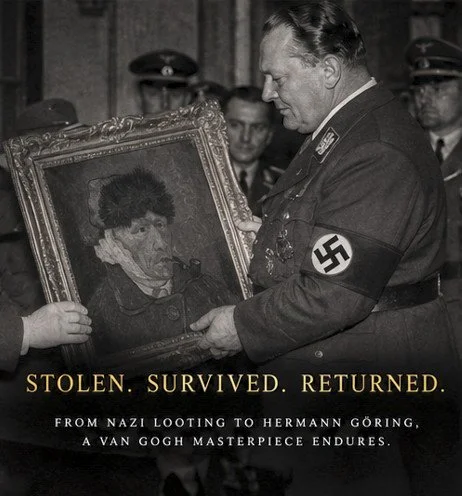
Rosenberg was Jewish. When Nazi Germany occupied France during World War II, his collection became a target. In 1941, Van Gogh's self-portrait was seized. Think about the strange journey this canvas had already experienced. Van Gogh paints himself wounded in Arles. Van Gogh dies. His reputation grows. Collectors begin recognizing his genius. The painting moves through the art world. Then Europe descends into war, and decades after Van Gogh's death, his wounded face becomes property stolen during one of history's greatest campaigns of cultural looting.
Eventually the painting came into the possession of Hermann Göring, one of the most powerful figures in Nazi Germany and one of the most notorious beneficiaries of Nazi art looting. Göring accumulated an enormous art collection during the war, much of it built through theft, coercion and the persecution of Jewish collectors. Somehow, Van Gogh's wounded self-portrait ended up caught inside this machinery of greed.
The painting was later moved into Switzerland in a diplomatic bag.
Yes, Warriors. A Van Gogh self-portrait reportedly traveled secretly across borders inside diplomatic luggage. If somebody wrote this into a movie, you might think the writer was exaggerating. But the story becomes even better. The painting survived.
The Van Gogh Was Recovered After World War II
In 1945, as Europe emerged from the devastation of World War II, the painting was recovered in Zürich. Three years later, in 1948, it was restituted to Paul Rosenberg. That word—restituted—matters. Because one of the great unresolved stories of twentieth-century art remains the enormous amount of cultural property stolen, confiscated, forcibly sold or displaced during Nazi rule. Families were murdered, collections were scattered, Van Gogh's self-portrait was fortunate. It found its way back.
Eventually the painting entered another legendary collection, that of Greek shipping magnate Stavros Niarchos, who reportedly acquired it during the 1970s for somewhere around $2 million to $3 million. At the time, that was an extraordinary amount of money. Today it sounds almost inexpensive.
Because if this Van Gogh ever reached the open market now, we would be talking about an entirely different financial universe.
The painting's current insurance or indemnity valuation hasn't been publicly disclosed, but Van Gogh specialist Martin Bailey has suggested it could potentially be valued somewhere around $200 million to $300 million for the Paris exhibition.
That isn't an auction result, and we shouldn't pretend it is. But it gives us an idea of what kind of masterpiece we're discussing. A painting purchased decades ago for a few million dollars could now potentially be valued in the hundreds of millions. And the man who painted it struggled financially during his lifetime. Art history can be brutally ironic.
Van Gogh and Gauguin Will Meet Again in Paris
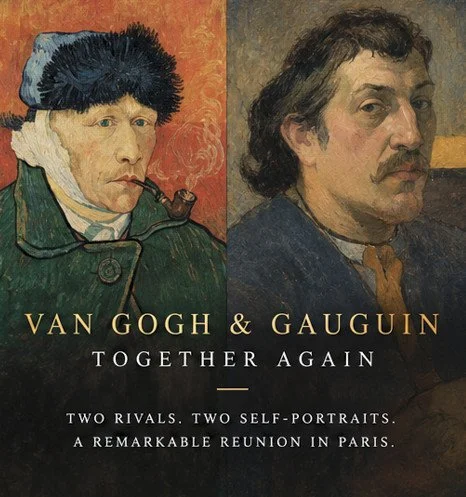
There is another beautiful piece of symbolism surrounding the upcoming exhibition. The Fondation Louis Vuitton exhibition explores the extraordinary collection assembled by French artist and collector Gustave Fayet, bringing together works associated with artists including Cézanne, Degas, Renoir, Toulouse-Lautrec, Matisse, Bonnard and others. And Gauguin; among the works being shown is Paul Gauguin's Self-Portrait with a Palette from 1898.
That means Van Gogh and Gauguin will effectively meet again through their self-portraits. I love that.
These were two men whose brief period living together ended in one of the most infamous episodes in art history. They argued, and separated. Van Gogh was wounded. Gauguin left Arles. They continued down completely different paths. Both eventually died. Generations passed. And now their faces will share an exhibition in Paris.
There is something poetic about art's ability to do that.

Why This Rare Van Gogh Self-Portrait Returning to Public View Matters
Self-Portrait with Bandaged Ear and Pipe hasn't appeared in a temporary exhibition since 1990. It hasn't been exhibited in France since 1937. For decades, museums reportedly sought opportunities to borrow the painting without success. That makes its appearance at the Fondation Louis Vuitton beginning October 9, 2026, particularly special. Millions of people know Van Gogh and The Starry Night. And, of course, practically everyone knows the story of the ear. But sometimes fame makes us forget the person. Van Gogh becomes an image on a coffee mug and multimillion-dollar auction headline.
We forget that behind those swirling stars was a human being trying desperately to understand himself and the world around him. That is why this particular self-portrait matters. Van Gogh isn't giving us a fantasy. He is giving us himself during the aftermath of catastrophe. There is no glamorous legend. There is simply Vincent, bandaged and smoking his pipe.
The exhibition Gustave Fayet: Collector–Designer, Icons of Modern Art runs at the Fondation Louis Vuitton in Paris from October 9, 2026 through March 8, 2027, giving the public a rare opportunity to stand face-to-face with a painting that has spent most of the modern era outside temporary exhibitions.
For anyone who loves Van Gogh, that alone makes this exhibition special.
But I think the story behind the painting makes the experience much deeper.
Van Gogh Painted the Warrior We Rarely See
I have always found something fascinating about Van Gogh. Not simply because he was a brilliant painter. Not because his paintings are worth hundreds of millions today. Not because he became one of the most recognizable artists who ever lived. I am fascinated by the fact that he kept creating. Van Gogh's life wasn't the romantic fairy tale we sometimes build around tortured artists. He struggle and failed, doubted himself. Van Gogh was human and dealt with struggles of being human.
Yet he produced more than 2,000 artworks, including roughly 900 paintings, during a relatively short artistic career. That doesn't mean we should romanticize suffering. Pain doesn't automatically create great art, and artists shouldn't need to destroy themselves to create something meaningful. But perseverance matters. And that is what I see when I look at Self-Portrait with Bandaged Ear and Pipe.
Life is going to hit all of us eventually, Warriors. Maybe not with the same struggles Van Gogh faced, but nobody escapes life without scars. We watch dreams collapse that we once believed were guaranteed. Sometimes we even lose pieces of ourselves. And during those moments, the easiest thing in the world is to believe the story is finished.
Van Gogh's portrait reminds me that the wound and the ending are not necessarily the same thing. Sometimes the wound becomes another chapter. This painting survived Van Gogh.
It survived the collapse of his friendship with Gauguin. And now, nearly 137 years after a wounded man looked into a mirror in Arles and lifted his brush, people will once again stand in front of that same canvas in Paris.
They will see the bandage. They will see the pipe. They will see the tired eyes. But I hope they see something else. He kept going. Perhaps that is why Van Gogh still speaks to us so powerfully after all these years. His paintings aren't merely beautiful. They feel human.
Behind those violent yellows, impossible blues, twisting skies and fields of color was someone fighting his own battles while desperately trying to create something meaningful before his time ran out. He couldn't possibly have known that generations later people would travel across the world to see his work.
He couldn't know that this wounded self-portrait might someday be valued in the hundreds of millions of dollars. He couldn't know that his name would become immortal. All Van Gogh knew in January 1889 was that he was still alive. And there was still a canvas in front of him.
Sometimes, Warriors, that is enough. You don't have to be completely healed to move forward. You don't have to have every answer. You don't have to wait until every wound disappears. Sometimes you simply pick up the brush.
Until next time, Warriors.
If you enjoyed this article, you can read more below:
Frida Kahlo Controversy: Why Mexico vs Spain Is Sparking a Cultural Debate