

Renoir Museum Robbed: Inside the $10 Million French Riviera Art Heist

Greetings Warriors,
Imagine breaking into the final home of one of history's greatest Impressionist painters before sunrise, cutting through a fence, entering through the garden, removing four paintings from the walls and disappearing before police can catch you. This isn't the plot of the next Netflix art-heist movie. It happened.
On the morning of September 8, 2026, two thieves broke into the Musée Renoir in Cagnes-sur-Mer on the French Riviera and targeted four paintings by legendary French Impressionist Pierre-Auguste Renoir. The alarm sounded at approximately 5:48 a.m., police arrived only five minutes later, and yet the thieves still managed to escape.
They didn't get everything they came for. Two paintings were abandoned in the museum's gardens as the burglars fled, apparently forced into a rushed escape by the alarm and rapid police response. But two Renoir paintings remain missing.
The works targeted during the robbery have been valued at approximately €9 million—around $10.5 million—turning what might sound like a bizarre early-morning burglary into one of the biggest art-crime stories of 2026.
Warriors, the more I read about this robbery, the stranger the story becomes, because the thieves didn't simply steal paintings from another museum.
They stole Renoirs from Renoir's home. And one of those paintings had already survived one of the darkest chapters in European history.

Between the wounds of war and the whispers of love lies the battlefield of the heart. These pages bleed passion, ache with loss, and stand defiant in hope. Step inside, where swords clash with sonnets, and discover that even in chaos, love dares to bloom.
Where love, loss, fear, hope, and memory quietly coexist. Love is not always loud or perfect; sometimes it is heavy, tender, and aching, shaped by time and experience. These words were born from moments of connection and moments of absence, from caring deeply and learning how to let go. Within these pages is an attempt to honor love in all its forms—the kind that holds us together, the kind that breaks us open, and the kind that teaches us how to keep going.
How Thieves Broke Into the Renoir Museum on the French Riviera
The robbery happened shortly before 6 a.m. at the Musée Renoir in Cagnes-sur-Mer, a beautiful town on the French Riviera roughly ten miles west of Nice. This isn't some giant modern museum surrounded by massive concrete walls. The museum is located at Les Collettes, the estate where Pierre-Auguste Renoir spent the final years of his life. He purchased the property in the early twentieth century and continued working there despite suffering from severe rheumatoid arthritis. He died there in 1919.
Today the property preserves not only Renoir paintings but sculptures, furniture, photographs and personal objects associated with the artist, including his easel and wheelchair. For an art lover, this isn't simply a building containing Renoir paintings. It is part of Renoir's story.
That makes what happened there even more disturbing. According to authorities, the thieves appear to have arrived prepared. They reportedly wore helmets, gloves and combat-style equipment and carried tools including an electric cutting device or saw. They cut through the museum's exterior garden fence, crossed the grounds and entered the building from the ground floor through the garden side. Then they went for the paintings.
This wasn't somebody wandering into a gallery and suddenly deciding to grab something from the wall. The mayor of Cagnes-sur-Mer, Bryan Masson, described the thieves as appearing well equipped and well informed about the museum.
At 5:48 a.m., the museum alarm activated. Five minutes later, police were there. Five minutes… Think about how small that window is. The thieves knew they had to move. They fled through the garden, leaving part of their haul behind. But by the time police arrived, two incredibly valuable Renoir paintings had disappeared into the morning.

"Potion Number 9" is an enthralling piece of abstract art that captures the essence of mystery and transformation. The artwork serves as a visual representation of alchemy, blending ethereal forms and vibrant colors to create a potion of visual enchantment.
Which Renoir Paintings Were Stolen?
Four Renoir paintings were initially taken during the robbery.
They were:
Portrait of Madame Stephen Pichon
Young Woman at the Well
Coco Reading
Portrait of Madame Colonna Romano
Fortunately, the thieves didn't escape with all four. Portrait of Madame Pichon and Coco Reading, a portrait of Renoir's young son Claude, were abandoned in the gardens as the thieves fled. That left two paintings missing: Young Woman at the Well and Portrait of Madame Colonna Romano.
Both works belong to the Musée d'Orsay in Paris and had been placed at the Renoir Museum on long-term loan. The four works targeted during the robbery were reportedly valued at approximately €9 million, although placing a simple price on historically important artworks is always complicated.
Renoir is one of the defining artists of Impressionism, and major works by him have sold for tens of millions of dollars. But there is something almost comical about stealing a famous Renoir if your objective is simply to make money.
How exactly do you sell it?
You can't walk into Sotheby's and say: "Greetings, I have this Renoir I found yesterday. What can you give me for it?". Everyone knows it's stolen. You can't post it on eBay. You can't casually bring it to an art dealer. You can't hang it inside your mansion and invite people over without wondering whether someone recognizes it.
The fame that makes the painting incredibly valuable is also what makes it incredibly difficult to sell. That is one of the great paradoxes of art theft. The more famous the masterpiece, the harder it becomes to turn that masterpiece into money.

One of the Missing Renoirs Has Already Survived War and Nazi Looting
This is the detail that transformed the story for me. According to French cultural records, Young Woman at the Well has a history connected to the massive displacement and theft of European art surrounding the Second World War. French authorities classify three of the four works targeted during the robbery as MNR—Musées Nationaux Récupération works. That designation applies to cultural property recovered after World War II whose rightful owners could not be definitively identified. The French state holds such works provisionally rather than treating them in the same way as ordinary national museum property.
Young Woman at the Well is believed to have been looted during the Nazi era before eventually being recovered in Bavaria after the war and returned to France. Now think about that journey. A Renoir survives the turmoil of World War II. It disappears amid the enormous Nazi-era displacement of art. It is recovered, returned to France, spends decades preserved inside the French museum system. And then, more than eighty years after the war ended, thieves cut through a fence on the French Riviera and steal it again.
There is something heartbreaking about that. Artwork doesn't know history, but artwork carries history. This Renoir has already traveled through one of the darkest periods of modern European history.
Now it is missing again.
I hope this chapter ends with the painting returning home.
Why Steal a Famous Renoir If You Can't Sell It?
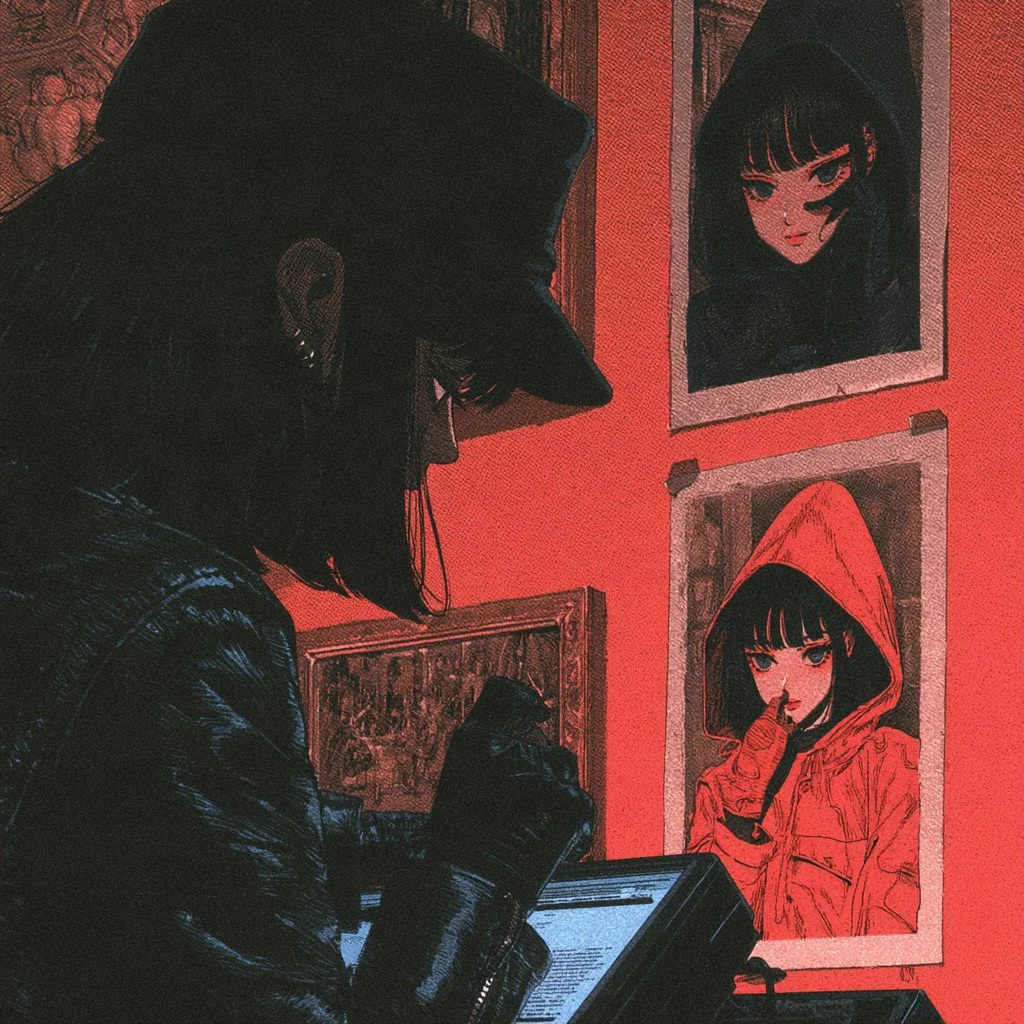
This is the question I kept asking myself. Why risk years in prison stealing something worth millions of dollars if almost every serious collector, auction house, museum and art dealer in the world knows it is stolen? Stolen masterpieces don't operate like ordinary stolen property. If someone steals a watch, the watch can be sold. If someone steals diamonds, they can potentially be separated, recut and moved through illicit markets. Gold can be melted. Jewelry can be dismantled. But you can't melt a Renoir. You can't repaint Young Woman at the Well and somehow maintain its value.
The thing making it valuable is the fact that it is a Renoir. And the moment you prove that, you also prove you're trying to sell one of the most recognizable stolen artworks in Europe. Art-crime experts therefore point to several possible motivations behind major art thefts. Stolen masterpieces can sometimes become bargaining chips within criminal networks, collateral in illicit transactions or leverage during negotiations after an arrest.
Sometimes thieves also dramatically overestimate how easy stolen art will be to monetize.
They see:
€9 million.
They imagine:
€9 million payday.
But those aren't the same thing.
The legitimate market value of a famous painting depends on something criminals cannot easily provide, and that is legitimate ownership.Without provenance and legal title, a multimillion-dollar Renoir can become one of the most difficult objects on Earth to sell.The thieves may therefore have escaped with incredibly valuable paintings while simultaneously acquiring an enormous problem.
France Has a Growing Museum Security Problem
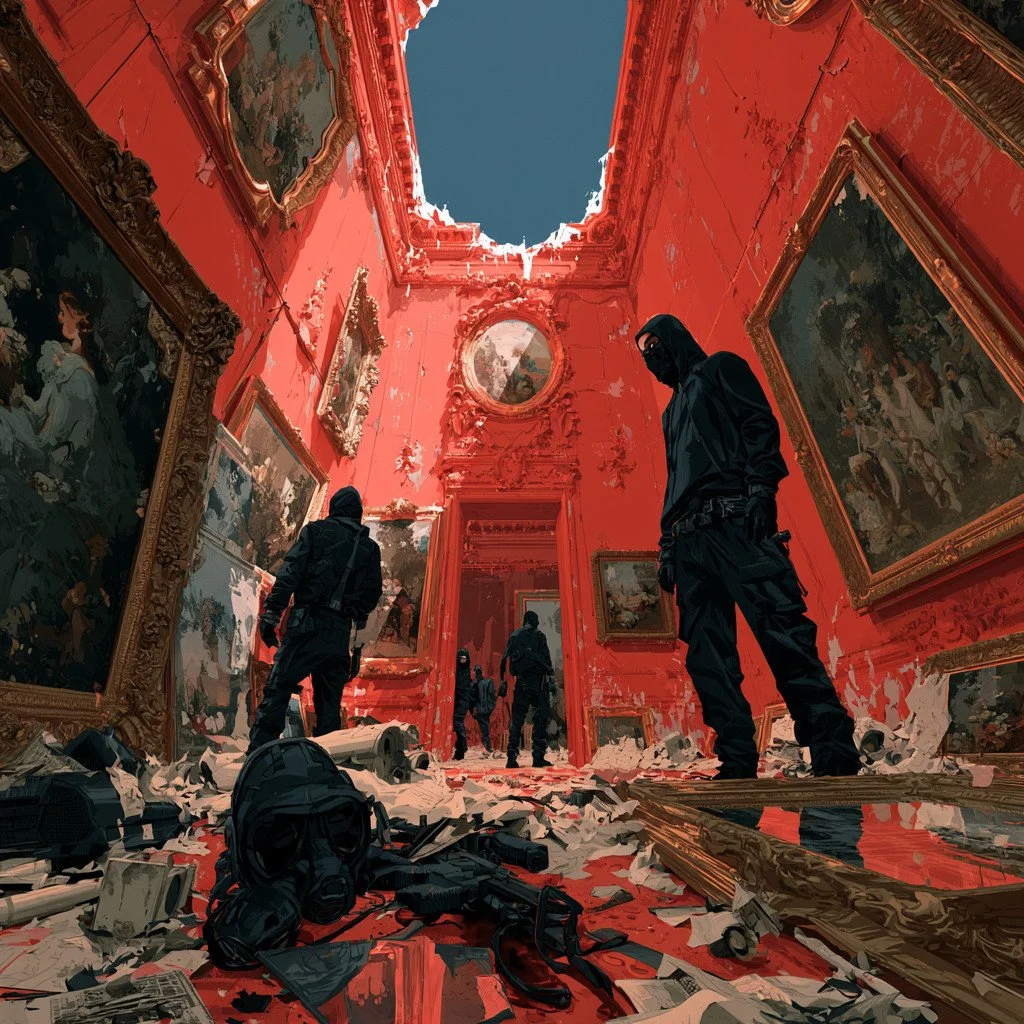
This robbery becomes much more serious when we stop looking at it as an isolated event. France has been dealing with mounting questions about museum security, and a French parliamentary report this year raised concerns about whether museums have sufficient resources and preparation to protect cultural property.
A Culture Ministry survey covering French institutions found troubling gaps in emergency planning and surveillance. Reuters reported that only about one-quarter of institutions surveyed had an emergency and risk-prevention plan, while nearly half lacked video surveillance.
Then there is the wider European problem.
Europol has warned that museum theft is evolving, with some robberies becoming more aggressive and less dependent on the traditional image of sophisticated professional art thieves. And France has already experienced an extraordinary museum robbery recently.
In October 2025, thieves targeted the Louvre, stealing crown jewels valued at approximately €88 million, or more than $100 million.
Now, less than a year later, thieves have targeted Renoir's former home. That should concern anyone who cares about cultural heritage. Because criminals aren't simply stealing expensive objects. They're stealing pieces of collective history. A Renoir doesn't belong culturally only to the person or institution whose name appears on an ownership document. Millions of people may encounter that painting over generations. Families travel across the world to stand in front of it. When an artwork disappears into a criminal network, the public loses access to part of its cultural memory. That is why museum security cannot simply be treated as another operating expense.

The Renoir Museum Robbery Exposes the Strange Reality of Art Crime
There is something deeply strange about the entire concept of stealing masterpieces. The thieves who entered the Renoir Museum apparently knew what they wanted and came prepared to get it. Yet within minutes their plan was already unraveling. The alarm sounded. Police raced toward the museum. The thieves fled. Two paintings ended up abandoned in the dirt outside the very museum they had just been stolen from. Two others disappeared.
Now police are hunting the suspects, investigators are examining the robbery as organized theft, images of the missing paintings are circulating internationally, and the art world knows exactly what to look for. The thieves may possess paintings worth millions of dollars. But they also possess paintings they can barely show anyone. That's the strange world of stolen art.
A masterpiece can simultaneously be worth millions and practically impossible to sell. And perhaps that's why these stories fascinate us so much. Art theft combines two worlds that couldn't seem more different. Beauty and crime.
The artist spends years learning how to create something meaningful, and generations later someone with a saw cuts through a fence before sunrise and tries to turn that meaning into cash. Yet there is another side to these stories that we sometimes forget. The artwork often survives, wars have failed to destroy art, dictators have failed to erase art. Thieves have stolen masterpieces only for those masterpieces to reappear decades later.
Collectors die.
Museums change.
Governments fall.
Borders move.
But somehow these fragile pieces of canvas continue traveling through history.
A Renoir Has Disappeared, But Its Story Isn't Over
Pierre-Auguste Renoir died more than a century ago. Yet on a quiet September morning in 2026, police vehicles surrounded the home where he spent his final years because people were still willing to risk their freedom for paintings created by his hands. There is something extraordinary about that. Art survives its creator, crosses borders, and becomes history. And sometimes it becomes the target of people who see millions of dollars where the rest of us see culture.
As I write this, Young Woman at the Well and Portrait of Madame Colonna Romano remain missing, while French authorities continue searching for the thieves. I hope they're recovered quickly. Not because they're worth millions. But because artwork like this should be seen.
It should inspire the artist who travels across the world simply to stand a few feet away from something painted more than a century ago. That is the true value thieves can never understand.
You can steal the canvas.
You can hide the painting.
You can put a price tag on it.
But you cannot steal what the artist contributed to history.
One of these Renoirs has already survived war, displacement and recovery. Now it has been stolen again. And if history has taught us anything, Warriors, it is that sometimes art is far more resilient than the people trying to possess it. Bring the Renoirs home.
Until next time, Warriors.
Frida Kahlo Controversy: Why Mexico vs Spain Is Sparking a Cultural Debate