
Warrior’s Tale: Pierre-Auguste Renoir The Impressionist Who Painted the Joy of Being Alive
Greetings Warriors!
When we talk about great artists, we have a strange habit of talking about suffering. Vincent van Gogh struggled with his mind and died young. Caravaggio fought his way through life and eventually became a fugitive. Rembrandt experienced financial ruin. Basquiat burned incredibly bright before dying at only 27. The history of art sometimes feels like one enormous collection of beautiful things created by people going through terrible circumstances.
And then you meet Pierre-Auguste Renoir. Renoir looked at the world a little differently. He painted friends laughing together, couples dancing, children playing, women relaxing, people drinking wine, sunlight passing through trees and ordinary Parisians enjoying those small moments in life that we usually don't realize are important until they're gone.
There is something about that philosophy that I appreciate. Life is difficult enough on its own. Sometimes art doesn't need to remind us how terrible everything can be. Sometimes art can simply remind us that being alive can also be beautiful.
And Renoir became one of the greatest painters in history by doing exactly that.
Check out my poem book!
Between the wounds of war and the whispers of love lies the battlefield of the heart. These pages bleed passion, ache with loss, and stand defiant in hope. Step inside, where swords clash with sonnets, and discover that even in chaos, love dares to bloom.
Where love, loss, fear, hope, and memory quietly coexist. Love is not always loud or perfect; sometimes it is heavy, tender, and aching, shaped by time and experience. These words were born from moments of connection and moments of absence, from caring deeply and learning how to let go. Within these pages is an attempt to honor love in all its forms—the kind that holds us together, the kind that breaks us open, and the kind that teaches us how to keep going.
From Painting Porcelain to Painting Masterpieces
Pierre-Auguste Renoir was born in Limoges, France, in 1841, into a working-class family. His family eventually moved to Paris, and Renoir didn't begin his artistic journey surrounded by wealthy collectors or famous galleries. He started by painting porcelain. Think about that for a moment. Before museums around the world were hanging Renoirs on their walls, Renoir was decorating plates and ceramics.
I love beginnings like this because we have a tendency to look at successful artists backward. We see the masterpiece, the museum exhibition and the multimillion-dollar auction price, and suddenly the artist seems almost destined for greatness. But nobody begins as a legend. Renoir had to learn.
He studied art, visited the Louvre and eventually entered the studio of painter Charles Gleyre in Paris around 1861–62. There he encountered several young artists who would help change the direction of Western art, including Claude Monet and Alfred Sisley.
These artists were beginning to question the traditional rules surrounding painting. And Warriors, whenever artists start questioning the rules, things usually get interesting.

Pierre-Auguste Renoir, Bal du moulin de la Galette (Dance at Le Moulin de la Galette) — 1876
Renoir and the Birth of Impressionism
During the nineteenth century, the French art establishment had fairly strong ideas about what important art was supposed to look like. Paintings were expected to be polished. Historical, religious and mythological subjects carried prestige. Brushstrokes were often carefully controlled and surfaces highly finished. Then the Impressionists showed up. Instead of pretending that a painting wasn't made with paint, they embraced the brushstroke. Instead of spending all their time painting ancient heroes and mythological scenes, they painted the world happening around them; Cafés, rivers, streets, gardens, workers, families, people simply living.
Renoir and Monet painted together along the Seine in 1869, experimenting with lighter colors and ways of capturing changing light. Renoir later participated in the first Impressionist exhibition in 1874, placing him directly inside one of the great artistic revolutions of the nineteenth century. What I find fascinating about Impressionism is how normal it looks to us today. We have seen Monet and Renoir reproduced so many times that their paintings can feel safe, beautiful and almost traditional. But that wasn't how everyone saw this work when it appeared.
These artists were breaking conventions. They were essentially saying:
This is what I see. This is how the light feels. This is the moment I want to capture. And Renoir became incredibly good at capturing the moment.


Renoir Painted People Living Their Lives
Claude Monet could make you fall in love with a pond. Renoir could make you want to join the party. That is probably the easiest way I can describe the difference. Renoir painted landscapes, but people became central to his artistic world. Women, children, friends, lovers and crowds appear again and again throughout his career. His paintings often feel warm. Not simply because of his colors, but because something human is happening inside them. Someone is looking at someone, or someone is smiling, dancing, thinking, and just enjoying life.
And perhaps his greatest example of this is Dance at the Moulin de la Galette, painted in 1876. The painting depicts a lively gathering at the Moulin de la Galette in Montmartre, Paris. People dance beneath the trees while others sit around tables talking and drinking.
But the real magic is the light. Renoir scatters sunlight across faces, clothing and the ground as if the light itself is dancing with everyone else. Look at the painting long enough and you almost begin hearing the room. Glasses clinking, music playing, people laughing. That is what great art can do. A canvas doesn't move. It doesn't make noise. Yet somehow Renoir can make a moment painted nearly 150 years ago feel alive.
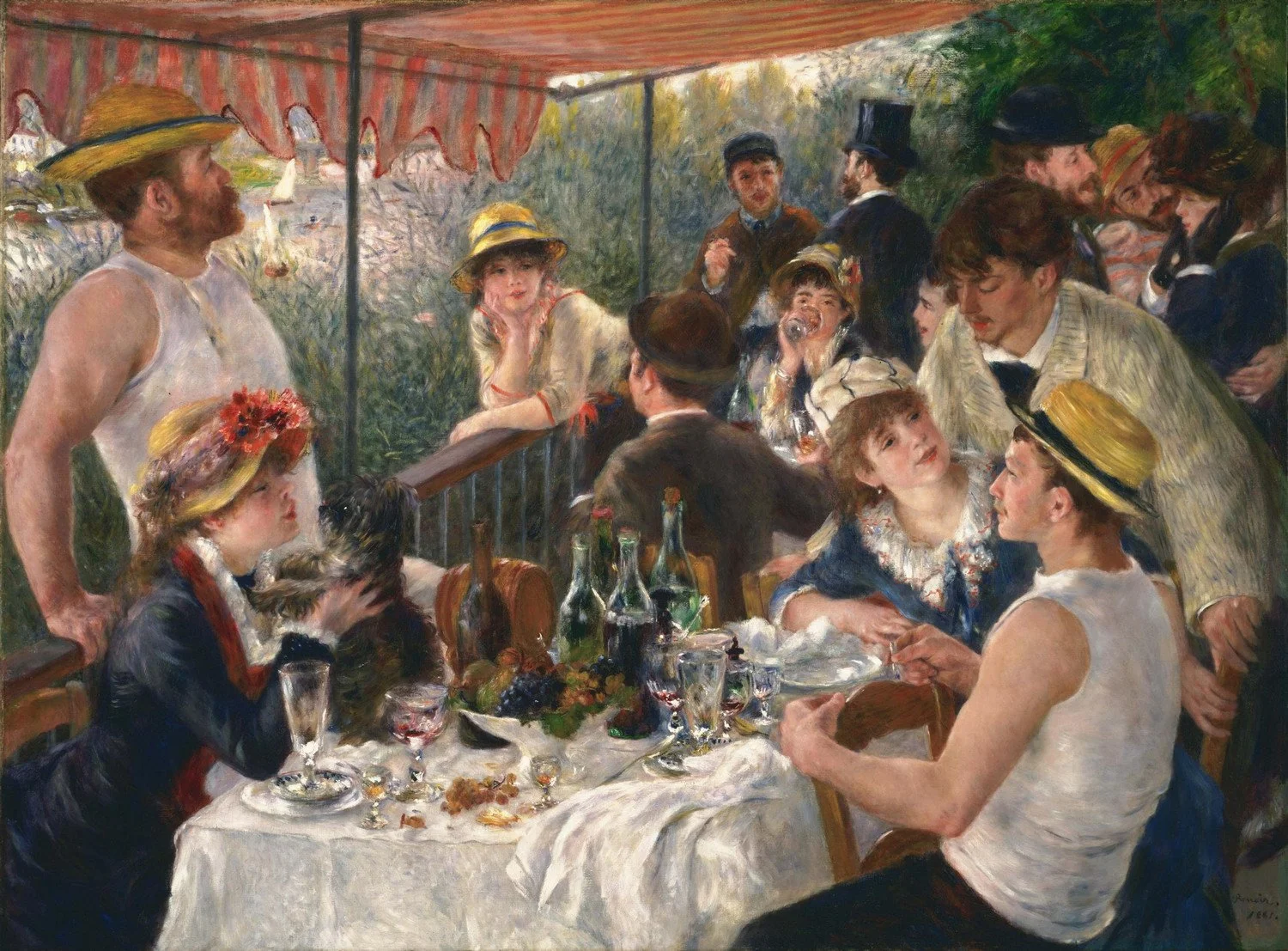
Pierre-Auguste Renoir, Luncheon of the Boating Party - 1880-1881
Renoir Eventually Questioned Impressionism
One thing I respect about Renoir is that he didn't simply discover a successful formula and repeat it forever. He changed.
By the late 1870s and early 1880s, Renoir was becoming dissatisfied with aspects of Impressionism. His travels became particularly important. After visiting Italy in 1881, he became increasingly interested in Renaissance and classical traditions, and his work gradually became more structured and linear. He admired artists including Raphael, Velázquez and Rubens.
You can actually see this transition happening. Look at Renoir's earlier Impressionist paintings and things can feel loose, atmospheric and spontaneous. Then look at later works and the figures can become more defined and substantial. One particularly interesting painting to study is The Umbrellas.
Renoir worked on the painting during a period when his style was changing, and the National Gallery notes that both its composition and painting technique point toward his artistic transition during the 1880s. I find this period of Renoir's life important because artists sometimes become prisoners of their own success. You create something people love. They recognize you for it. Collectors want more of it. And suddenly changing becomes dangerous. But an artist has to evolve.
I have always believed that creativity requires experimentation. You try something. You fail. You learn. You change direction. Sometimes people love the new direction and sometimes they absolutely hate it. That's part of the journey. Renoir helped build Impressionism, but he wasn't willing to allow Impressionism to become his cage.
BUY MY ART🖤

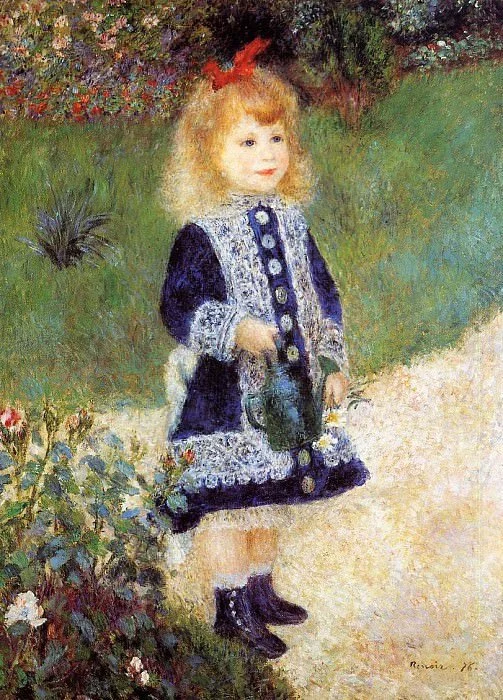
Pierre-Auguste Renoir, A Girl with a Watering Can - 1876
The Artist Who Chose Joy
This is probably the part of Renoir that interests me most. There is a warmth running through so much of his work. Renoir wasn't blind to hardship. He wasn't living in some imaginary world where pain didn't exist. He experienced financial struggles early in life, lived through war and political upheaval, and later suffered tremendously from rheumatoid arthritis.
Yet when Renoir picked up his brush, he repeatedly returned to beauty.
That choice means something to me. We sometimes assume serious art must be dark. Pain feels deep. Happiness feels simple. Joy can somehow be dismissed as decorative. I don't agree with that.
Finding beauty in a difficult world can be its own form of resistance. There is depth in sitting around a table with people you love. There is meaning in watching your child play. There is beauty in sunlight passing through trees. There is something profound about realizing that one day the ordinary moments happening around us right now will become memories.
Renoir painted those moments. Maybe that is one reason his paintings continue connecting with people more than a century after his death. He understood something incredibly simple that we constantly forget: Life doesn't have to be extraordinary every second to be beautiful.

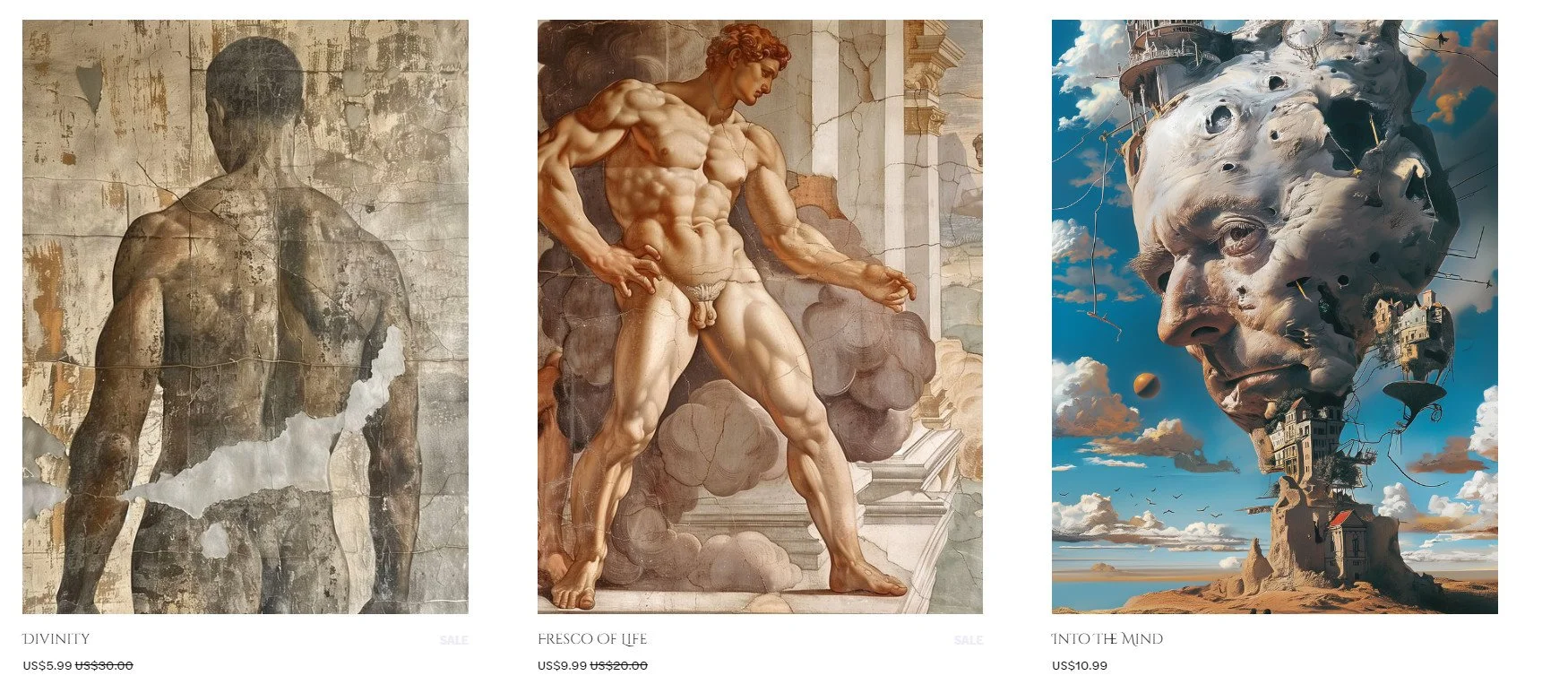
Renaissance Man - Inspired by Leonardo Da Vinci
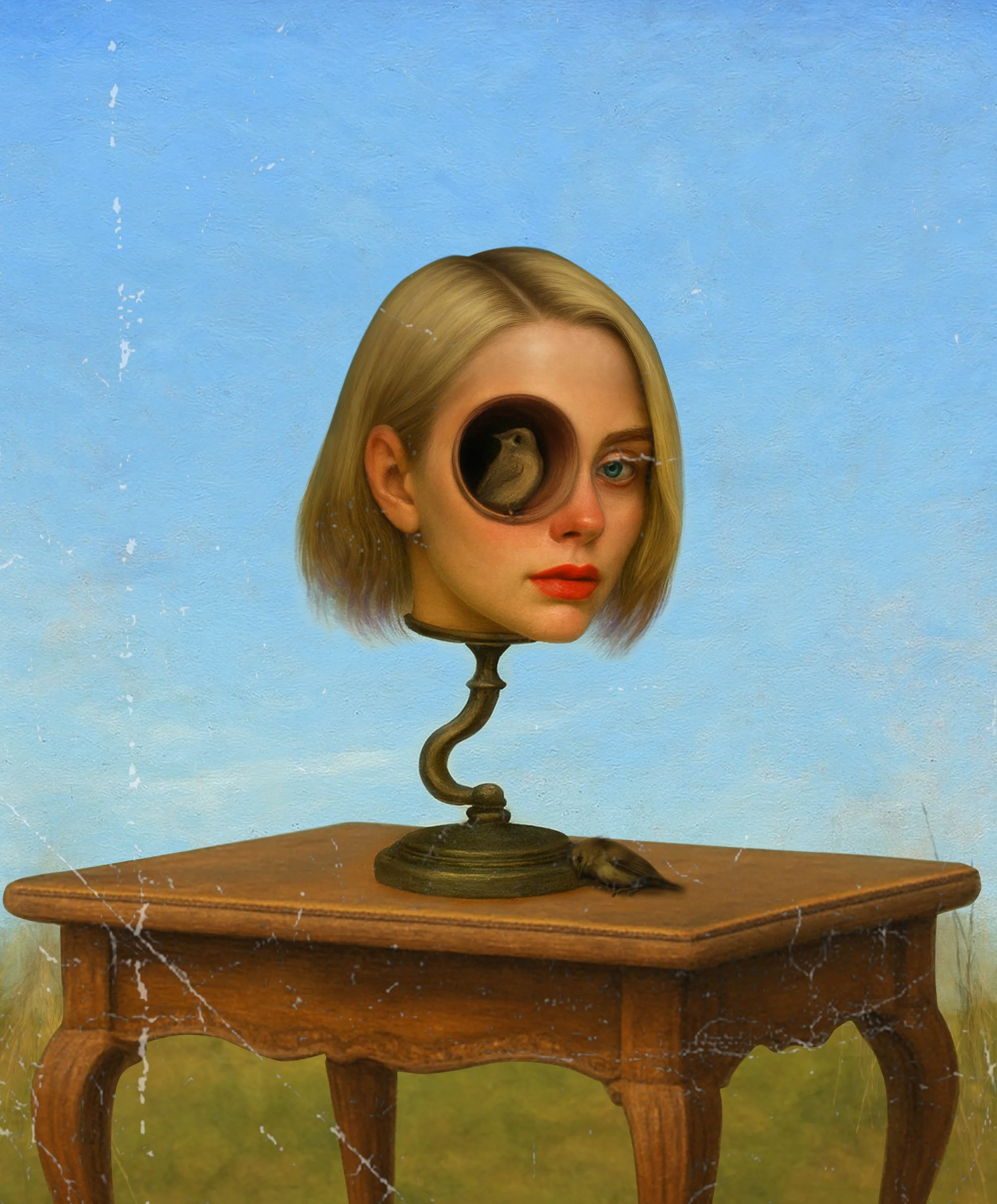
Vosoughi, I Am The Light - 2025
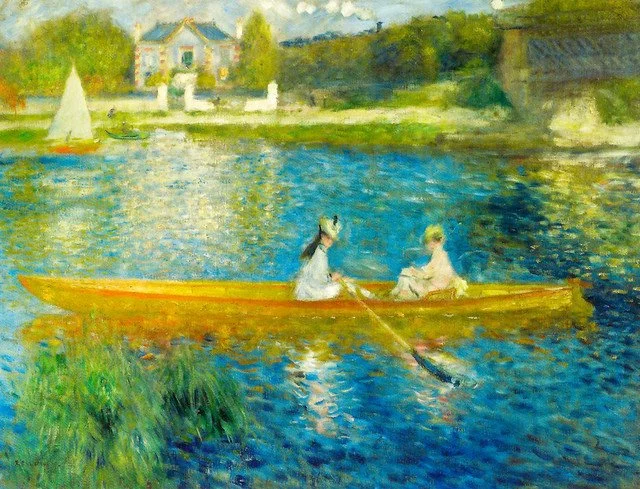
Pierre-Auguste Renoir, The Skiff (La Yole) - 1875
Renoir Kept Painting When His Body Began Failing Him
The later years of Renoir's life make his joyful paintings even more powerful. Renoir developed severe rheumatoid arthritis, which increasingly affected his mobility. Imagine being a painter and slowly losing the freedom of movement in your hands. I can deeply relate to this, even as I type… I feel the pain in my hands and deep within my bones.
For many artists, that would feel like losing part of your identity. But Renoir continued working. Eventually he settled at Les Collettes in Cagnes-sur-Mer, on the French Riviera, where he spent the final years of his life. He continued creating despite his declining physical condition and died in Cagnes-sur-Mer in 1919 at the age of 78. And there is a strange contrast here that I can't stop thinking about. His body was hurting. His movement was becoming increasingly difficult. Yet the paintings remained filled with flesh, warmth, landscapes, women, families and life.
The man experienced pain. The artist continued searching for beauty. That feels like a warrior's mentality to me. Not pretending pain doesn't exist. Not pretending life is perfect. But refusing to allow pain to become the only thing you see.
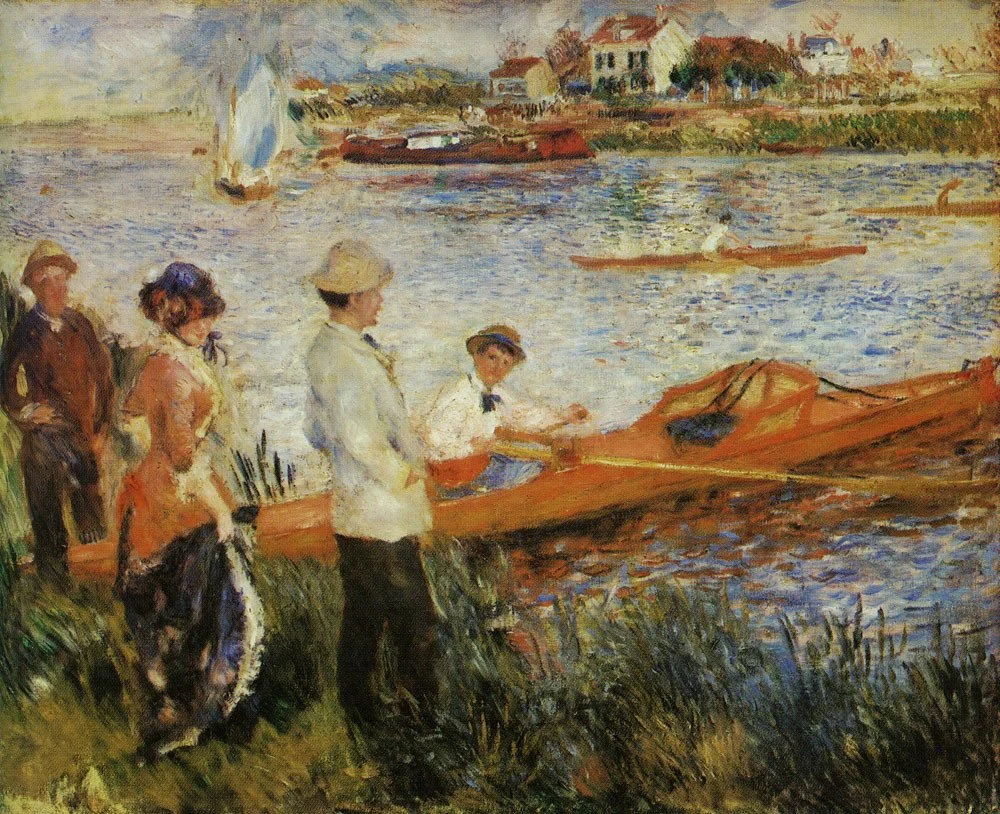
Pierre-Auguste Renoir, Oarsmen at Chatou - 1879
More Than a Century Later, People Are Still Fighting Over Renoir
Renoir died in 1919. More than a century later, his name is still making headlines. And unfortunately, one of the biggest Renoir stories of 2026 came from the very place where he spent his final years. On September 8, thieves broke into the Musée Renoir in Cagnes-sur-Mer, cutting through a fence and entering Renoir's former estate before targeting four paintings. Two works were abandoned as the thieves escaped, but Young Woman at the Well and Portrait of Madame Colonna Romano were successfully stolen. The targeted works were valued at roughly €9 million, or around $10.5 million.
I recently wrote about the entire crazy story because it honestly sounds like something written for a movie. With thieves, alarms, police arriving within minutes, and paintings abandoned in the garden. You can read my full breakdown here:
Renoir Museum Robbed: Inside the $10 Million French Riviera Art Heist
But there is something poetic—and sad—about connecting that robbery with Renoir's life. The museum isn't simply some random building displaying his paintings. It is his former home. He walked those grounds. He painted there. He struggled with arthritis there. He spent the final chapter of his life there. And more than 100 years after his death, people were willing to cut through a fence before sunrise and risk prison to steal paintings carrying his name.
If you ever wonder whether art can outlive the artist, there is your answer.
Renoir Reminds Us to Enjoy the Damn Party
There are artists who force us to confront darkness. There are artists who make us question society. There are artists who explore madness, religion, death, sexuality, politics and war. We need those artists. But we also need someone who reminds us to enjoy the party. Pierre-Auguste Renoir painted people dancing beneath trees. He painted children. He painted lovers.
He painted friends sitting together. He painted women, landscapes, flowers and ordinary moments transformed by extraordinary light.
And perhaps that is why Renoir still matters. The world will always give us reasons to be angry. Life will give us reasons to cry. Time will take people from us. Things we love will disappear. But somewhere between all of that, Warriors, sunlight still passes through the trees. And maybe sometimes the job of the artist isn't to explain the entire universe. Maybe sometimes the artist simply needs to notice those moments before they disappear.
Renoir noticed them.
Then he painted them.
More than a century later, we're still looking.
Until next time, Warriors.
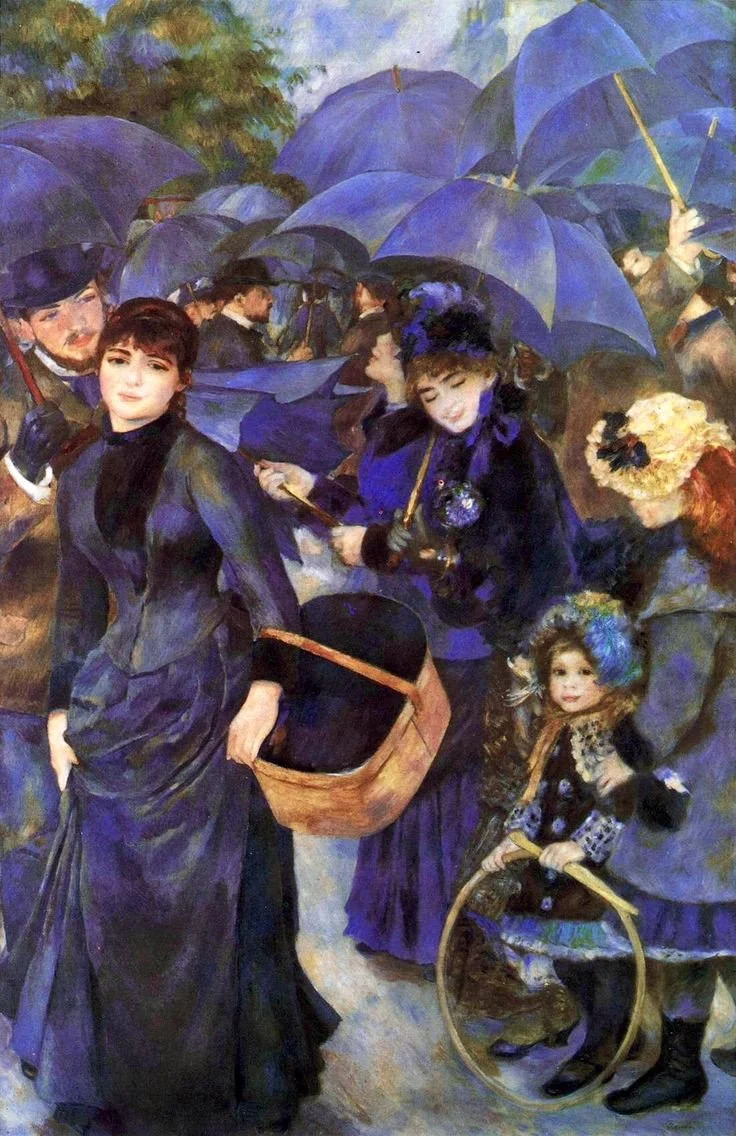
Pierre-Auguste Renoir, The Umbrellas (Les Parapluies) - 1881-1886
If you enjoyed this article, you can read more below:
Frida Kahlo Controversy: Why Mexico vs Spain Is Sparking a Cultural Debate