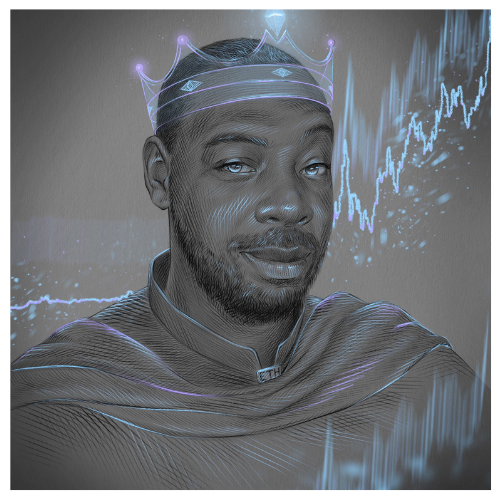

What Does Truth Look Like Anymore? When Social Media Becomes Reality
Greetings Warriors!
I have been thinking about something lately that sounds simple until you actually try to answer it: What does truth look like anymore? Not what is true—that is a different question. I am asking what truth actually looks like in a world where almost everything we experience passes through some kind of filter. We wake up and grab our phones. We scroll through X, Instagram, TikTok, news articles, photographs, videos, opinions, arguments and increasingly AI-generated content. Within minutes of opening our eyes, we have already consumed dozens of different versions of reality. One person tells us the world is falling apart while another tells us everything is wonderful. One photograph shows tragedy while another photograph taken a few feet away shows celebration. One person is called a hero while another person looking at the exact same individual sees a villain. Somewhere between all those screens, opinions, algorithms and perceptions sits something we used to simply call the truth. But I am beginning to wonder if we even recognize it anymore.
Check out my poem book!
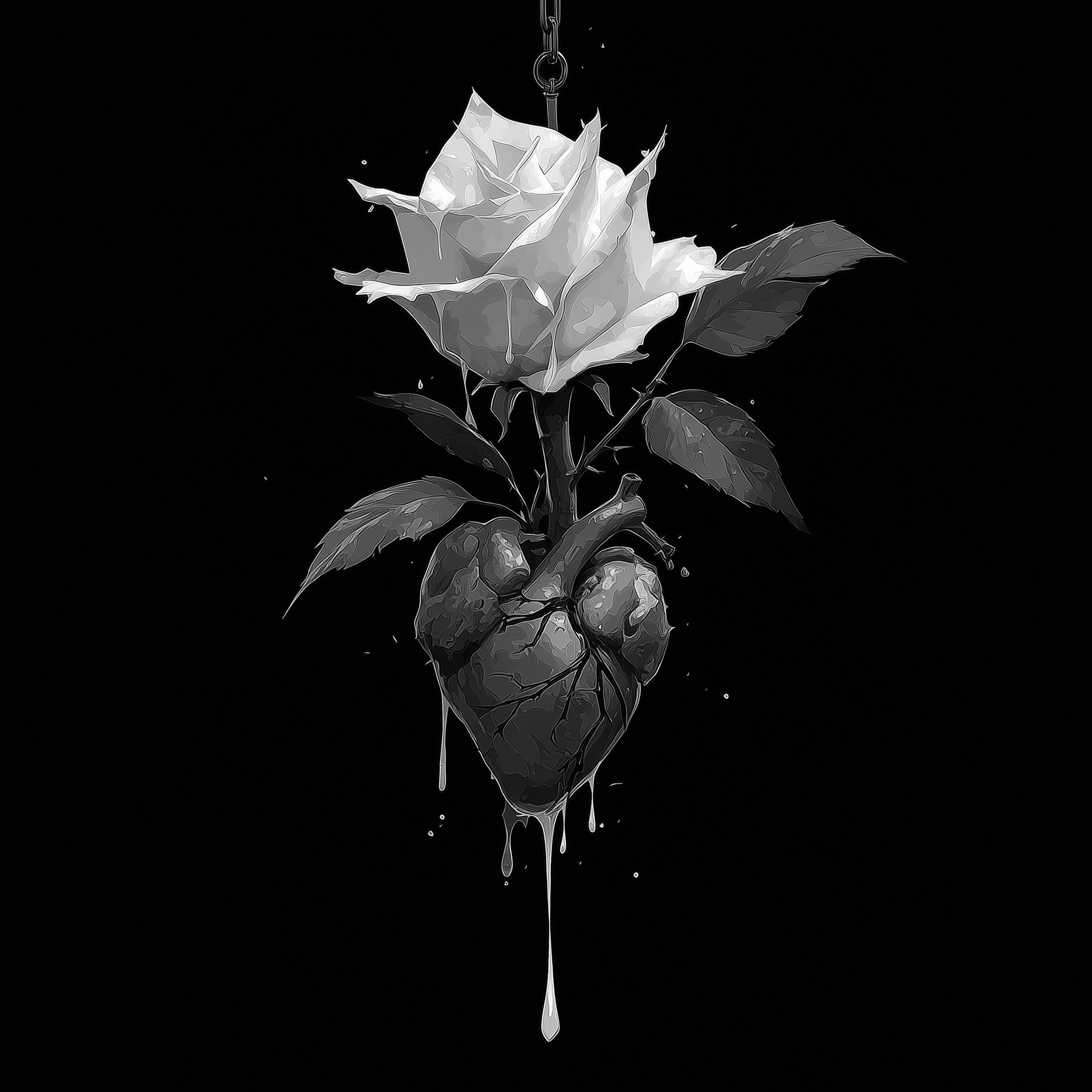
Between the wounds of war and the whispers of love lies the battlefield of the heart. These pages bleed passion, ache with loss, and stand defiant in hope. Step inside, where swords clash with sonnets, and discover that even in chaos, love dares to bloom.
Where love, loss, fear, hope, and memory quietly coexist. Love is not always loud or perfect; sometimes it is heavy, tender, and aching, shaped by time and experience. These words were born from moments of connection and moments of absence, from caring deeply and learning how to let go. Within these pages is an attempt to honor love in all its forms—the kind that holds us together, the kind that breaks us open, and the kind that teaches us how to keep going.
Social Media Has Become Its Own Reality
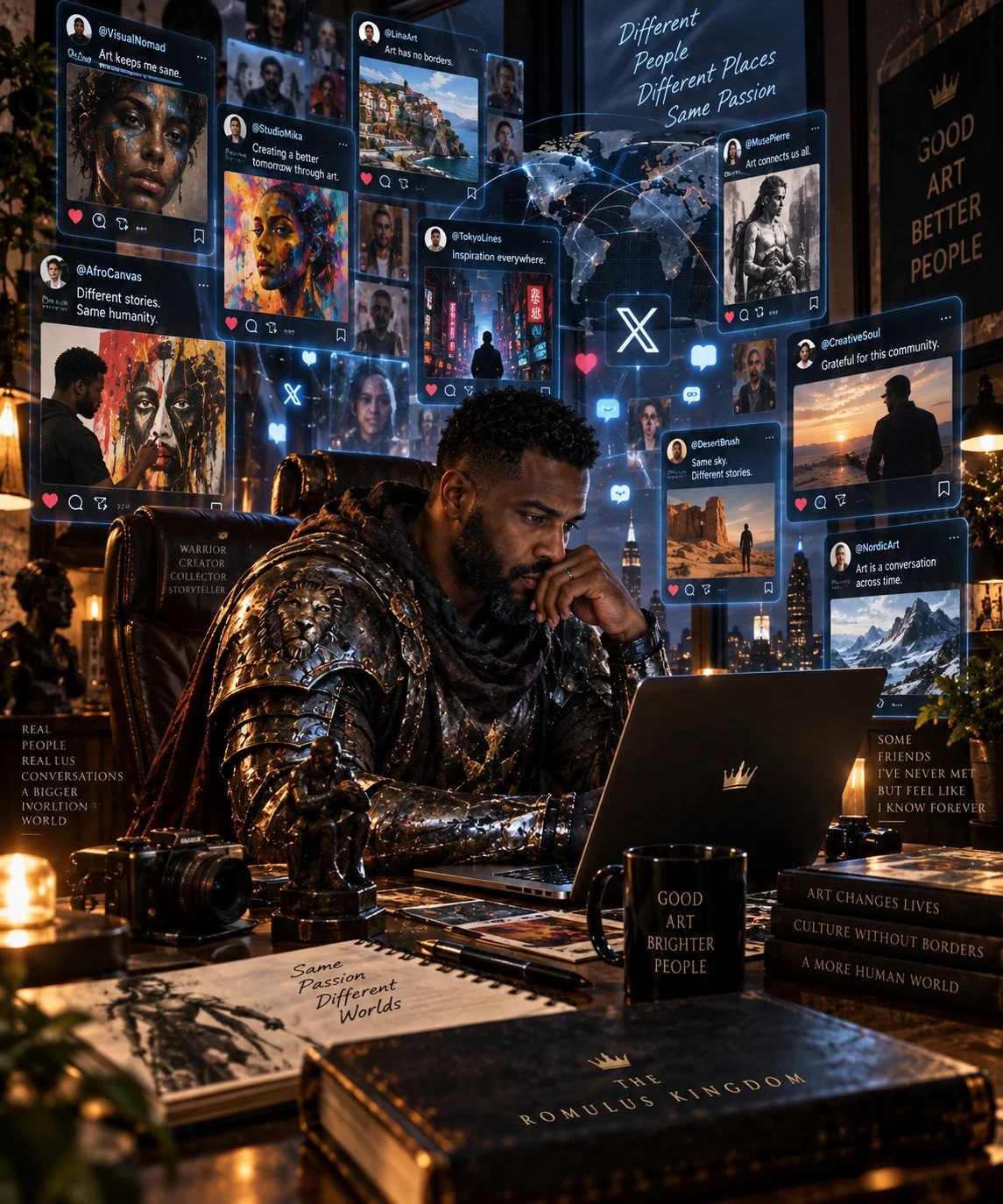
I have spent years interacting with artists online, especially on X, and what originally began as another social platform slowly became something much more personal to me. I discovered artists whose work I admired. I watched people experiment, fail, improve and completely reinvent themselves. I collected artwork, supported artists, debated art, laughed with people and watched controversies explode one day and disappear the next. Somewhere along the way, strangers became familiar, and some of those people became individuals I genuinely consider friends. There are artists I have never sat across from at a restaurant, never shaken hands with and never physically stood beside, yet I have spoken with them countless times. I know pieces of their lives and they know pieces of mine. We have celebrated victories together, watched each other struggle, disagreed, encouraged one another and sometimes simply laughed at something stupid happening online. After enough years, these relationships stop feeling like "online relationships." They simply feel like relationships. Yet every once in a while, a strange thought crosses my mind: How much do we really know each other? Is the reality we have created together actually true?
The People Behind the Screens
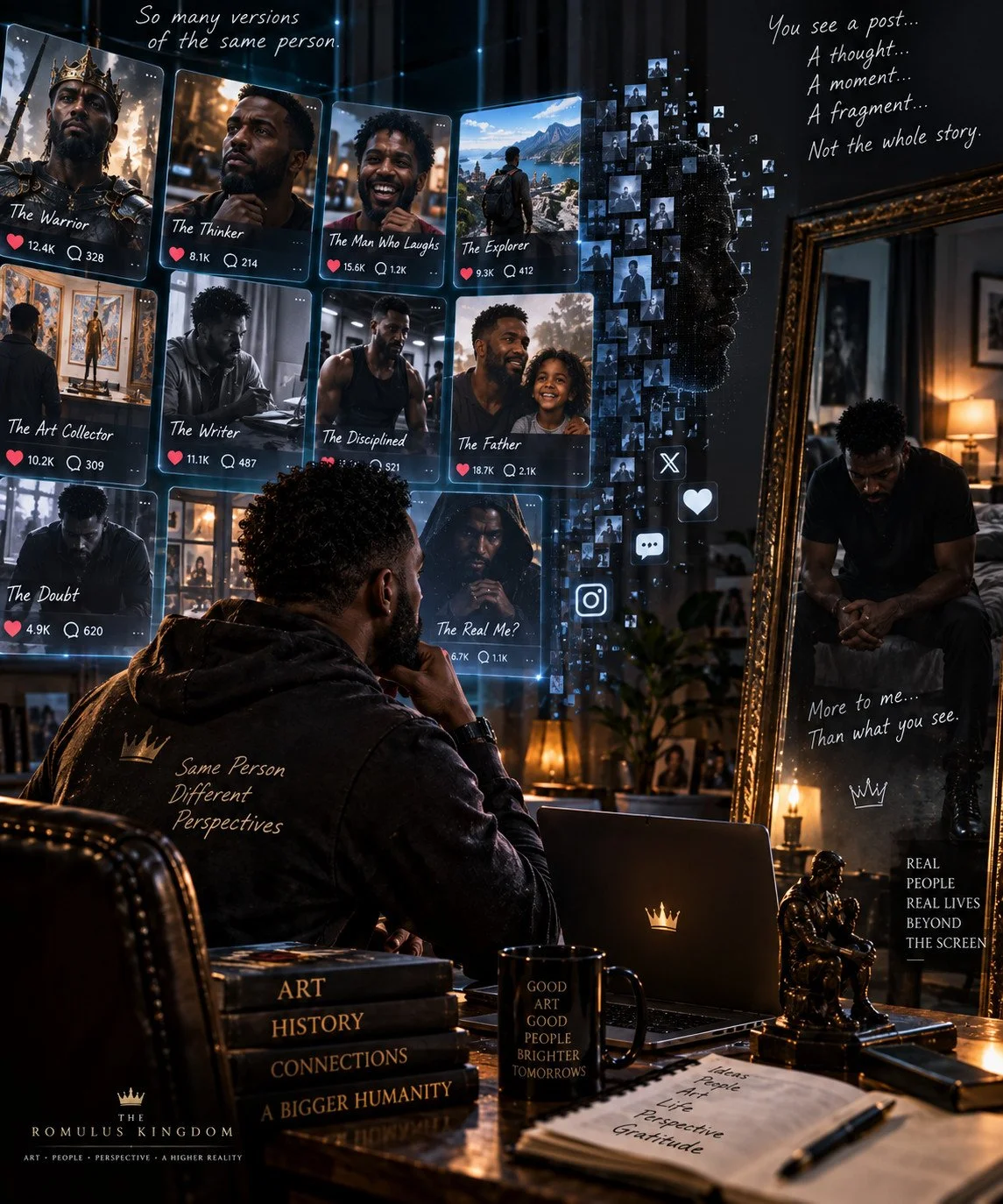
Think about how strange social media actually is. We often encounter someone's thoughts before we ever encounter the person. You might know someone's opinions, favorite artist, sense of humor, heartbreaks and frustrations without ever hearing the sound of their voice. Over time, you begin building an image of that person in your mind, and at the same time, they are building an image of you. But neither image is complete. When I post something online, you are seeing a piece of Peter. You might see the art collector, the writer, the warrior, the guy making jokes, the person questioning the art world or the person fascinated by history, but you aren't standing beside me for the other twenty-three hours of the day. I don't see those hours of your life either. We are meeting through fragments of ourselves, and perhaps that is what social media really is: billions of people exchanging fragments of themselves and slowly constructing entire human beings from the pieces. The frightening part is how easily we forget that those pieces are not the whole person.


The Hall of Mirrors
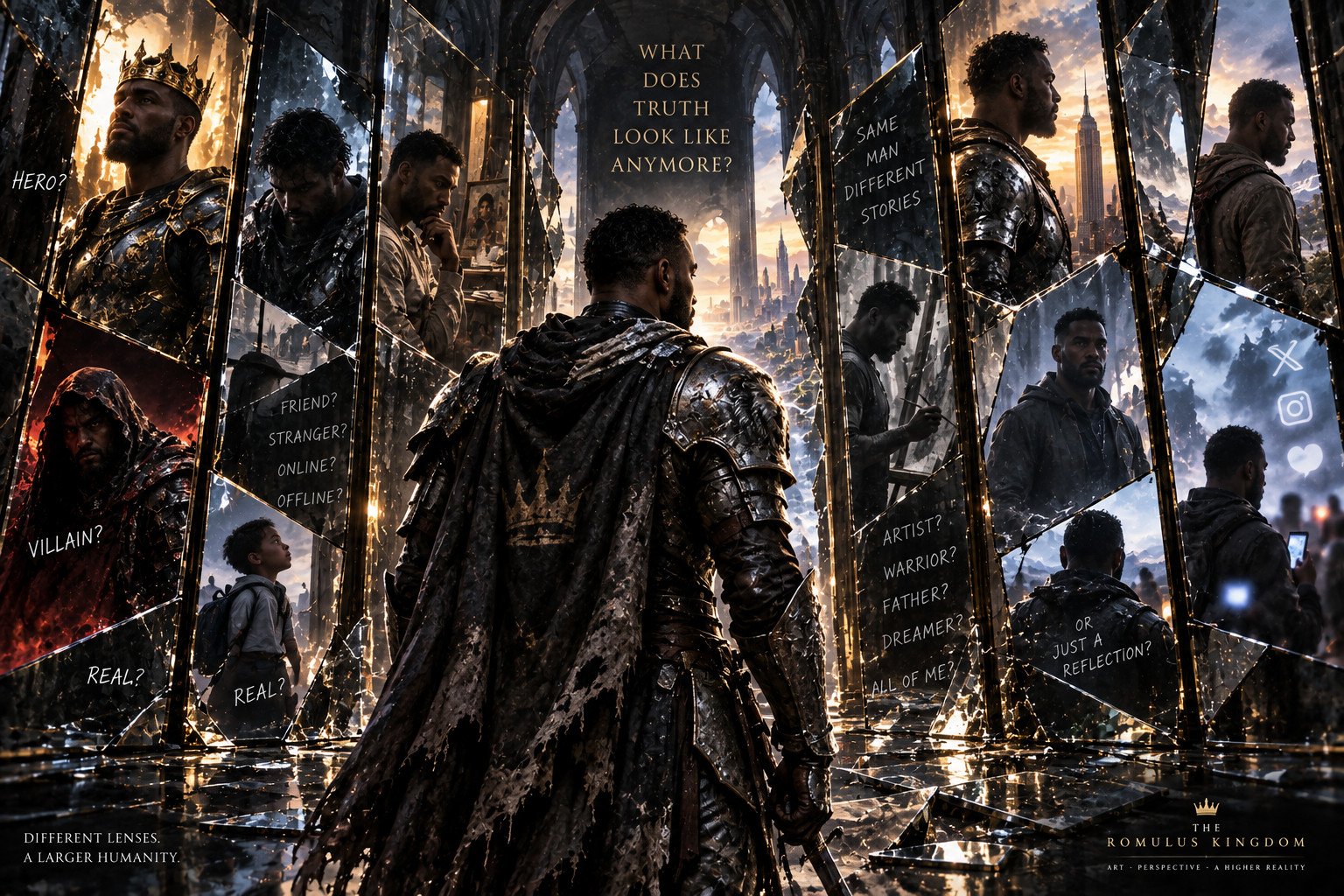
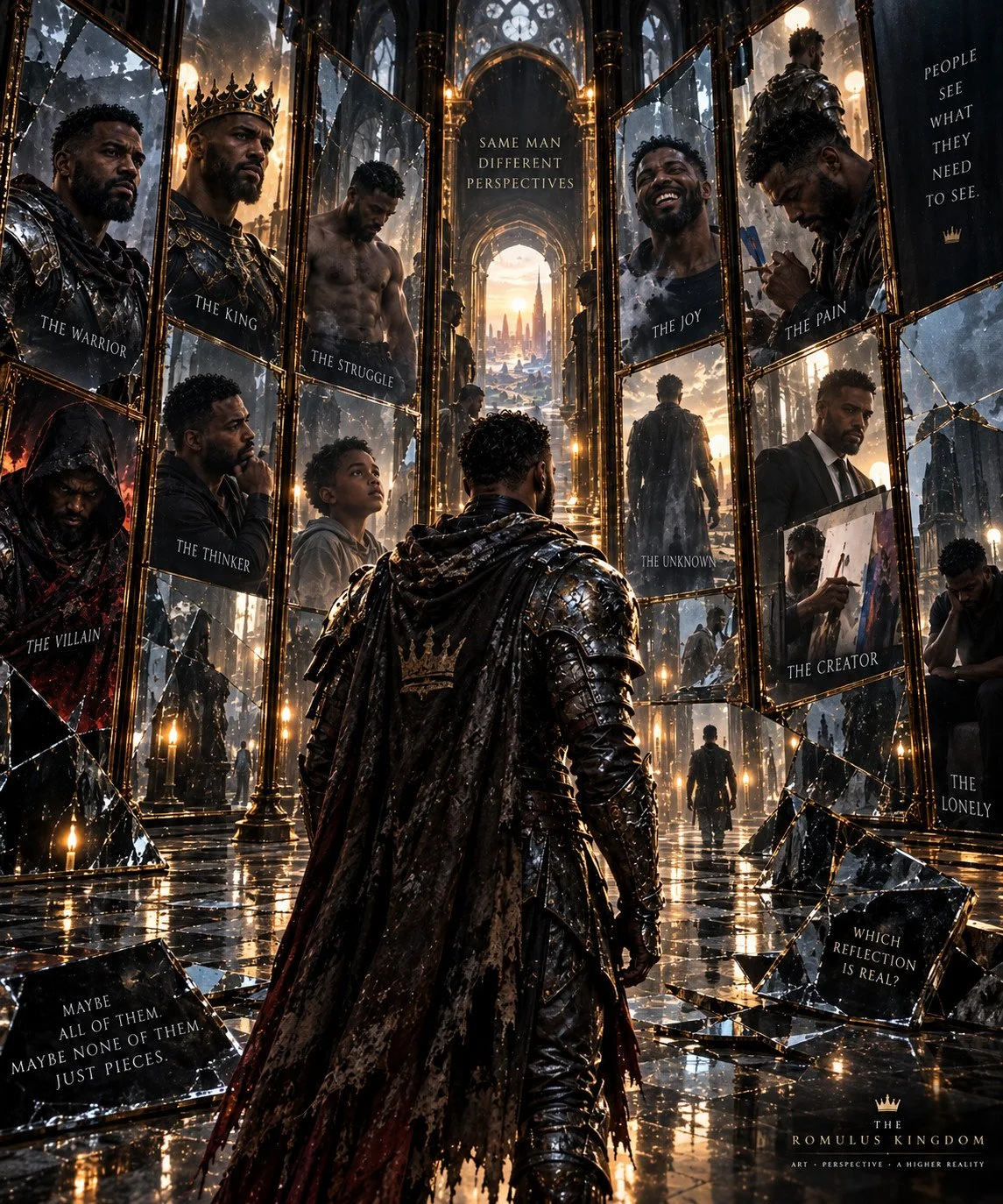
If I had to turn modern social media into a piece of art, I would create an enormous dark hall filled with mirrors. A warrior would walk through the center wearing battered silver armor, but every mirror would reflect him differently. One would show a hero while another would show a villain. One would show a powerful warrior while another would reveal a frightened child. One would place a crown on his head while another would strip away his armor. One would make him beautiful and another monstrous. Perhaps one mirror wouldn't show him at all. Yet the warrior walking between those mirrors never actually changes; only the reflection changes. That is how social media often feels to me. I can write one sentence and a hundred people can interpret it a hundred different ways. Someone sees wisdom, someone sees arrogance, someone sees humor, someone sees disrespect, someone sees inspiration and someone else sees something completely different from what I intended. Which version is actually me? Perhaps none of them completely. Perhaps every interpretation contains only a fragment. That is where truth becomes complicated.
We Are All Holding Pieces of a Broken Mirror
Imagine an enormous mirror lying shattered across the floor. I pick up one piece and inside my fragment I see a beautiful blue sky. You pick up another and see fire. Someone else sees darkness, another person sees flowers and someone else sees blood. Before long, we begin arguing about what the world really looks like. I say the world is beautiful, you tell me the world is burning and someone else insists that we are both wrong because all they can see is darkness. Yet nobody is necessarily lying. We are simply staring at different pieces of the same broken mirror. This is increasingly how I see the world around us. Social media gives us access to more information than almost any generation in human history, yet somehow we seem increasingly incapable of agreeing on what reality actually is. Part of the problem may be that none of us are seeing the entire mirror. We are seeing the fragment placed in front of us, and algorithms have become incredibly good at handing us more fragments that resemble the ones we already hold. Eventually our little piece of the mirror begins to look like the entire world.
BUY MY ART🖤

But Are My Online Friendships Real?
This is where the question becomes personal for me. If someone has supported me for years, if we have exchanged hundreds of conversations, if I recognize their artwork instantly, if I can see their growth through the work they create, if we have encouraged one another during difficult moments and if their absence is noticeable when they disappear for a while, does it really matter that most of our relationship happened through a screen? I don't think the answer is as simple as saying these relationships aren't real, because the emotions produced by them certainly can be. Someone online can make you laugh when you're having a terrible day. A message from someone thousands of miles away can genuinely encourage you. An artist you have never met can create something that stays with you for years, and a person you originally knew as nothing more than a username can eventually become someone whose wellbeing actually matters to you. Those feelings are real, but another truth exists beside them: we still don't completely know each other. Perhaps that isn't even unique to social media. How completely do we really know anyone? People can be married for decades and still discover things about each other they never knew. Children grow older and discover completely different versions of their parents. Friends remember the same event differently. Maybe social media didn't invent fragmented reality. Maybe it simply made it impossible for us to ignore.
AI Makes the Question Even Stranger
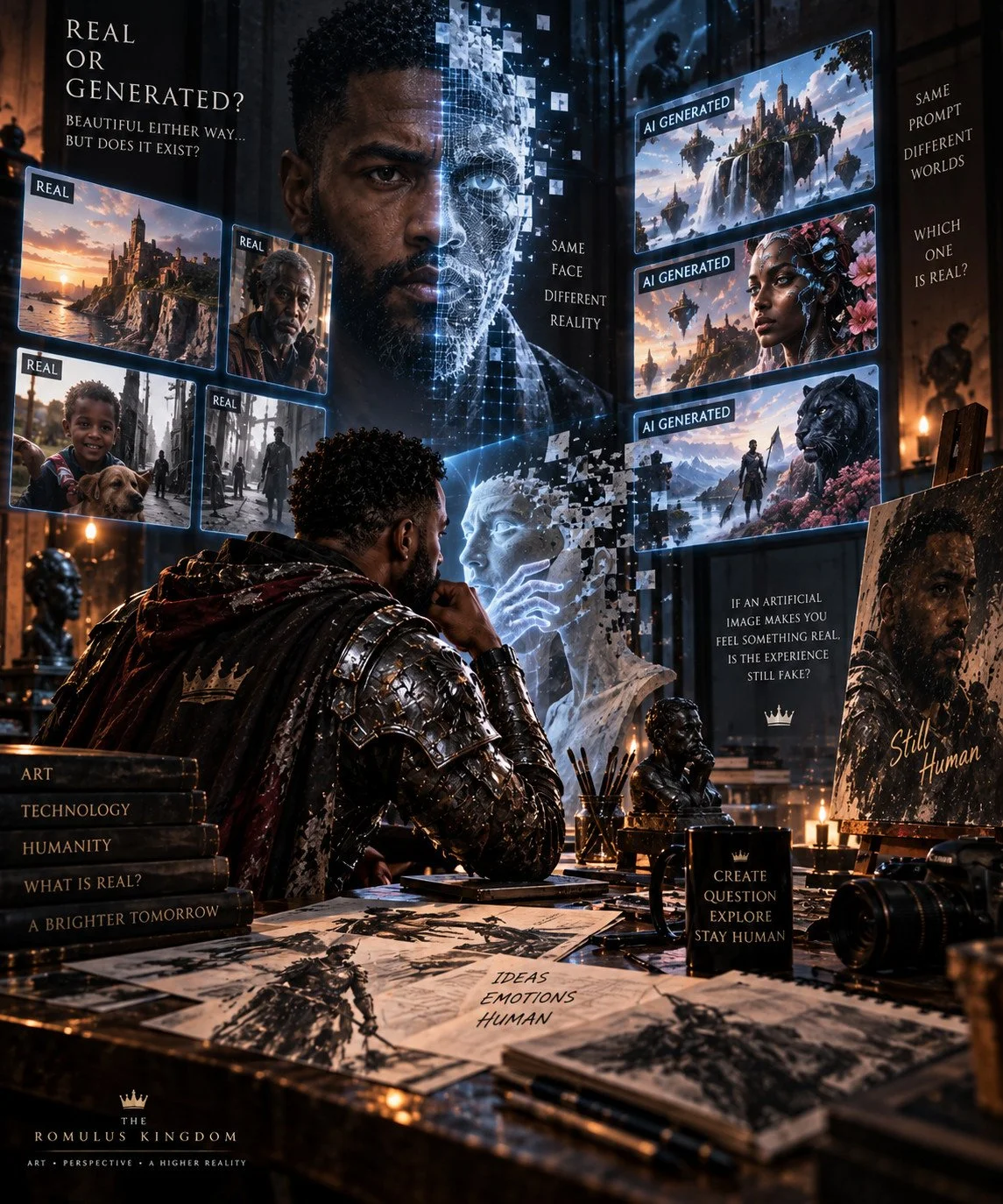
Artificial intelligence adds another layer to this question because now we aren't simply interpreting reality; we are gaining the ability to manufacture convincing versions of it. AI can generate photographs of people who never existed, recreate voices, construct entire landscapes and produce videos depicting moments that never happened. As an artist enthusiast and someone fascinated by technology, I find that incredible, but I also find the philosophical implications fascinating. For most of human history, photographs carried an unspoken promise that something existed in front of the camera. The photograph might have been staged, manipulated or carefully framed, but something still had to be there. That assumption is disappearing. Increasingly, when we look at an extraordinary image, the question will not simply be, "Is this beautiful?" It will also be, "Did this moment ever exist?" And then we arrive at an even stranger question: If an artificial image makes you feel something genuine, is the experience itself fake? The image may never have existed in the physical world, but the emotion it produced inside you certainly did. That is the strange territory humanity is entering.

Renaissance Man - Inspired by Leonardo Da Vinci
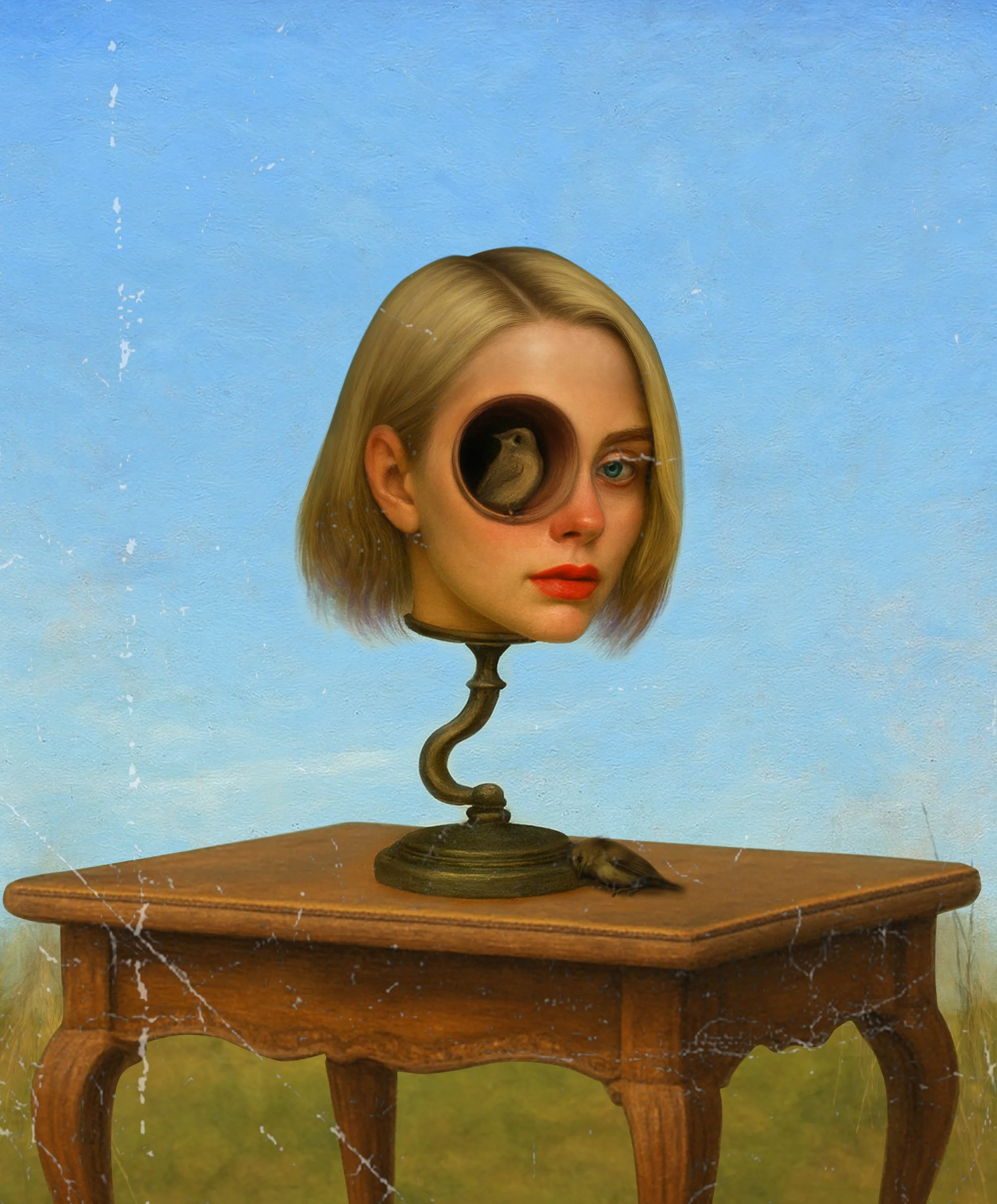
Vosoughi, I Am The Light - 2025
Who Are You Without the Audience?
There is another side of social media that I think artists especially understand. We create something, post it and then wait. We watch the likes, reposts, comments, views, followers and numbers. Eventually something dangerous can happen: we stop asking ourselves, "Do I love what I created?" and begin asking, "Did they love what I created?" Those are two completely different questions. Imagine an artist standing on a massive stage with one million seats in front of him, except every seat is empty. There is no applause, no comments, no likes, no algorithm and nobody watching. Would he still create? I think every artist living in the social-media age should occasionally ask themselves that question. Who are you when nobody is watching? Would you still paint if nobody could like the painting? Would you still write if nobody could repost your words? Would you still create if the algorithm decided tomorrow that nobody would ever see your work again? Somewhere underneath all those metrics is the person who started creating before anyone cared. Don't lose that person.
Maybe Truth Was Never as Simple as We Thought
The more I think about this, the less convinced I am that technology created our problem with truth. Human beings have always interpreted reality through emotion and experience. Pain changes how we remember things. Love changes memory. Anger changes perspective. Fear changes what we notice. Ego changes the stories we tell ourselves. Two people can walk away from the same relationship carrying completely different versions of its history, and neither memory is a perfect recording of what actually happened. We aren't cameras. We are storytellers. Perhaps social media simply took something human beings have always done internally and projected it onto billions of screens. For the first time, we can watch competing realities being created, defended and destroyed in real time. The technology may be new, but the human tendency behind it is ancient.
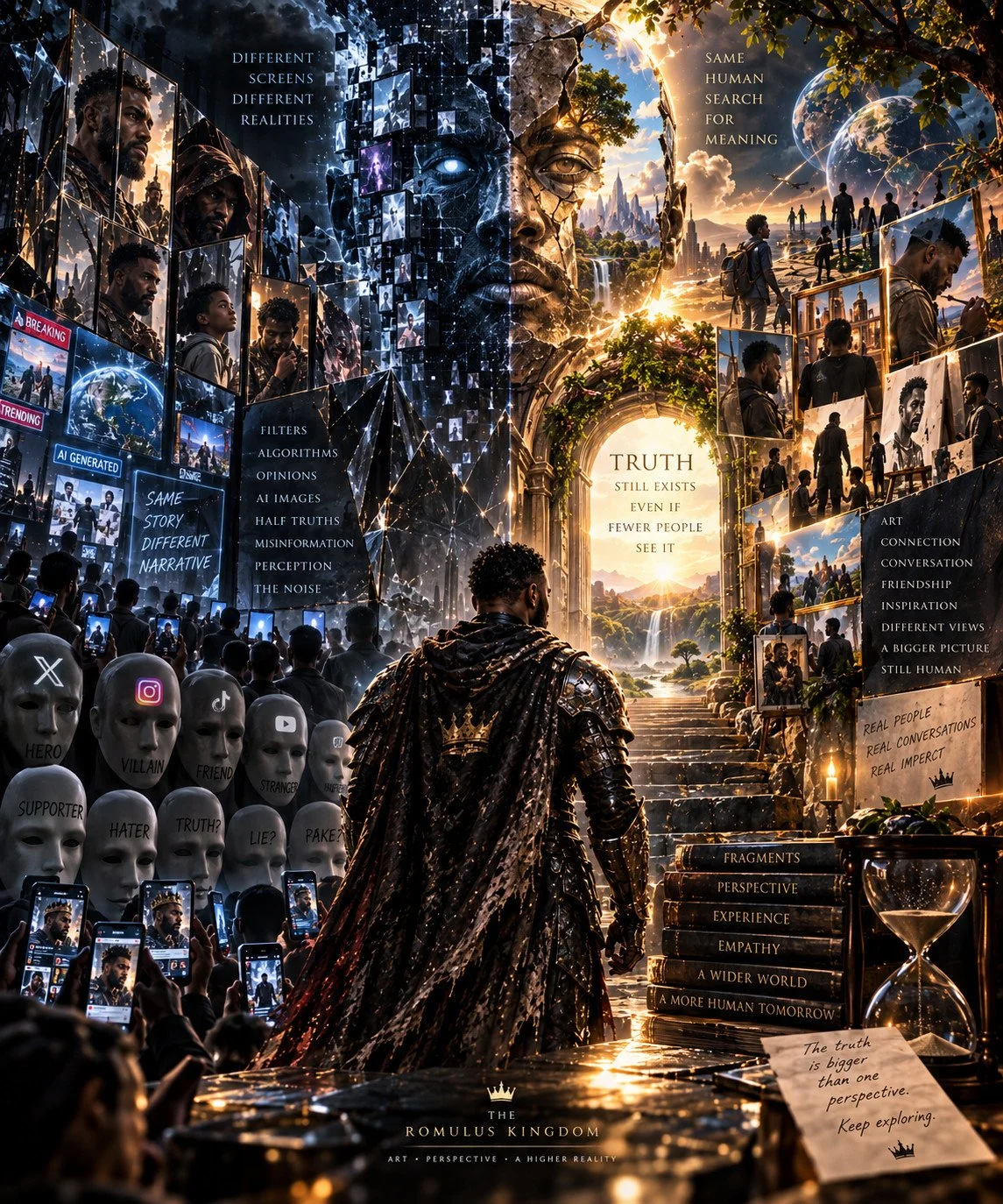
The Warrior and the Mirror
If I could create one final artwork around this idea, I would return to the warrior standing before an enormous broken mirror. For years he has collected pieces of that mirror from everyone he has encountered. Some people called him strong, so he keeps that fragment. Others called him arrogant, so he keeps that one too. Some loved him, some misunderstood him, some supported him and some walked away. Some saw a warrior while others saw something completely different. Eventually he places every fragment together, believing that when the mirror finally becomes whole, he will discover who he truly is. But when the final piece clicks into place, something unexpected happens. The mirror doesn't show him at all. Instead, it becomes transparent. On the other side is the world: people laughing, crying, fighting, creating, falling in love and staring endlessly into their phones while desperately trying to understand one another. Maybe that is the lesson. We spend so much of our lives trying to determine which reflection is the real one that we forget to experience the world beyond the mirror.
What Does Truth Look Like Anymore?
I don't have the answer, and perhaps that is the point. I have friendships that began with usernames and profile pictures but have become meaningful parts of my life. I have collected artwork from people I first encountered as pixels on a screen. I have watched strangers become familiar and familiar people become strangers. I have seen social media bring together people who probably never would have crossed paths otherwise, and I have watched that same technology divide people who might have understood each other if they had simply sat in the same room. So are these relationships real? I believe the feelings can be. But I also believe we have to remember that every profile is a window, not the entire house. Every photograph is a moment, not an entire life. Every post is a thought, not an entire person. Every algorithm shows us a piece, not the entire world. Every mirror reflects something, but no single mirror contains everything.
Maybe the greatest challenge of our generation isn't discovering the truth. Maybe it is maintaining enough humility to understand that the piece of truth we are holding may not be the whole picture. The next time you are absolutely certain that you understand someone because of something they posted, remember that broken mirror. Look carefully at the fragment in your hand, recognize that what you see within it may very well be real, and then have the courage to ask yourself one more question: What exists just beyond its edges?
Until next time, Warriors. Keep creating, keep questioning, and never mistake the reflection for the whole world.
If you enjoyed this article, you can read more below:
George Lucas 1 Billion Dollar Museum