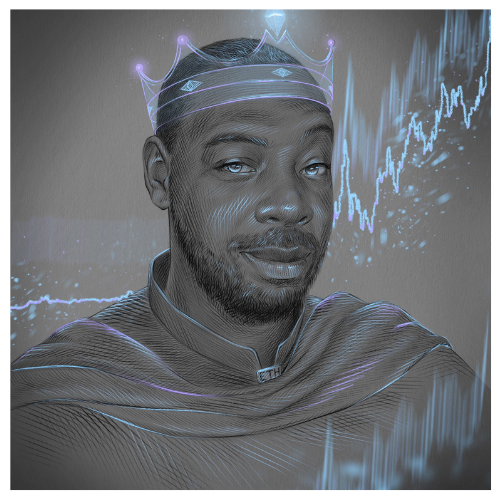

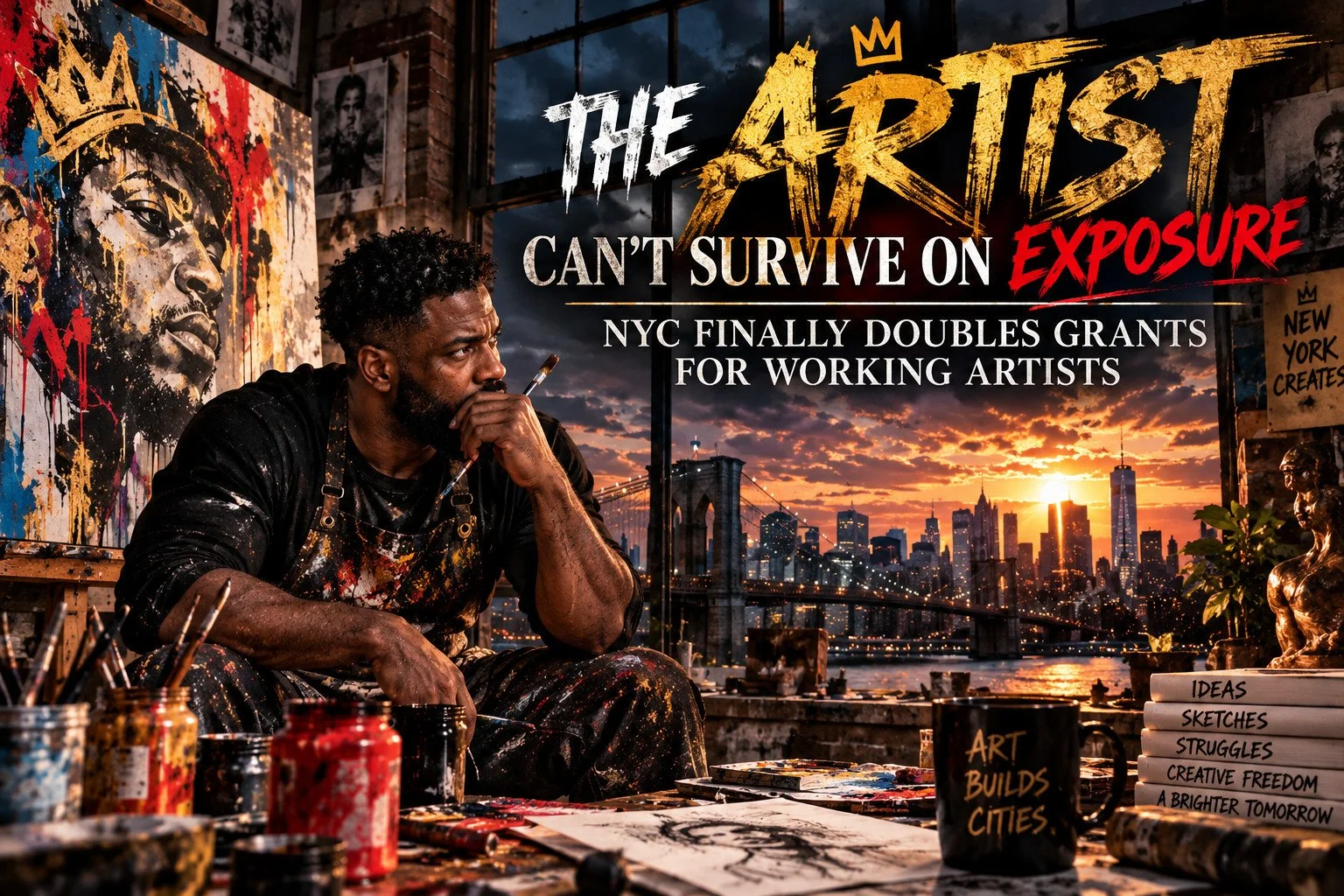
The Artist Can’t Survive on Exposure: NYC Finally Doubles Grants for Working Artists
Greetings Warriors,
I have spent years talking with artists, collecting their work, watching their journeys and developing genuine friendships with many of them. Some of these relationships began with nothing more than a post on X. I saw a piece of art that stopped me from scrolling, clicked on the artist's profile and eventually found myself following their journey. Over time, I have watched artists experiment with new styles, celebrate sales, struggle through creative blocks, disappear for months, return stronger, question themselves and sometimes wonder whether continuing to create is financially possible.
Through those experiences, I have learned something about the art world that doesn't get discussed nearly enough. We love art. I'm not always convinced we love supporting artists. We celebrate creativity. We tell artists their work is beautiful. We repost their paintings. We compliment their talent. We tell them they should never stop creating. But art cost money; ir cost money to get paint, canvas, equipment, software subscriptions… It all cost money!
That is why a recent announcement from New York City caught my attention. New York is doubling the maximum amount available through city-funded grants for individual artists and small arts organizations from $5,000 to as much as $10,000, marking the first increase in roughly two decades. The initiative is designed to provide greater financial support to painters, musicians, filmmakers, writers, dancers and other working creatives across the five boroughs.
At first glance, this might seem like a relatively small arts-policy announcement. I believe it represents something much bigger. It forces us to confront an uncomfortable question about the city that proudly calls itself one of the cultural capitals of the world:
Can the artists who make New York culturally important still afford to live and create here?
Between the wounds of war and the whispers of love lies the battlefield of the heart. These pages bleed passion, ache with loss, and stand defiant in hope. Step inside, where swords clash with sonnets, and discover that even in chaos, love dares to bloom.
Where love, loss, fear, hope, and memory quietly coexist. Love is not always loud or perfect; sometimes it is heavy, tender, and aching, shaped by time and experience. These words were born from moments of connection and moments of absence, from caring deeply and learning how to let go. Within these pages is an attempt to honor love in all its forms—the kind that holds us together, the kind that breaks us open, and the kind that teaches us how to keep going.
Twenty Years Changed Everything Except the Grant
For nearly two decades, the maximum amount available through these grants remained around $5,000 while almost everything surrounding an artist became more expensive. Think about what has happened to New York during that period. Rent increased. Studio space became more expensive. Food costs increased. Transportation increased. Art supplies became more expensive. Insurance increased. Technology changed, creating entirely new categories of expenses for digital artists, photographers and filmmakers.
Meanwhile, artists still have all the ordinary financial responsibilities everyone else has. You have to pay rent, mortgage, children, groceries, healthcare, and more. And somewhere between all of those responsibilities, they are somehow expected to find the time, money and emotional energy required to create. That is what makes doubling the maximum grant meaningful.
It isn't simply New York suddenly becoming generous toward artists. In many ways, it is an acknowledgement that financial support for artists had failed to keep pace with the reality of being an artist in one of the world's most expensive cities. And that raises another question. Why do we sometimes behave as though creating art isn't work?

"Potion Number 9" is an enthralling piece of abstract art that captures the essence of mystery and transformation. The artwork serves as a visual representation of alchemy, blending ethereal forms and vibrant colors to create a potion of visual enchantment.
The Artist Can't Survive on Exposure
There is a phrase almost every creative person has heard at some point:
“It will be great exposure.” Exposure has become one of the strangest currencies in the creative world. Artists are sometimes asked to provide artwork, photography, music, design or creative labor for little or nothing because the opportunity might place their work in front of a larger audience. Sometimes exposure genuinely does create opportunities.
But eventually an artist has to eat. There is a tremendous amount of invisible labor behind a finished piece of art. When someone posts a beautiful painting online, we see the final image.
We don't necessarily see the hours spent creating it.
We don't see the discarded sketches.
We don't see the paint that had to be purchased.
We don't see the canvas.
We don't see the studio rent.
We don't see the framing.
We don't see the photography.
We don't see the website fees.
We don't see the shipping materials.
We don't see the gallery commission.
And we certainly don't see the years the artist spent developing the ability to make something look effortless. I have collected enough artwork and spoken with enough artists to understand that what appears on the wall is only the final chapter of a much longer story. Yet we frequently price art as though only the final object has value. The artist's time somehow disappears from the equation. That needs to change.
We Love Art—But Do We Value the Artist?
This contradiction fascinates me. We can walk into a museum and stand quietly before a painting worth $50 million. We can read biographies about artists who changed history. We can celebrate Basquiat, Warhol, Pollock, Haring, Rothko and countless others as cultural giants. We can spend hundreds of millions of dollars buying and selling artworks at auction. Yet somewhere in Brooklyn, Queens, the Bronx, Manhattan or Staten Island, an unknown artist might be sitting inside a tiny apartment wondering whether they can afford another canvas. That unknown artist might eventually become important. Or maybe they won't. But that's not really the point.
An artist shouldn't have to become famous before their creative labor deserves respect. That is something I have increasingly come to believe as a collector. I love discovering artists before the larger world knows who they are. There is something special about watching someone develop their voice rather than simply arriving after the market has already decided that person matters.
But that experience has also shown me how difficult the journey can be.
Talent alone doesn't guarantee survival. Sometimes the difference between continuing and quitting isn't inspiration. It's money.
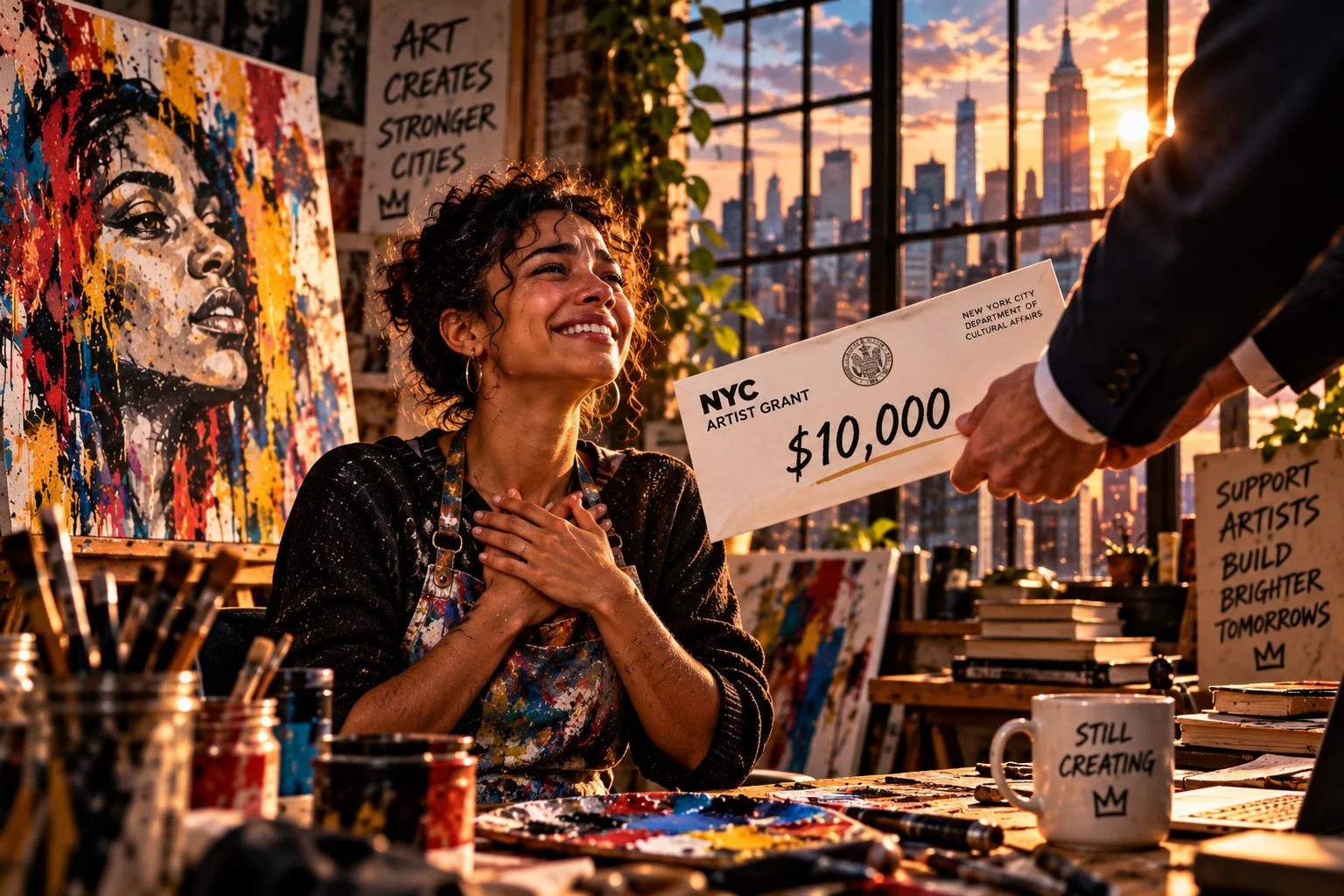
Ten Thousand Dollars Can Buy Something More Valuable Than Supplies
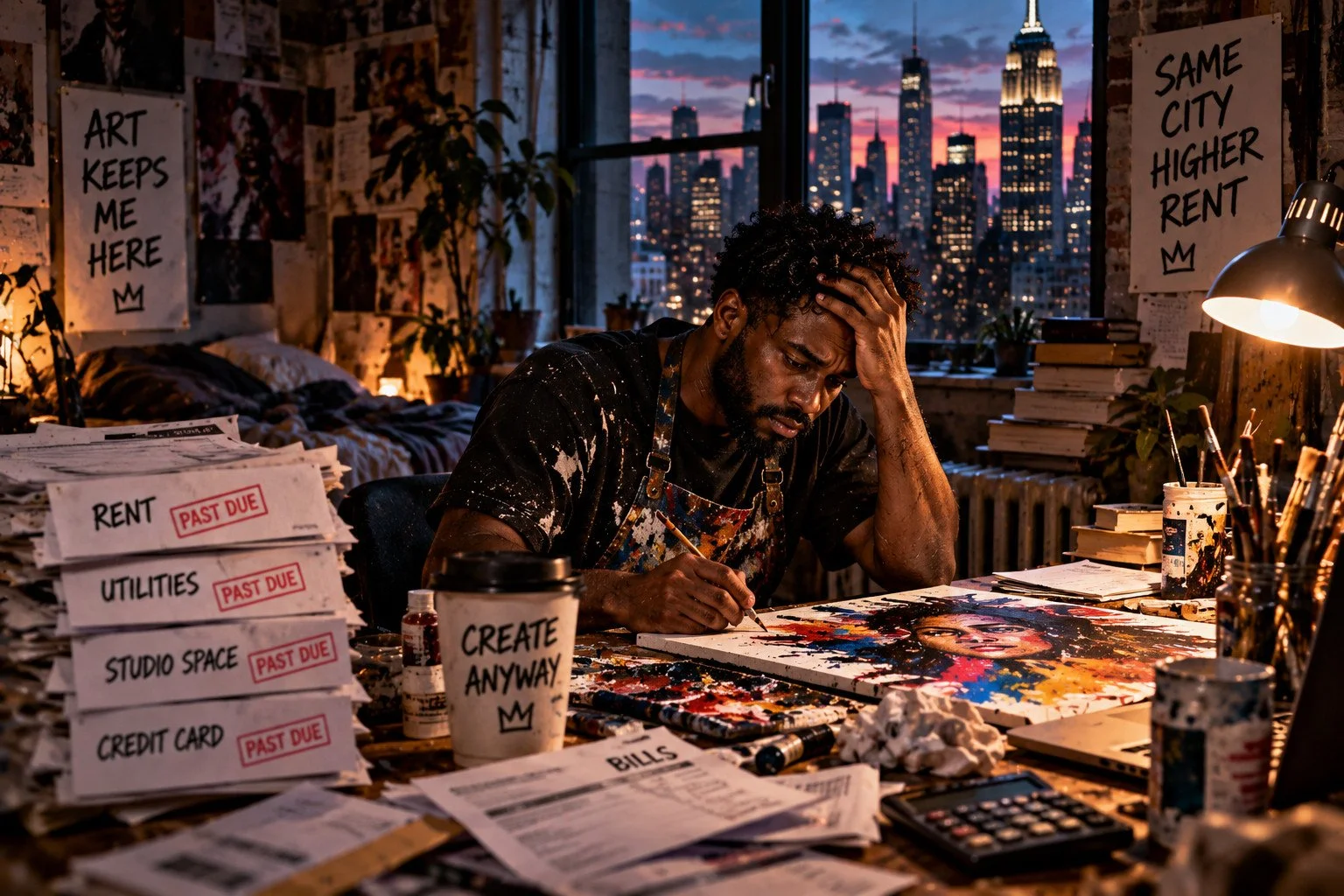
Some people might look at a $10,000 maximum grant and say: “That's not enough to change someone's life in New York.” They're probably right. Ten thousand dollars won't solve New York's housing crisis. It won't suddenly make studio space affordable. It won't eliminate healthcare expenses. And because $10,000 is the maximum award rather than an automatic payment to every applicant, not every artist receiving support will necessarily receive that amount. But I think we're looking at the wrong thing when we see only the dollar figure. Because money can purchase something incredibly valuable for an artist. Time.
Ten thousand dollars might mean fewer extra shifts somewhere else. It might mean buying enough materials to complete a body of work. It might mean renting studio space. It might mean purchasing equipment. It could pay for framing, printing, software, camera, and many more crusial items. It might simply allow someone to spend several months thinking less about survival and more about creation. And sometimes that is exactly what an artist needs. Not another compliment or repost. Not another person saying, “You're incredibly talented.” They need the resources required to actually use that talent.
New York Is Also Addressing the Cost of Materials
Another part of the city's announcement deserves attention. Through NYC's Materials for the Arts program, qualifying artists will also gain greater opportunities to obtain donated creative materials at no cost.
That might sound like a small detail compared with the grant increase.
It isn't. Anyone who creates physical artwork understands how quickly materials become expensive. If someone receives funding to produce an ambitious project but spends a large percentage of that money simply obtaining materials, the grant disappears quickly.
Providing both financial support and access to materials recognizes something obvious but important. Creativity requires resources.
We sometimes romanticize artists as though they simply sit down and summon masterpieces from imagination. But imagination still needs something to work with. Even Michelangelo needed marble.

Artists Help Build Neighborhoods—Then Get Priced Out of Them
There is another side of this conversation that New York knows particularly well.
Artists often move into neighborhoods where space is inexpensive. Then studios appear. Small galleries open. Musicians perform. Creative communities develop. Restaurants follow. People begin visiting and the neighborhood develops an identity.
Suddenly it becomes interesting and then property values rise. Rent increases. Developers arrive.
And eventually some of the same artists who helped make the neighborhood culturally desirable can no longer afford to live there.
The cycle repeats.
This has happened in different forms throughout New York's history.
And there's something almost tragic about it. Artists help create cultural value but rarely receive the financial value generated around them. A neighborhood becomes desirable because creative people made it interesting, and eventually those creative people are told: You can't afford to live here anymore. Then years later everyone asks where the artistic community went.
Can New York Remain the World's Art Capital Without Artists?
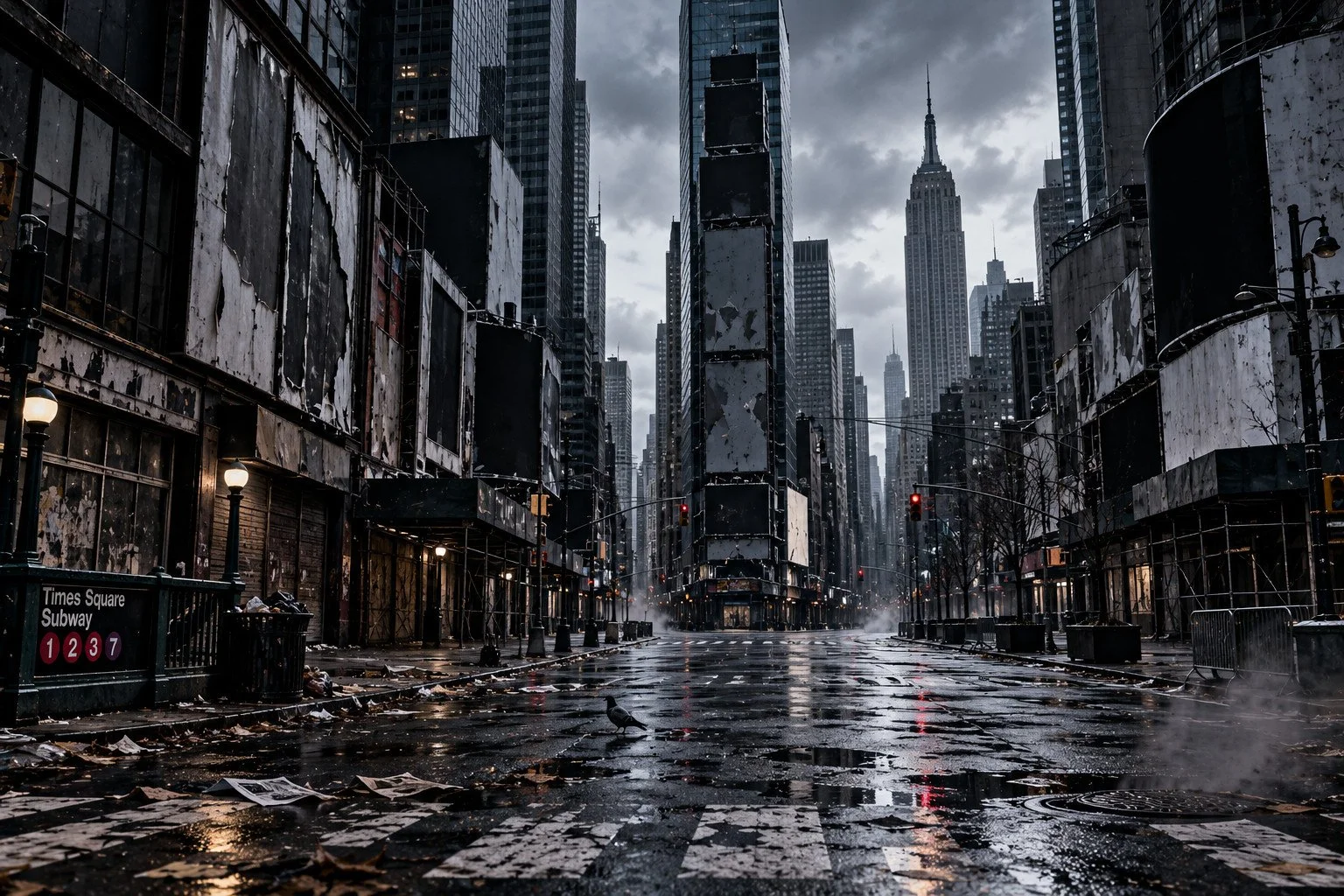
New York's relationship with art is part of its identity; MoMA, The Metropolitan Museum of Art, The Whitney, The Guggenheim, Chelsea, SoHo, and Brooklyn. Studios hidden inside buildings most tourists will never enter. Generations of artists have come here because New York represented possibility. But cultural capitals aren't created by museums alone. They're created by people, by young painters experimenting inside small apartments. Photographers walking the streets. Musicians performing in tiny venues. Writers sitting in coffee shops. Filmmakers borrowing equipment. Sculptors working inside warehouses. Artists trying things nobody understands yet.
Some will eventually become successful. Most probably won't become household names. But collectively they create the cultural ecosystem that makes a city feel alive. If those people can no longer afford to remain here, eventually the city risks becoming something very different. It can still possess great art. It can still sell great art. It can still exhibit great art. But will it still create great art? That is the question.
The Next Basquiat Has Rent Due
This is the thought I keep coming back to. Somewhere in New York right now might be an extraordinary young artist nobody knows. Maybe they're in Brooklyn, or Queens, or the Bronx. Maybe they're creating digital artwork on a laptop inside a bedroom. Maybe they're painting in a tiny studio. Maybe they're working two jobs. Maybe they have 200 followers. Maybe they haven't sold anything this month. Maybe they're experiencing imposter syndrome and wondering whether they're even good enough to call themselves an artist.
Twenty years from now, people might look back at what they're creating today and wonder why nobody recognized it earlier. History has a funny way of discovering value after the struggle is over. But the artist has to survive long enough to get there. And that's why this seemingly small announcement matters.
New York doubling its maximum artist grants isn't going to fix everything wrong with the economics of the art world. But it acknowledges something that should never have been controversial: Artists deserve support while they're creating—not simply applause after they've succeeded.
Final Thoughts: Invest in the Person Before the Masterpiece
Warriors, I've spent enough time around art to realize that the masterpiece and the person who created it cannot truly be separated. We love the finished painting because we don't see everything that came before it. The doubts and failures, the discarded sketches, the unpaid bills, the experiments that didn't work. The nights spent creating while everyone else slept. The moments when the artist wondered whether anybody cared.
Every masterpiece begins long before the world decides it is a masterpiece. And perhaps supporting artists means believing in that process before history tells us who was worth believing in. New York's decision to double its maximum grants from $5,000 to $10,000 won't save every artist. It won't solve affordability. It won't stop artists from leaving the city. But it sends a message I hope becomes louder: Art is work.
And artists cannot survive forever on exposure.
If New York wants the next Basquiat, Haring or cultural revolutionary to emerge from its streets, then perhaps the city has to make sure that unknown artist can afford to stay here long enough to become them. Because the next masterpiece might already be sitting unfinished inside a tiny New York apartment. The person creating it may not need another person telling them how talented they are. They might simply need the opportunity to finish. Until next time, Warriors. Support the art. But never forget to support the human being creating it.