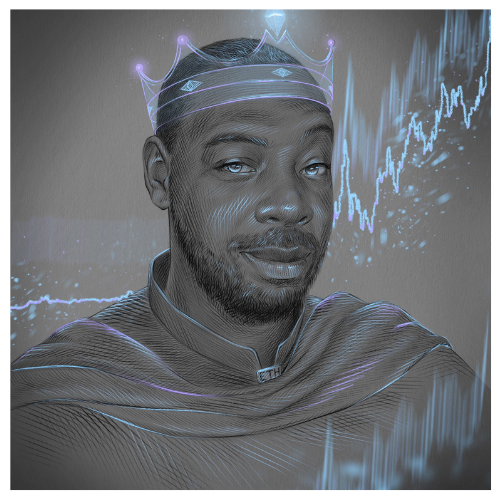

While NFT Marketplaces Are Dying, OpenSea Is Becoming Something Else

Greetings Warriors!
I have been in the NFT space long enough to know one thing.Nothing stays the same.Platforms come and platforms go. Projects explode overnight and disappear just as quickly. Artists build communities, collectors spend fortunes, marketplaces become giants—and then one morning we wake up and realize the landscape has completely changed.
I have watched it happen over and over again. Foundation shutting down was one of them. I had collected loads of artwork on Foundation. Many believed these platforms would be around for years. We built our portfolios there. We promoted them. In many ways, these marketplaces became part of our identities as NFT artists. Then they disappeared.
Foundation wasn't alone. Nifty Gateway shut down. Other NFT marketplaces disappeared or dramatically changed direction. Companies that once treated NFTs like the future quietly moved on to something else.
The great NFT gold rush was over.
Or at least that version of it was.
Because while much of the NFT world has been shrinking, OpenSea appears to be doing something completely different. Instead of retreating from NFTs, OpenSea is expanding. And its latest move may tell us exactly where the company believes this industry is heading.
Solana NFTs are coming back to OpenSea.
But Warriors, I don't think this story is really about Solana.
I think this story is about OpenSea attempting to become something much bigger than an NFT marketplace.
Check out my new poem book!
A collection of my most deepest thoughts.
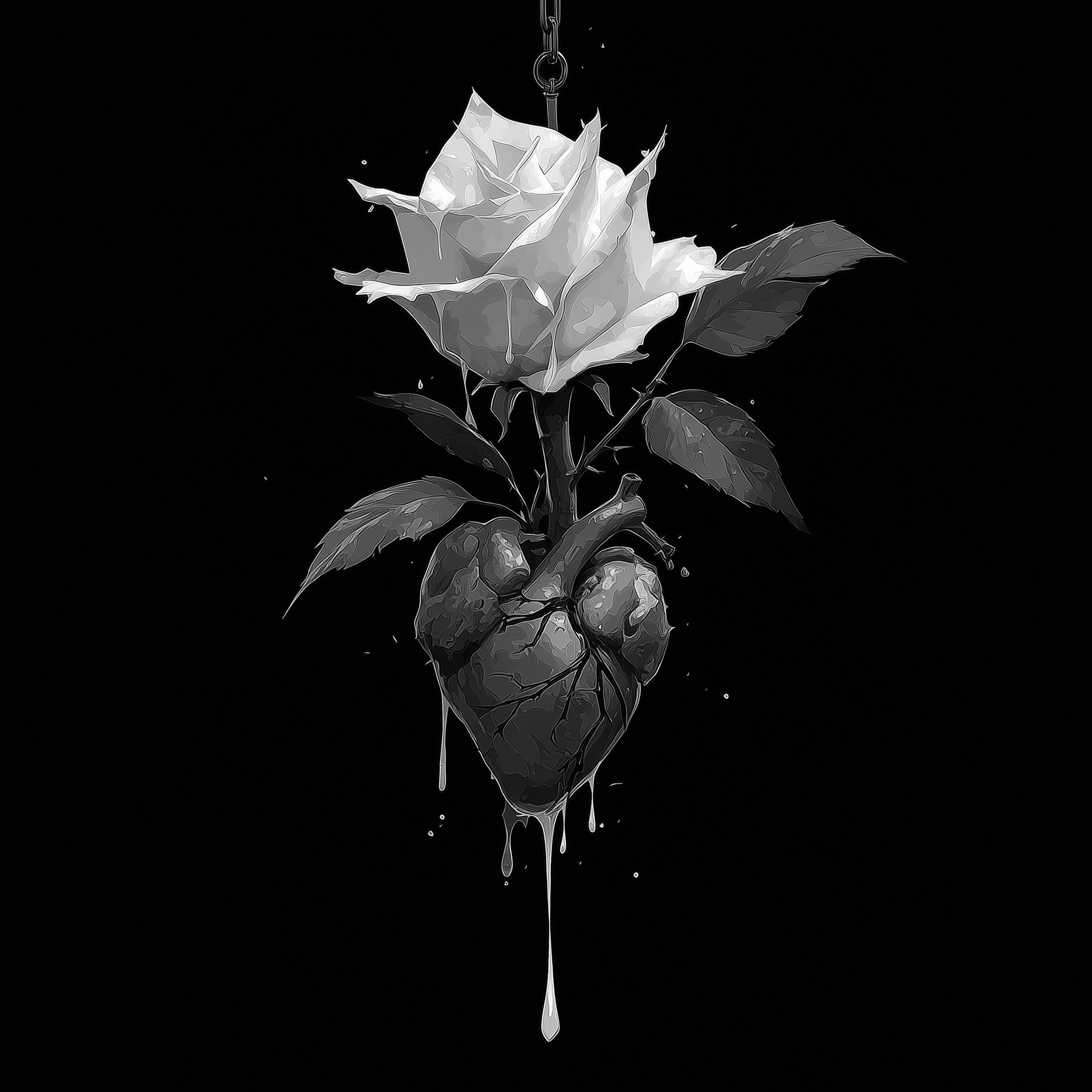
Between the wounds of war and the whispers of love lies the battlefield of the heart. These pages bleed passion, ache with loss, and stand defiant in hope. Step inside, where swords clash with sonnets, and discover that even in chaos, love dares to bloom.
Solana Returns to OpenSea
On August 31, 2026, OpenSea announced support for buying and selling Solana NFTs through its current marketplace. That means collectors can browse and trade selected Solana collections alongside assets from the other blockchain ecosystems supported by OpenSea.
Collections such as Mad Lads, Claynosaurz, Collector Crypt, Phygitals and BoDoggos were among those highlighted as part of the expansion.
For someone casually following NFTs, this might sound like a relatively small announcement. But there is much more happening underneath the surface. Because this isn't actually OpenSea's first dance with Solana.
OpenSea originally introduced Solana NFT support in beta back in 2022. At the time, the NFT market was still coming down from one of the most insane speculative periods we had ever witnessed.
Millions of dollars were moving through JPEGs. Profile-picture projects were launching almost daily. Celebrities were buying NFTs. Brands were jumping into Web3. Everybody wanted a piece of the pie.
OpenSea attempted to expand into the growing Solana ecosystem, but Solana-native marketplaces established themselves as the dominant players there.
Eventually, OpenSea's original Solana NFT integration disappeared. Now Solana NFTs are back. But this time, they are returning to a very different OpenSea.
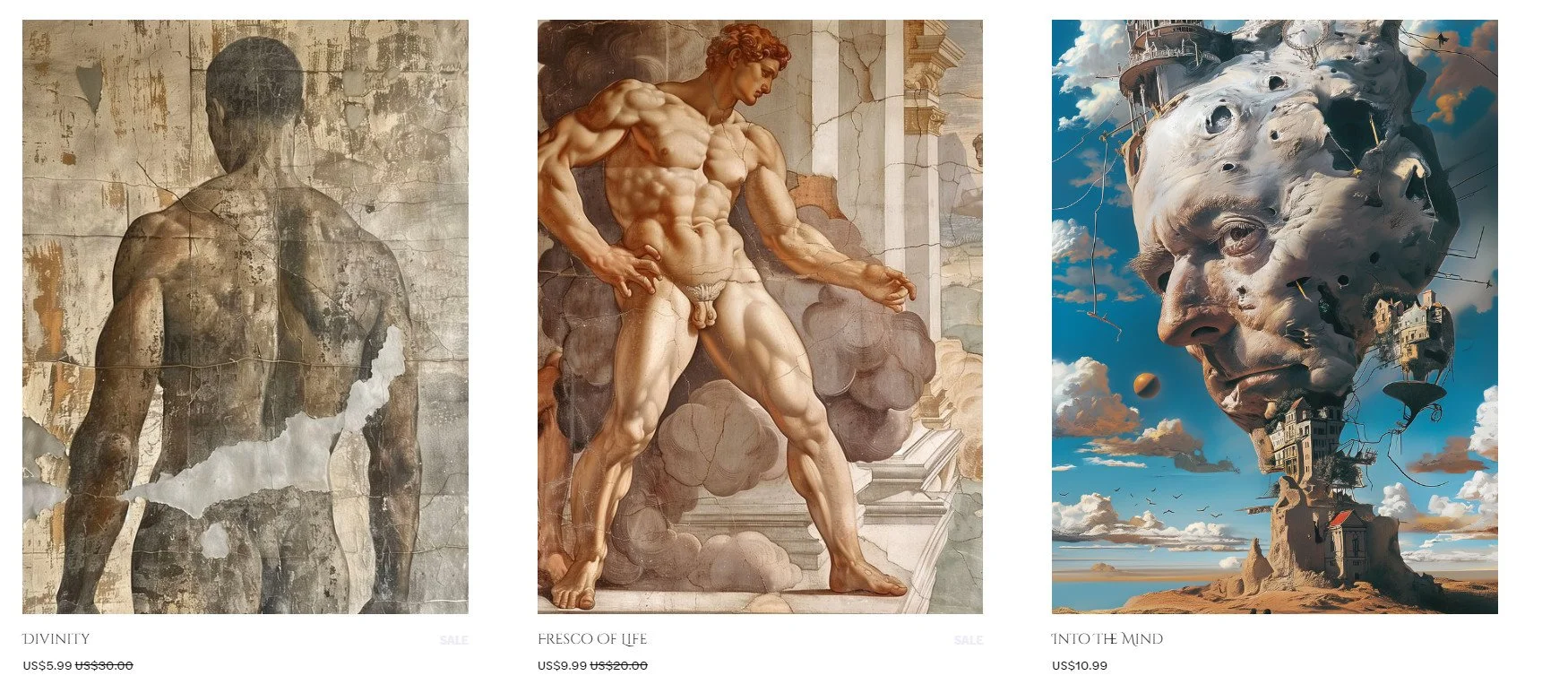
Get two custom AI Art created by yours "King Romulus" truly every month. Uniquely crafted, with expressive quotes that dive deep into my subconsciousness. One of the art pieces will be posted on my Instagram account as well. Live through art history in the making!
OpenSea Isn't the Same Company Anymore
When most people hear the name OpenSea, they probably still think about NFTs. CryptoPunks, Bored Apes, Digital art, Profile pictures, and Ethereum. That was the OpenSea many of us knew during the NFT boom.
But OpenSea has spent the last few years transforming itself.
The company's rebuilt OS2 platform has increasingly moved toward becoming a multi-chain marketplace for on-chain assets, rather than simply a website where people buy JPEGs. OpenSea now supports assets across more than two dozen blockchain networks. It has expanded token trading. It has introduced swaps. It has expanded wallet functionality. It has pushed deeper into mobile. And now Solana NFTs have returned. Put all of those pieces together and something becomes clear. OpenSea isn't trying to rebuild the NFT marketplace of 2021. OpenSea is trying to build the marketplace for whatever comes after it. That distinction matters.


Are your thoughts the focus of your pain. Do the burn the inner boroughs of your subconsciousness? Thoughts on Fire... Will they remain?
The NFT World Became Too Fragmented
One of the biggest problems with crypto has always been fragmentation.
Want Ethereum NFTs? Go here. Want Solana NFTs? Go somewhere else. Want to swap tokens? Open another application. Want to check your portfolio? Open another application. Here comes another website, another opportunity to screw something up.
For people who have lived inside crypto for years, this feels normal. But Warriors, it isn't normal.
Imagine if buying something online required you to use an entirely different browser depending on the company manufacturing the product. Nobody would tolerate that. Yet crypto users have tolerated a similar experience for years. OpenSea appears to be trying to solve part of that problem.
Its strategy increasingly looks something like this:
NFTs.
Tokens.
Swaps.
Multiple wallets.
Multiple blockchains.
One marketplace.
And Solana is another major piece of that puzzle.


One Account, Multiple Blockchain Worlds
Another important part of OpenSea's evolution is its wallet system. Users can link multiple wallets across EVM networks and Solana to a single OpenSea account. Think about what that means.You could have Ethereum NFTs sitting in one wallet and solana NFTs sitting in another. And instead of treating these as completely separate digital worlds, OpenSea can increasingly present them through one interface.
That is the direction Web3 desperately needs to move toward. The average person doesn't care what database Amazon or Netflix uses. They just want the technology to work.
Crypto eventually needs to reach the same point. Users shouldn't have to become blockchain engineers simply to collect digital art. The technology should slowly disappear into the background. And if that happens, the winners may be the companies capable of making dozens of complicated blockchain ecosystems feel like one simple experience. OpenSea clearly wants to become one of those companies.

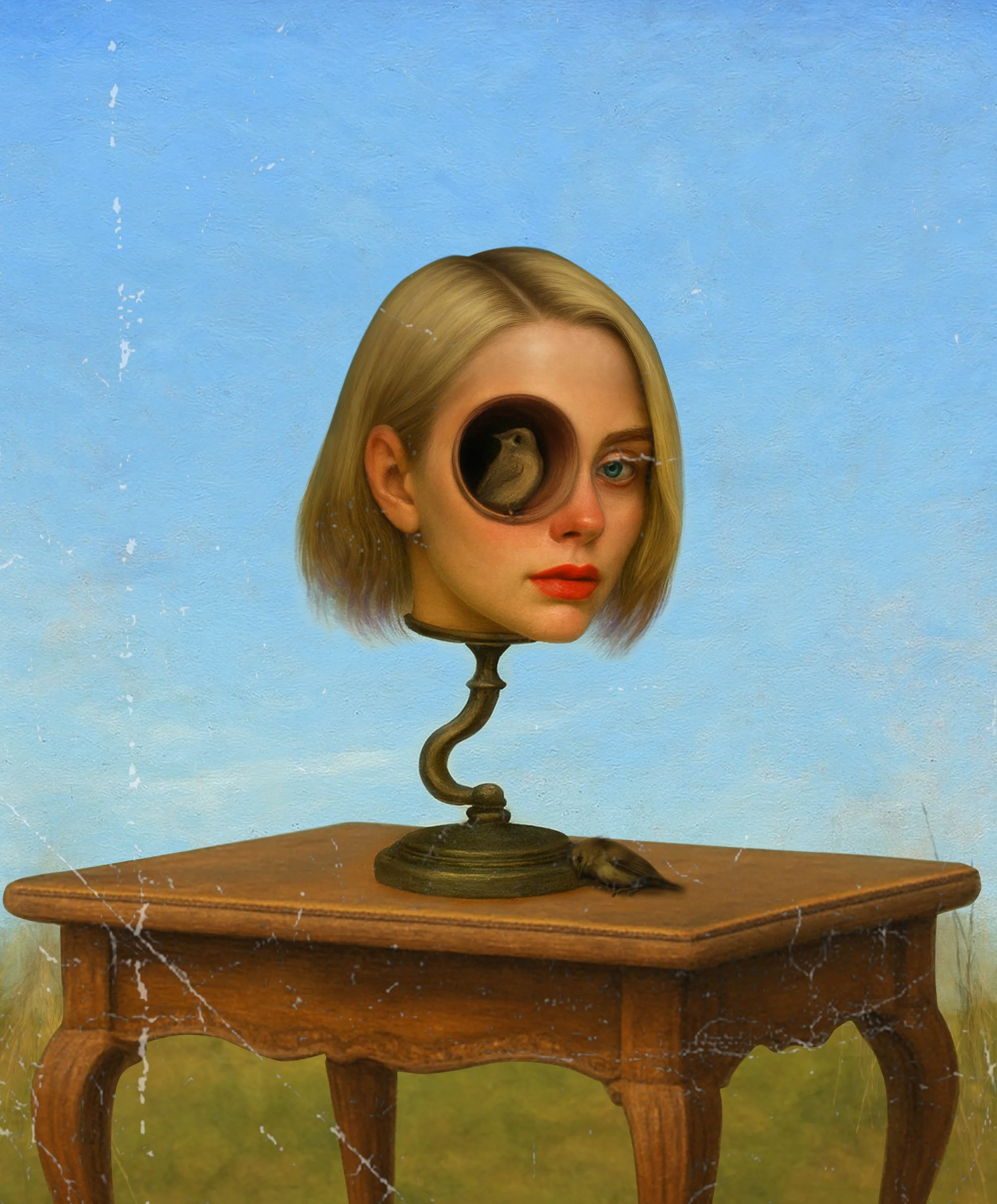
Vosoughi, I Am The Light! - 2025
Why Solana Matters for Artists
Now this is where things become especially interesting for artists. Ethereum changed digital art forever. Whatever happens to NFTs from here, I don't think that can ever be taken away.
For the first time, digital artists could create scarce digital objects, establish provenance and sell directly to collectors around the world without requiring a traditional gallery to validate their work. That was revolutionary. But Ethereum also came with problems.
During the height of the NFT boom, gas fees could become ridiculous.
Sometimes minting or moving an NFT could cost more than the artwork itself. That made experimentation expensive. It also created a strange economic pressure where artists felt like everything needed to sell for hundreds or thousands of dollars simply to justify interacting with the blockchain. Solana changes some of that.
Transactions on Solana are generally extremely inexpensive compared with Ethereum mainnet. That opens the door to a different type of artistic economy. Imagine an artist creating a major one-of-one piece on Ethereum.That might be the museum-quality work.
The centerpiece.
The expensive work intended for a serious collector.
Then that same artist could experiment with Solana. Affordable editions and collectibles. Small releases costing $10, $20 or $50 rather than thousands of dollars.
Two completely different markets. One artist. And potentially one OpenSea storefront connecting them. That could become extremely powerful.
Artists Learned a Painful Lesson
There is another reason this matters to me personally. Foundation shutting down taught me something. Never confuse the marketplace with the artwork. That is an easy mistake to make. Many did.
We uploaded our artwork. Built profiles. Collected followers. Shared Foundation links. Shared Nifty Gateway links. Shared marketplace pages.
Eventually those platforms began feeling like our galleries. But they weren't our galleries. We were building inside someone else's house. And someone else always has the ability to turn off the lights. That is one of the harshest lessons of Web3.
Decentralization doesn't automatically mean permanence. A blockchain might survive. Your token might survive. Your smart contract might survive. But the beautiful website displaying everything? That can disappear tomorrow. That is why I believe the future of NFT art has to become less dependent on individual marketplaces. The artwork should exist independently. The marketplace should simply become a window through which people discover it. If OpenSea succeeds with its multi-chain strategy, that distinction becomes increasingly important.
The Next NFT Era May Not Look Like NFTs
This is why OpenSea bringing Solana NFTs back matters. Not because Solana needs another marketplace. It matters because we're watching the infrastructure evolve.
The first NFT era was about speculation. The next one may be about interoperability. Multiple blockchains. Multiple wallets. Different types of assets. Physical and digital ownership merging together. Artists moving freely between ecosystems.
Collectors interacting with blockchain assets without caring which chain sits underneath them. That is a much bigger idea.
And OpenSea clearly wants to be standing in the middle of it.
Will they succeed? I don't know.
Crypto history has taught me never to assume any company is untouchable. OpenSea itself could disappear someday. That's the point.
The goal shouldn't be for OpenSea to survive forever. The goal should be for our art to survive regardless of whether OpenSea does. That is the promise blockchain technology originally gave artists.
And somewhere beneath all the speculation, hype, rug pulls, million-dollar JPEGs, failed marketplaces and broken promises…
I still believe that promise matters.
The NFT gold rush may be dead.
Good.
Maybe now we can finally build something worth keeping.
Until next time, Warriors.
If you enjoyed this article, you can read more below:
Frida Kahlo Controversy: Why Mexico vs Spain Is Sparking a Cultural Debate