
Another NFT Marketplace Falls: Exchange.Art Shuts Down, Leaving Collectors Like Me Heartbroken
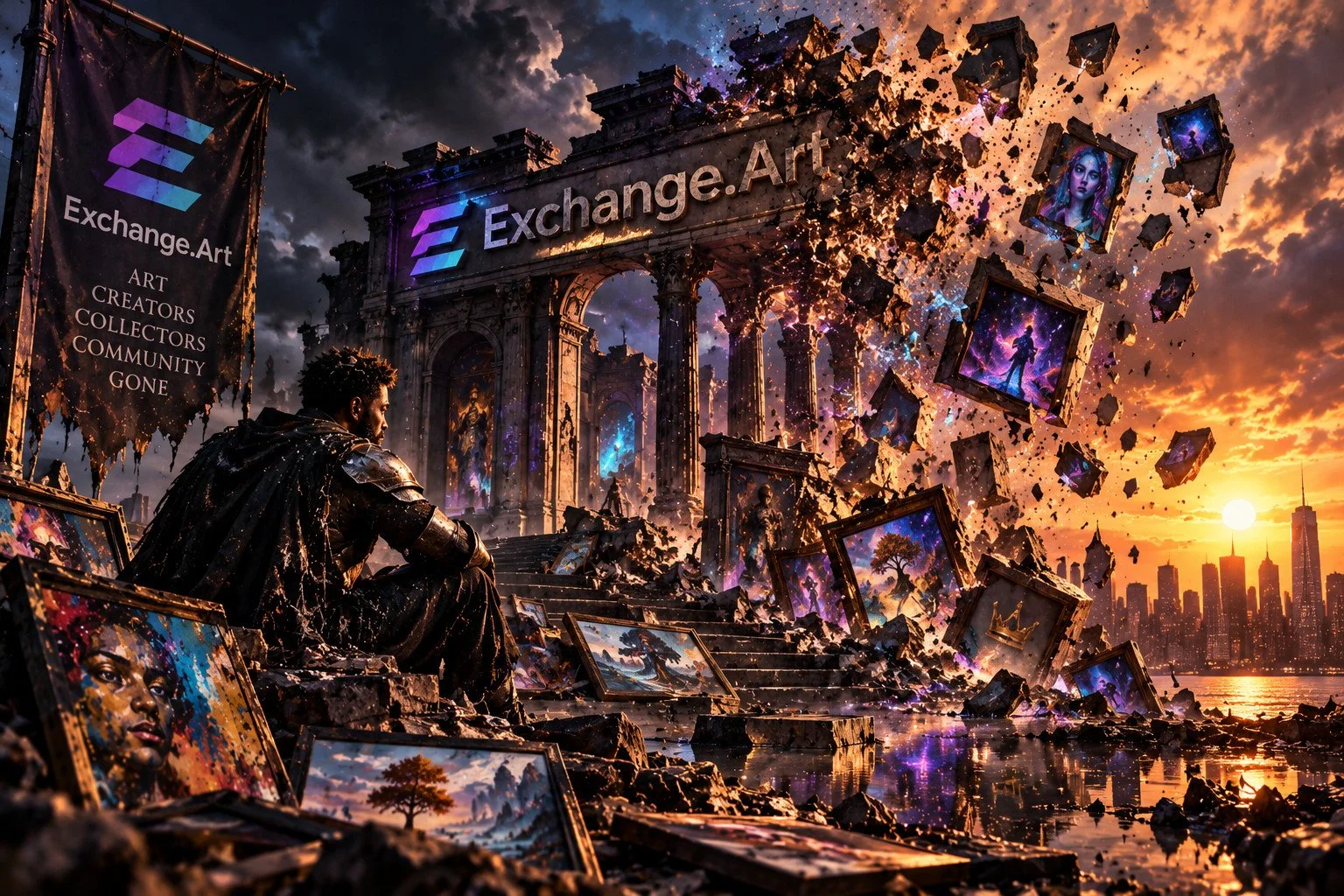
Another NFT Marketplace Falls: Exchange.Art Shuts Down, Leaving Collectors Like Me Heartbroken
The Solana-based digital art marketplace closed on August 1, 2026. I only discovered its demise today, when I returned to revisit the artwork I had collected over the years. What I found was another painful reminder of how fragile the NFT art ecosystem has become.
Greetings Warriors!
There is something special about revisiting an artwork you love. Sometimes I find myself going through my digital art collection, admiring pieces I purchased months or even years ago, remembering the artists who created them and appreciating the emotions those works still evoke. I have made this something of a personal ritual, regularly checking my NFTs, rediscovering forgotten favorites and sharing pieces across social media so that others can experience the creativity that originally captured my attention.
Today, however, that familiar ritual ended in disappointment.
I decided to visit Exchange.Art, a Solana-based NFT marketplace where I had collected a substantial amount of digital artwork over the years. I wasn't looking to make a trade or speculate on the price of a token. I simply wanted to look through my collection, admire some beautiful artwork and perhaps share a few pieces with my followers.
Instead, I was greeted by a message informing me that the marketplace had shut down.
Exchange.Art had officially ceased operations on August 1, 2026, and I was only discovering it now, more than two months later.
I stared at the announcement with a familiar feeling of sadness, disappointment and frustration. Another platform gone. Another digital art community disrupted. Another marketplace that once represented possibility for artists and collectors reduced to a closure notice.
For those who have followed my writing, you know this isn't the first time I've experienced something like this. I've watched NFT marketplaces emerge with extraordinary promises, build passionate communities and eventually disappear when the economics no longer worked. I have personally collected artwork across this ecosystem, and every closure feels a little more personal than the last.
What saddens me most isn't simply that another business failed. It's that another home for digital art has disappeared. And as I looked at that shutdown notice today, I found myself asking a question that has become increasingly difficult to ignore: How many more NFT marketplaces must disappear before the industry finally confronts the problems threatening its survival?
Check out my new poem book!
A collection of my most deepest thoughts.
Between the wounds of war and the whispers of love lies the battlefield of the heart. These pages bleed passion, ache with loss, and stand defiant in hope. Step inside, where swords clash with sonnets, and discover that even in chaos, love dares to bloom.
Exchange.Art: A Marketplace That Put Digital Artists First
Exchange.Art launched in October 2021, during a period when NFTs were attracting extraordinary attention from artists, collectors, investors and speculators around the world. The marketplace was built on the Solana blockchain, which offered relatively low transaction fees and fast processing, making it an appealing alternative to the sometimes expensive experience of minting and trading artwork on Ethereum.
What made Exchange.Art particularly interesting was its emphasis on digital fine art.
While much of the NFT industry became associated with profile-picture collections, speculative trading and projects promising enormous financial returns, Exchange.Art sought to establish a space where original digital artwork could receive meaningful attention. Artists could mint their creations, offer works through auctions or fixed-price sales, build relationships with collectors and participate in a marketplace that treated artistic expression as something worth celebrating.
The platform also developed tools intended to protect creator royalties, including a royalty-protection standard introduced in 2022. Its approach reflected an important principle: artists should have opportunities to benefit from the economic activity surrounding their work, rather than watching intermediaries capture all the value.
For someone like me, who genuinely enjoys discovering independent artists and collecting their creations, that emphasis mattered. I wasn't interested in collecting artwork simply because someone on social media claimed it would increase in value. I collected because I liked what I saw, because a particular image resonated with me, or because I wanted to support an artist whose creativity deserved recognition.
Exchange.Art gave me another place to do exactly that.And over time, I accumulated a substantial collection of artwork through the platform.
That is why its disappearance hurts.
Get two custom AI Art created by yours "King Romulus" truly every month. Uniquely crafted, with expressive quotes that dive deep into my subconsciousness. One of the art pieces will be posted on my Instagram account as well. Live through art history in the making!
I Went Looking for My Art and Found a Shutdown Notice
I think there is a difference between reading about a marketplace closing and personally discovering that a platform holding years of your collecting memories is no longer operating.
When I learned about previous NFT marketplace closures, I understood the economic circumstances surrounding them. I knew the industry was struggling. I had watched trading activity decline, investor enthusiasm disappear and platforms scramble to reinvent themselves.
But today wasn't about market analysis. It was about my collection. I went to Exchange.Art expecting the familiar experience of browsing artworks I had purchased. I wanted to revisit pieces that once inspired me, perhaps rediscover an artist I hadn't checked on recently, and share some of that creativity with my community on X and other social platforms.
Instead, I discovered that the website I remembered was gone. The banner announcing the shutdown felt strangely final. I hadn't realized that Exchange.Art announced its closure in July. I hadn't realized that August 1 would mark the end of its operations. I simply returned to a place I had visited before and found that it no longer existed as the marketplace I remembered.
Perhaps that is one of the most unsettling things about digital platforms. They can become part of our routines without us ever imagining that one day we might return and find the doors permanently closed. A traditional art collector might visit a gallery where they purchased a painting years earlier and discover that the business has closed. The painting hanging in their home would still exist, of course, but the place where they discovered it, the people they encountered and the experience surrounding that purchase would become memories.
Digital collecting has a similar emotional dimension, even if the technology is entirely different. My NFTs weren't merely entries in a wallet. They represented artists I admired, creative decisions I made and moments when a piece of digital artwork captured something meaningful to me.
Seeing Exchange.Art shut down reminded me that while technology can preserve ownership records, it cannot automatically preserve every community, relationship or experience built around them.
The artwork may survive, but the place where we discovered it can disappear. And that is a loss worth acknowledging.


Are your thoughts the focus of your pain. Do the burn the inner boroughs of your subconsciousness? Thoughts on Fire... Will they remain?
Why Exchange.Art Shut Down: The NFT Bear Market Claims Another Victim
On July 3, 2026, Exchange.Art publicly announced that it would permanently cease operations on August 1.
The explanation was painfully familiar. The company said that a prolonged downturn in the market for blockchain-based art had made it impossible to identify a financially sustainable path forward. In other words, the marketplace could no longer support the cost of operating its business under existing market conditions.
Exchange.Art had survived the collapse of the initial NFT boom, periods of declining trading activity and the broader shift in attention away from digital art speculation. It had even been acquired by the Solana-based cryptocurrency project Bonk in May 2025, but that ultimately wasn't enough to prevent its closure.
The announcement represents another reminder that building an innovative platform and attracting a community of talented artists do not necessarily guarantee commercial survival.
NFT marketplaces require money to operate.
Developers must maintain the infrastructure. Security systems need attention. Websites require hosting and maintenance. Customer support, product development, marketing and community management all create ongoing expenses.
When collectors stop buying and trading activity declines, those costs don't simply disappear.
A marketplace that depends heavily on transaction fees can quickly find itself in trouble when the volume of transactions falls below the level required to sustain operations.
And digital fine art faces a particular challenge.
Unlike speculative collections that sometimes generate rapid buying and selling, serious art collectors may purchase an artwork because they want to keep it indefinitely.
That is something I understand personally.
When I collect artwork I love, I am not necessarily planning to sell it next week or next month. I might want to hold onto it for years.
That is wonderful for collecting culture, but it creates a difficult economic reality for marketplaces that depend on frequent transactions.
A marketplace can succeed in encouraging people to love and hold art while simultaneously struggling to generate enough trading revenue to survive.
That contradiction deserves far more attention.


My NFTs Still Exist, but Something Important Is Missing
One of the first questions collectors naturally ask when an NFT marketplace shuts down is what happens to their artwork. Fortunately, Exchange.Art explained that the NFTs minted through its platform remained recorded on the Solana blockchain and could be imported or displayed through compatible marketplaces. The company also stated that artwork and funds held in its sales and escrow contracts would be released to their rightful owners before operations ended. That distinction is important.
A marketplace shutting down does not automatically erase blockchain ownership. However, blockchain ownership is only one part of the digital art experience. The underlying media files must still remain accessible through their storage arrangements, and marketplace-specific features such as profiles, galleries, descriptions and transaction interfaces may no longer be available.
For collectors, that can create a frustrating situation. You may still own the NFT, but the familiar place where you viewed it, discovered similar works and followed the artist's journey has disappeared. For me, that matters because I actually enjoy revisiting my collection. I don't want my NFTs to become obscure wallet addresses that I rarely examine. I want to see the artwork. I want to remember why I purchased it. I want to share it with people who might appreciate it.
The visual experience is part of the joy of collecting. I didn't enter the NFT art world because I wanted to spend my evenings staring at blockchain transaction records. I entered because I love art. And while decentralized ownership remains one of the most interesting aspects of blockchain technology, the closure of Exchange.Art demonstrates that the surrounding experience still depends heavily on businesses and platforms that can disappear.
Decentralized ownership does not automatically mean a decentralized art ecosystem. That is a lesson the NFT industry must take seriously.
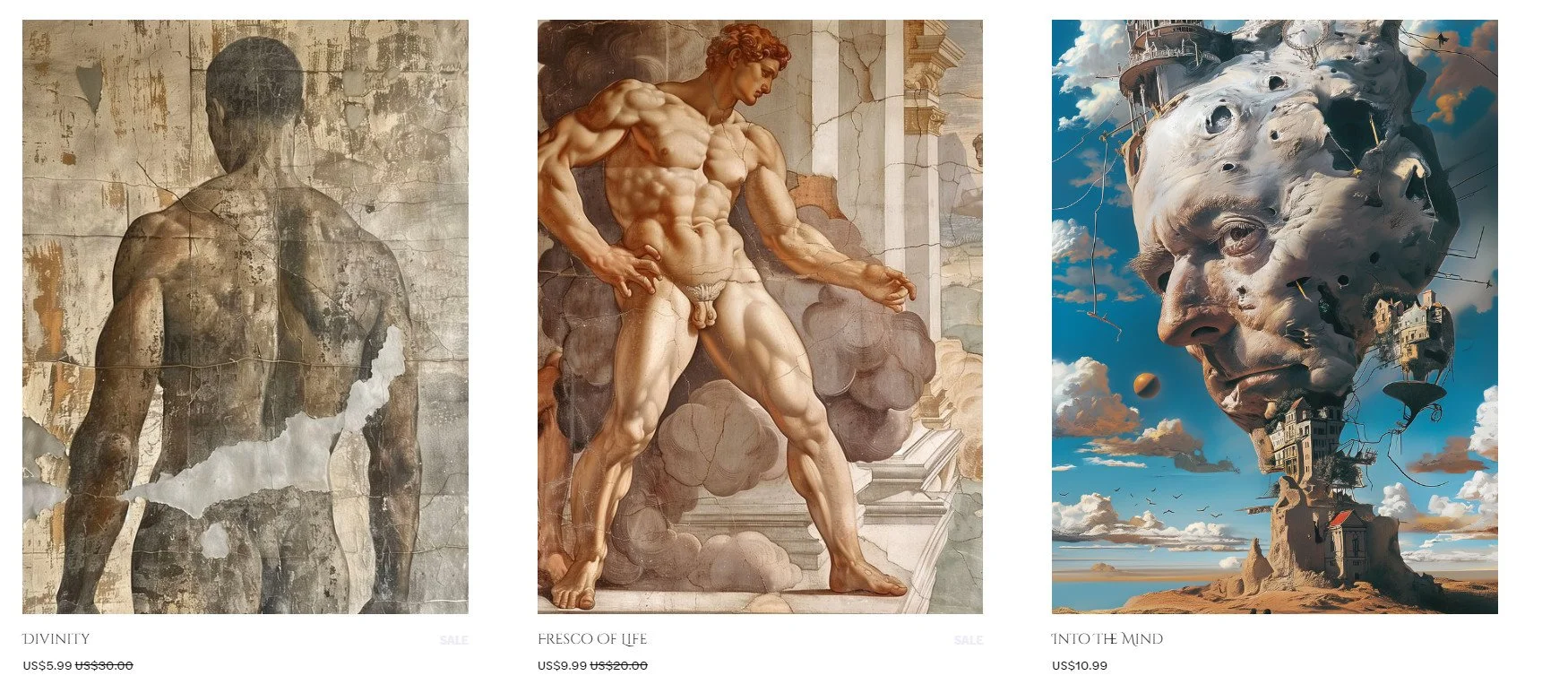

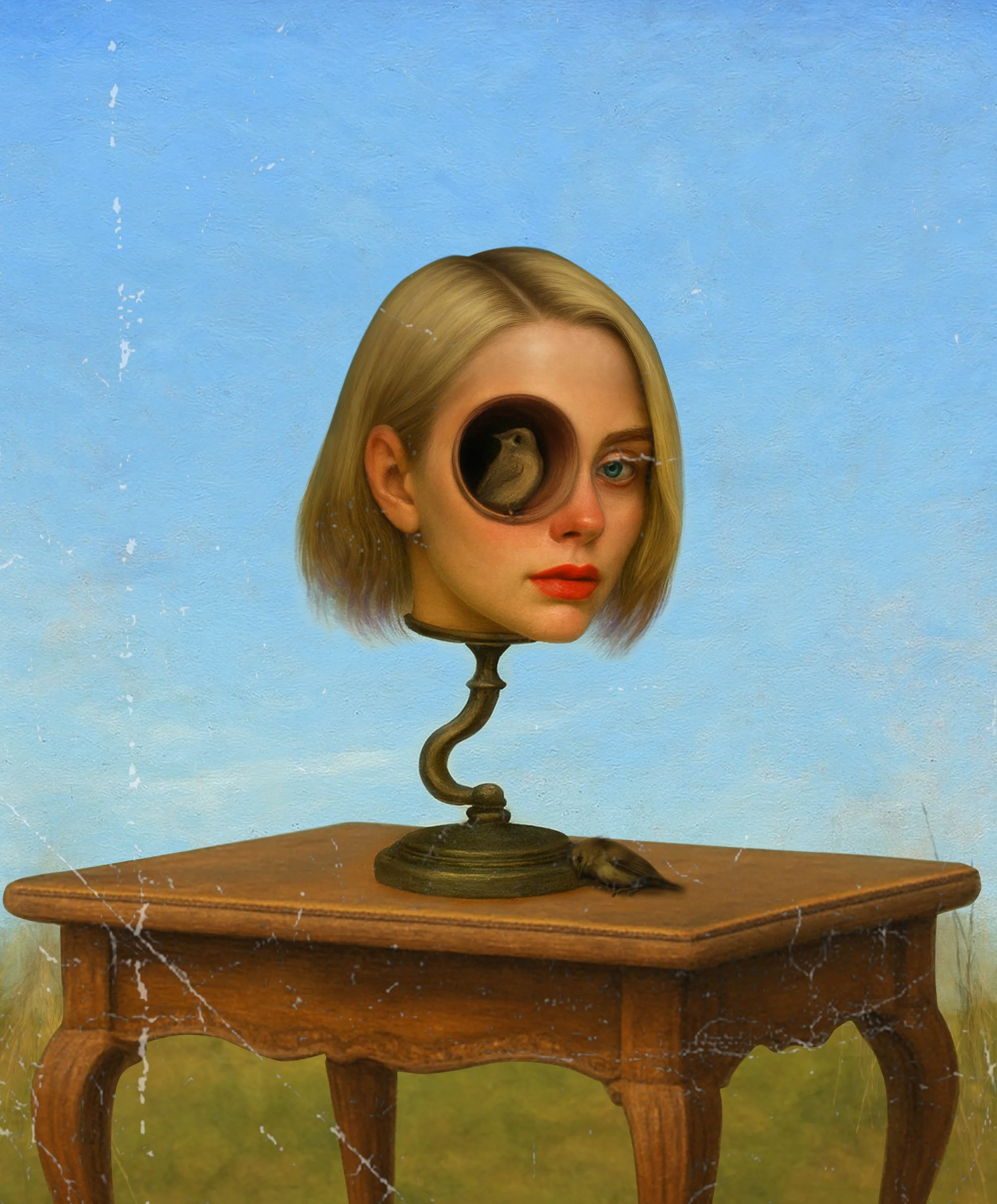
Vosoughi, I Am The Light! - 2025
Another Closure in an Increasingly Familiar Story
What makes Exchange.Art's shutdown particularly discouraging is that it isn't an isolated event. I've written before about the closure of NFT platforms and the uncertainty surrounding the future of digital art marketplaces. Each time another service disappears, the same questions return.
What happens to the artists?
What happens to the collectors?
What happens to the communities?
And perhaps most importantly, what happens to the confidence of people who believed these platforms would become permanent homes for digital creativity? The closure of Rodeo was another reminder of the fragility of experimental NFT platforms. Nifty Gateway's decision to wind down its marketplace marked another significant change in an industry that once seemed destined for endless expansion.
Foundation's shutdown was especially painful for me because I had collected numerous artworks there. It was another platform that had once felt like an important part of the digital art landscape. Now Exchange.Art joins that growing list. Different companies had different strategies, communities and financial circumstances, so their closures should not all be treated as identical. But together, they reveal an unmistakable pattern.
The NFT marketplace industry is undergoing a prolonged period of contraction and restructuring. During the height of the NFT boom, new platforms appeared constantly. Nearly every project promised to revolutionize digital ownership, empower artists, democratize collecting or create the next generation of creative communities.
There was excitement everywhere. Money was flowing. Artists were experimenting. Collectors were discovering new forms of expression. And entrepreneurs were building businesses around what seemed like an unstoppable movement. But excitement is not the same thing as sustainability. Eventually, businesses must demonstrate that they can survive when speculative enthusiasm disappears.
And many have struggled to do so. As a collector, I find that incredibly disappointing because the platforms that disappear are not merely financial ventures to me. They were places where I discovered art. They were part of my collecting journey. And each closure makes the digital art landscape feel a little smaller.
The Real Victims Aren't Always the Investors
Whenever a marketplace shuts down, much of the conversation revolves around the business itself. How much money did it raise? Who acquired it? How much trading volume did it generate? Why couldn't it survive? Those questions matter, but I believe they overlook the people who gave the marketplace its identity… The artists. I have spent years interacting with artists online, particularly through X, where many of my collecting relationships began. Some artists have become genuine friends, and I have had the privilege of watching their creative journeys unfold.
I have seen artists celebrate their first NFT sale. I have seen artists struggle with self-doubt. I have seen artists experiment with extraordinary ideas, share personal stories through their work and continue creating even when the market offered very little encouragement. For some, NFTs represented an opportunity to reach collectors without relying entirely on traditional galleries or established institutions. They could present their artwork directly to an international audience.
They could build relationships with collectors. They could experiment with pricing, editions and digital formats. And they could potentially earn income from their creativity. When a platform like Exchange.Art disappears, those artists don't necessarily lose ownership of their creations, but they may lose a place where their work was discovered, promoted and appreciated. That loss is difficult to quantify. A marketplace is more than a website.
At its best, it becomes a gathering place for people who believe art matters. And when that gathering place disappears, the community must find somewhere else to go.
Final Thoughts: Another Marketplace Gone, but the Art Remains
Warriors, when I visited Exchange.Art today, I wasn't expecting to write another article about the decline of the NFT marketplace industry. I simply wanted to enjoy my collection, revisit artworks that had brought me happiness, admire the creativity of artists I had supported and perhaps share a few pieces with my followers.
Instead, I found a shutdown notice.
And for a moment, I felt the familiar sadness that comes with realizing another chapter of something you cared about has ended.
Exchange.Art is gone. Another marketplace has met its demise. Another community has lost a digital home, and another group of collectors, including myself, must adapt to the disappearance of a platform that once played a meaningful role in our collecting journeys.
I don't know how many more NFT marketplaces will disappear before this period of contraction finally stabilizes. I don't know which platforms will successfully adapt or what the next generation of digital art marketplaces will look like.
But I do know one thing.
I didn't fall in love with digital art because of the marketplaces. I fell in love with the creativity of the people who made the art.
The platforms helped me discover those people. They made collecting easier, connected artists with collectors and, for a time, created places where digital creativity could flourish.
For that, I am grateful.
But perhaps the greatest lesson from all these closures is that we should never confuse the marketplace with the art itself. Businesses come and go. Websites disappear. Market cycles rise and fall. But meaningful art has a way of outliving the institutions that once housed it, provided we make the effort to preserve it. I sincerely hope the NFT industry learns from the demise of Exchange.Art and the many platforms that came before it, because artists deserve more than temporary digital storefronts, collectors deserve more than disappearing galleries, and digital art deserves an infrastructure built to last.
Until next time, Warriors. Another marketplace has fallen. But my love for the art—and my appreciation for the artists behind it—remains.
If you enjoyed this article, you can read more below:
Frida Kahlo Controversy: Why Mexico vs Spain Is Sparking a Cultural Debate