
Warrior’s Tale: Jackson Pollock — The Artist Who Turned Chaos into Modern Art
Greetings Warriors!
Jackson Pollock didn’t just paint. He fought the canvas… and sometimes, he lost.
But in those losses—those spills, drips, accidents, and beautiful disasters—modern art found a new language. One that didn’t whisper politely from museum walls, but screamed, staggered, and danced across the floor like a man possessed.
This is the story of Jackson Pollock: the artist people love to mock, hate to understand, and can’t stop talking about.
Check out my poem book!
A collection of my most deepest thoughts.
The Man Before the Myth
Jackson Pollock was born in 1912 in Cody, Wyoming—already a warning sign. The American West shaped him early: wide-open spaces, raw landscapes, and a sense that rules were suggestions, not commandments. He wasn’t raised in salons or academies dripping with velvet and wine. He came from dust, movement, and instability.
By the time he landed in New York, Pollock was already restless. He studied under Thomas Hart Benton, a regionalist painter known for sweeping murals and muscular compositions. Benton didn’t teach Pollock to drip paint—but he taught him rhythm. Motion. The idea that a painting could move like music instead of sitting still like a well-behaved child.
Pollock absorbed that lesson deeply. Too deeply, some would say.
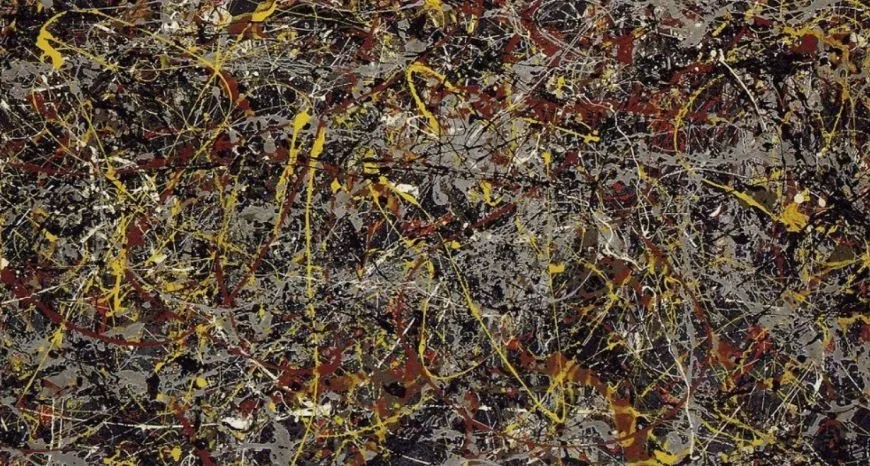
Jackson Pollock, Number 5 - 1948
The Influence of Chaos (and Therapy)
Before Pollock became famous, he became troubled. Depression. Alcoholism. Rage. Doubt. He wasn’t painting from a calm place—and thank God for that. Calm rarely makes history.
During therapy, Pollock was introduced to Jungian psychology—the idea of the collective unconscious, symbols older than civilization, myths buried inside all of us. Suddenly, painting didn’t need a subject. The subject was the mind itself.
This was a turning point.
Pollock wasn’t trying to paint things anymore. He was trying to release something.


Picasso Enters the Arena
Let’s clear something up right now: Jackson Pollock did not emerge in a vacuum like a paint-splattered deity. He was watching. Studying. Reacting.
And yes—Picasso mattered.
When Pollock encountered Picasso’s work, especially pieces like Guernica, it hit him like a punch to the ribs. Picasso proved that painting could be violent, political, emotional, and monstrous all at once. You didn’t need beauty. You needed truth.
Pollock saw that and thought: If Picasso can break the body apart, I can break the painting itself.
Picasso fractured form. Pollock shattered the rules entirely.
From Easel to Floor: The Revolution
Here’s the moment the art world still argues about.
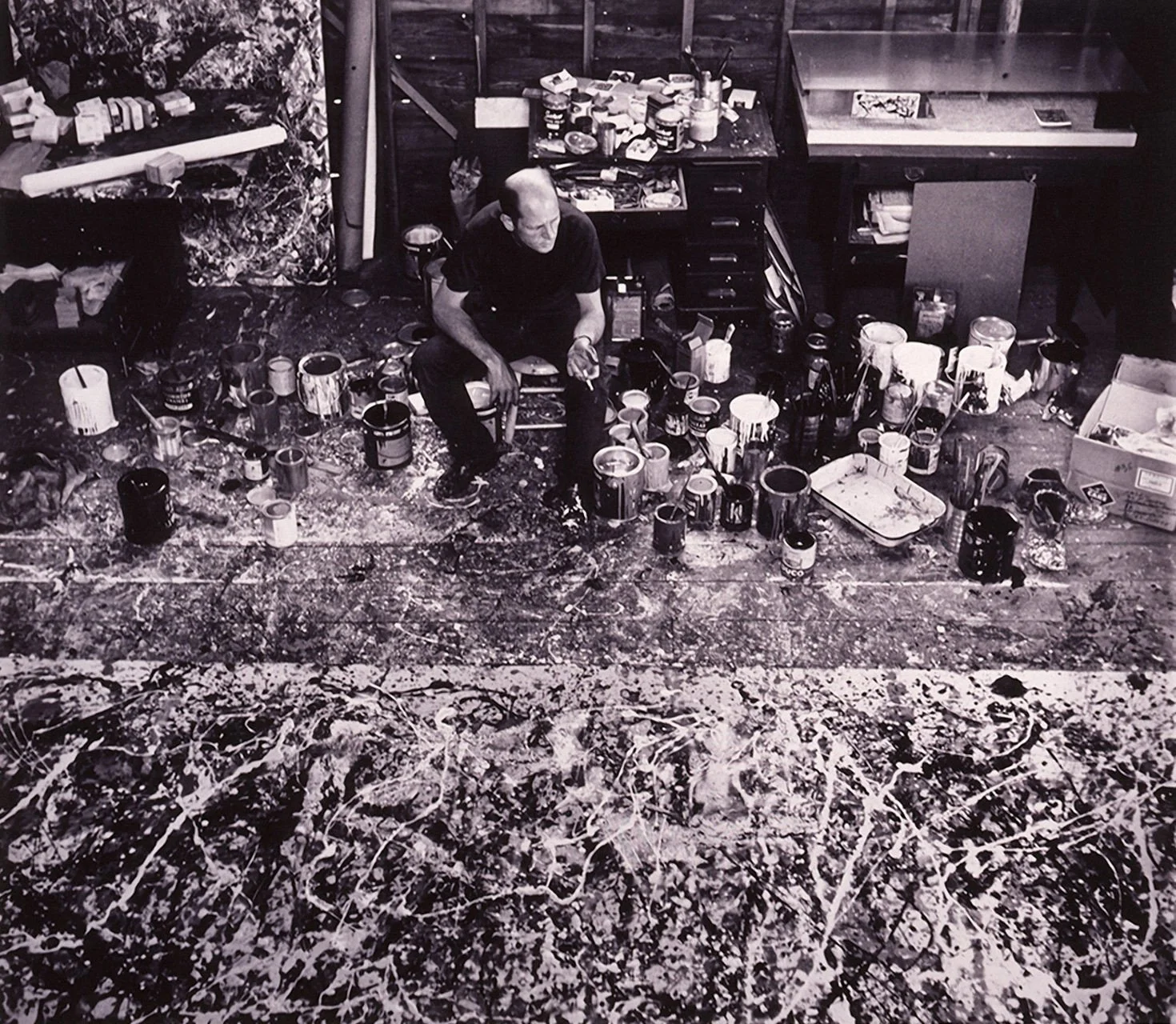
Pollock put the canvas on the floor.
That single act was rebellion.
No easel. No polite distance. He walked around the canvas. Over it. Into it. Paint dripping, splashing, flinging from sticks, brushes, hardened bristles—sometimes straight from the can. Gravity became his collaborator. Movement became his signature.
Critics laughed. Viewers scoffed. “My kid could do that,” they said.
Sure. Let your kid try.
Pollock’s paintings weren’t random. They were layered, deliberate, and rhythmically controlled. Every line responded to the last. Chaos, yes—but guided chaos. Like jazz. Like war. Like life.
BUY MY ART🖤

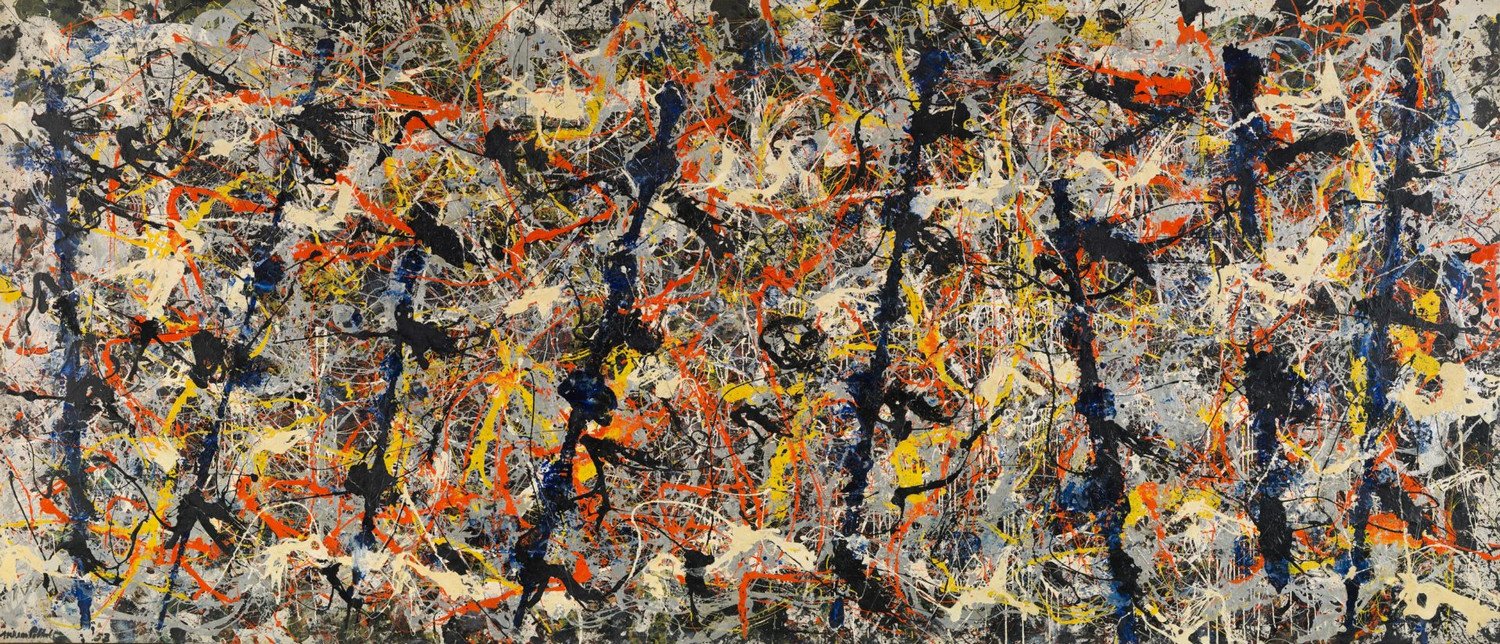
Jackson Pollock, Blue Poles - 1952
Influences Beyond the Gallery
Pollock was deeply inspired by Native American sand painting rituals, which he saw in exhibitions and demonstrations. These were not artworks to hang on walls. They were acts. Temporary. Sacred. Performed on the ground.
Sound familiar?
Pollock didn’t copy these traditions—he absorbed the philosophy. Art as action. Art as presence. Art as something that happens, not something that decorates.
Surrealism also left its fingerprints on his work, particularly the idea of automatic drawing—letting the unconscious guide the hand without censorship. Pollock didn’t sketch first. He trusted instinct.
That trust is rare.

Renaissance Man - Inspired by Leonardo Da Vinci

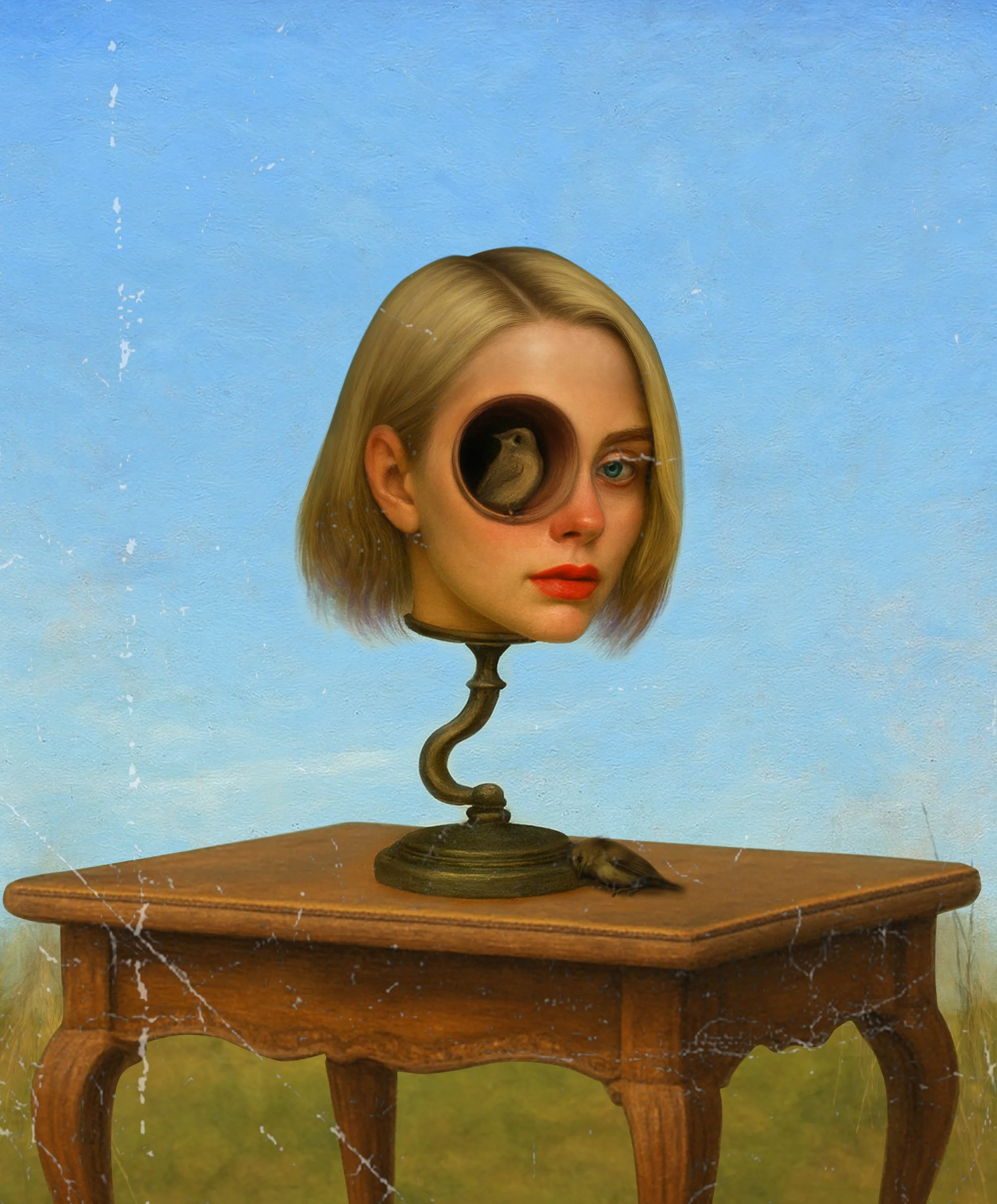
Vosoughi, I Am The Light - 2025
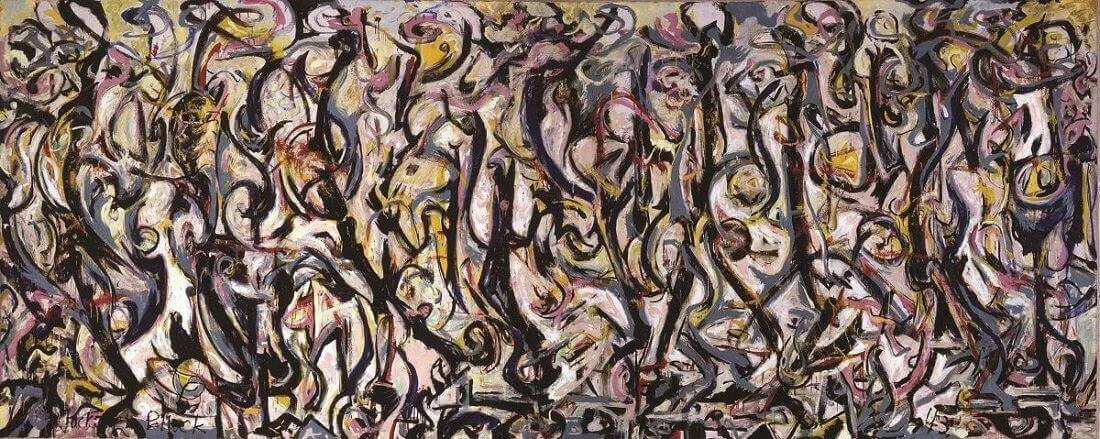
Jackson Pollock, Mural - 1943
Fame, Money, and the American Myth
When Pollock became famous, it happened fast—and violently. Magazines dubbed him “Jack the Dripper.” Galleries sold his work. Collectors fought over canvases that once lay drying in barns.
Suddenly, the man who couldn’t control his demons was asked to represent American art.
No pressure.
He became a symbol: the tortured genius, the cowboy of abstraction, the artist as warrior. And like many warriors, he struggled to survive peace.
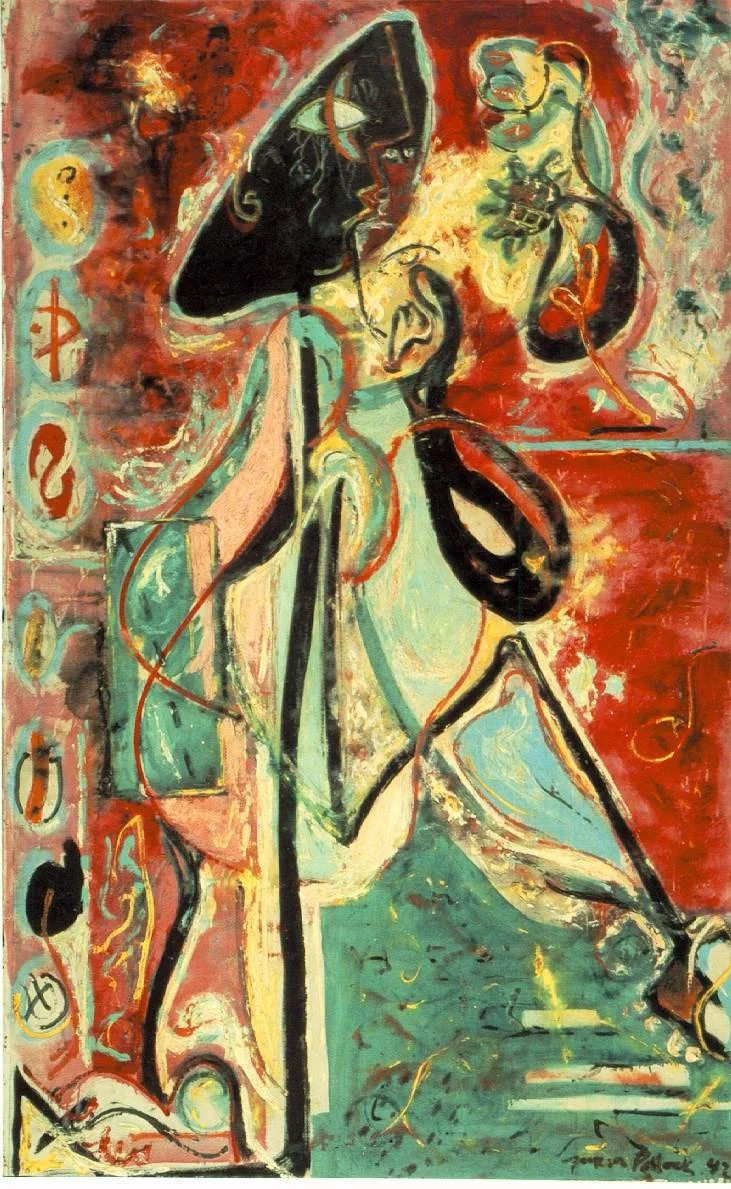
Jackson Pollock, Moon Woman - 1942
The Price of the Battle
Pollock died in a car crash in 1956 at the age of 44. Alcohol was involved. The myth hardened instantly. Tragic. Predictable. Romanticized.
But here’s the uncomfortable truth: Pollock wasn’t great because he suffered. He was great because he worked. Relentlessly. Obsessively. He showed up even when his mind was burning.
Pain didn’t make the art. Discipline did.
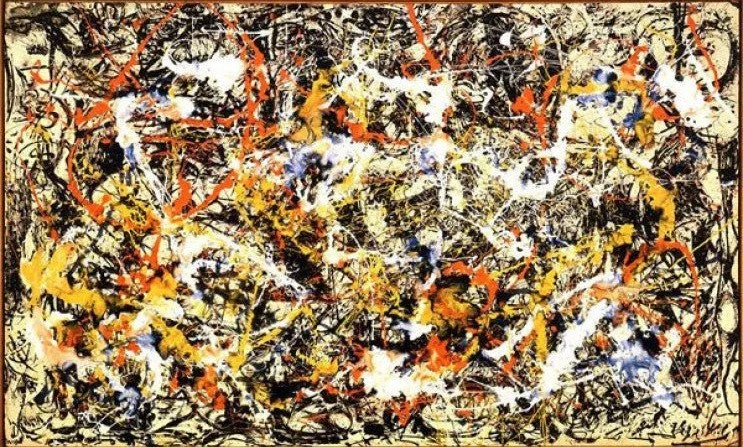
Jackson Pollock, Convergence - 1952
Why Pollock Still Matters
Today, Pollock’s paintings sell for over $100 million. Museums guard them like relics. Instagram mocks them daily.
And yet—no one ignores them.
Pollock changed the question from “What is this a painting of?” to “What happened here?”
He gave artists permission to:
Use their body
Trust instinct
Embrace failure
Reject permission
That permission echoes everywhere—from street art to performance to digital chaos.
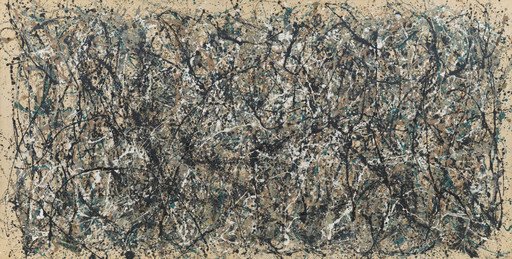
Jackson Pollock, One: Number 31 - 1950
Final Thoughts from the Battlefield
You don’t have to like Jackson Pollock. But you should respect him.
He stepped into the arena without armor. He let chaos speak. He proved that art doesn’t need to explain itself to be powerful.
And maybe that’s why people still argue about him.
Because deep down, Pollock reminds us of something uncomfortable:
Creation is messy. Control is an illusion. And sometimes, the most honest thing you can do is throw the paint—and see what survives.
Until the next battle,
King Romulus