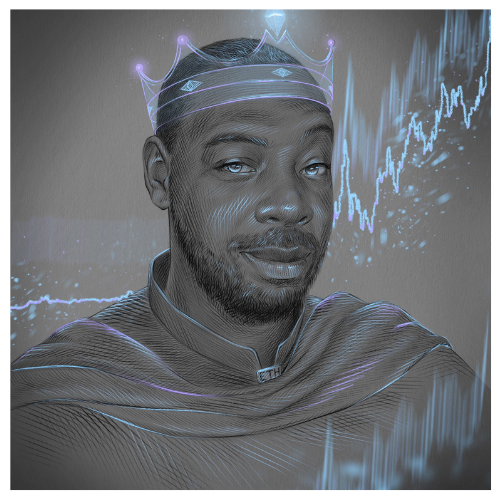

African Warrior Rises:Ibrahim Mahama
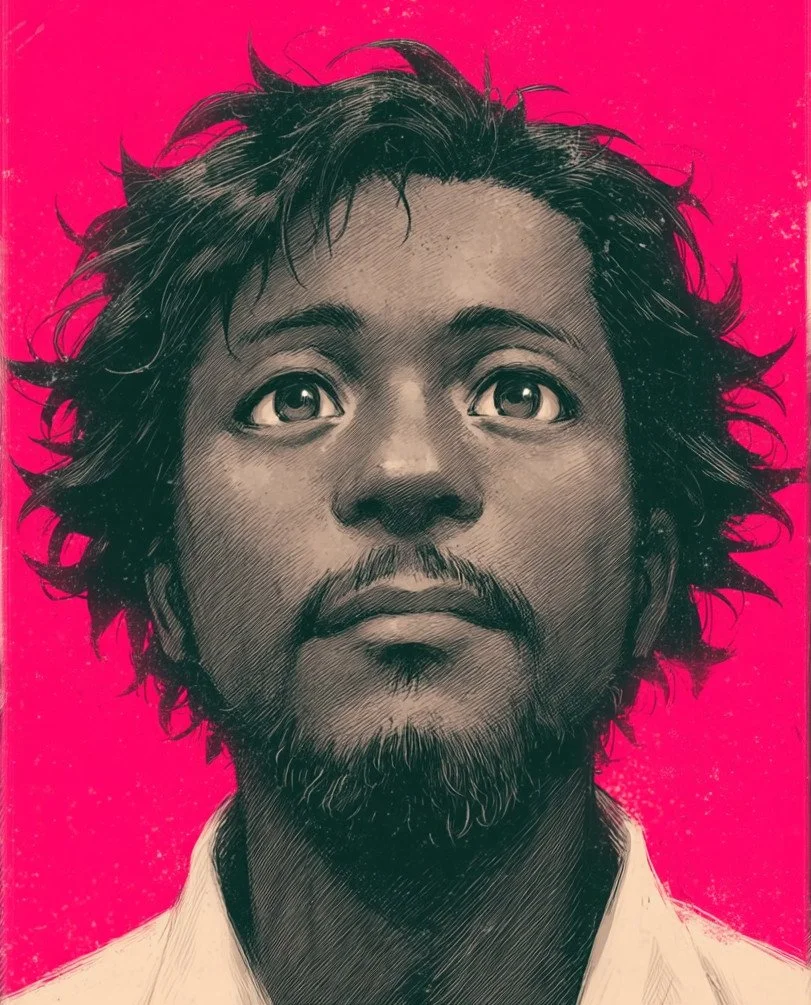
Greetings Warriors!
Today, we step into a moment bigger than art, bigger than accolades, bigger than any single institution’s approval. Today, we witness history being carved by the hands of a man who understands the power of material, memory, and reclamation. Ibrahim Mahama, the Ghanaian artist known for transforming discarded objects into monumental installations, has just become the first African ever to top ArtReview’s annual Power 100 list—a ranking of the most influential figures shaping contemporary art across the globe.
This isn’t just a ranking.
This is a rupture.
A rewriting.
A reclamation.
Mahama’s rise is proof that the art world—long guarded by Western gatekeepers—is shifting… or at least trembling a little under the weight of a truth it can no longer deny: the future of contemporary art is global, diverse, and unapologetically rooted in narratives once ignored.
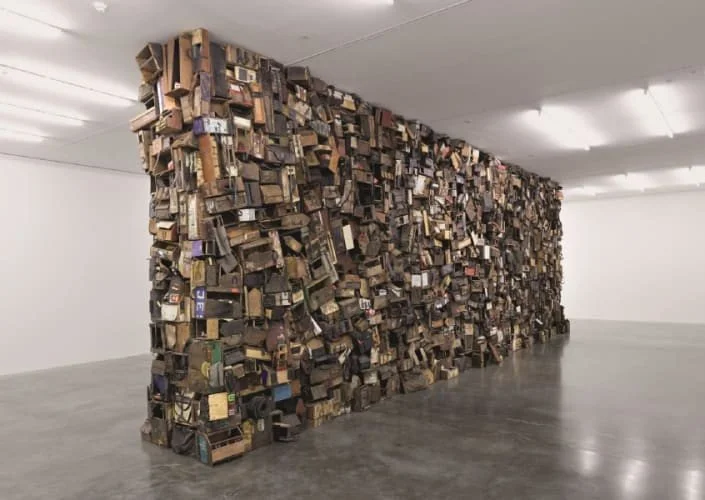
Ibrahim Mahama, Non-Orientable Nkansa II - 2017
The Warrior from Tamale: A New Face of Power in Art
Ibrahim Mahama was born in Tamale, Ghana, in 1987. From the beginning, his creative journey wasn’t built on silver spoons or elite academies—it was forged from the environment around him. He learned to see beauty in what others cast aside: jute sacks, rusted metal, old wooden structures, forgotten spaces.
His art is not polished perfection—it is a battlefield of textures, histories, and labor.
Mahama’s installations often take the form of giant draped surfaces—using stitched-together jute sacks originally handled by migrant laborers working in cocoa production. They carry sweat, dust, fingerprints, and stories. By recontextualizing these materials, he makes the invisible visible, the forgotten unforgettable.
Warriors, this man rewrites narratives using what the world throws away. And isn’t that the essence of resilience?
Get two custom AI Art created by yours "King Romulus" truly every month. Uniquely crafted, with expressive quotes that dive deep into my subconsciousness. One of the art pieces will be posted on my Instagram account as well. Live through art history in the making!
Becoming the First African to Top ArtReview’s Power List
ArtReview’s annual Power 100 list is one of the most watched rankings in the art world. Museums, collectors, galleries—everyone pays attention, no matter how much they pretend not to.
For decades, this list has reflected a very specific art-world hierarchy. One rooted in Western privilege. One that rarely acknowledged voices from Africa unless they were filtered through Western institutions. But in 2025, Ibrahim Mahama stands at the top.
This is not a symbolic gesture.
This is recognition earned through:
Transforming public spaces with monumental installations
Building cultural infrastructure in Ghana rather than exporting talent to Europe
Supporting young artists and reshaping local art ecosystems
Challenging the narrative that artistic relevance must be validated by the West
This ranking signals something deep:
The global art narrative is expanding—and Africa is no longer waiting for permission.


The Materials of Memory: Jute Sacks, Labor, and the Weight of History
Mahama’s signature medium—jute sacks—isn’t random.
These sacks were once used to transport cocoa, Ghana’s golden export. They were handled by laborers who were never credited, celebrated, or acknowledged. Their hands built wealth for others.
By stitching thousands of these sacks together and draping them over buildings, Mahama transforms them into canvases of historical memory. They become monuments to workers, migration, global trade, and the unseen labor force that has shaped modern economies.
This is not art for decoration.
This is art as testimony.
Warriors, think of how many of us carry stories like these—heavy, weathered, stitched together through struggle. His work mirrors our lives.


Redefining What Power Looks Like in the Art World
Power in art used to mean owning a gallery in Chelsea, or having a Biennale named after you, or selling a painting for millions at Sotheby’s.
Mahama’s power looks nothing like that. His influence is rooted in:
Cultural sovereignty: Je builds artistic infrastructure in Ghana, investing in the next generation, rather than seeking validation abroad.
Community-driven storytelling: His materials are tied to real laborers, real people, real histories.
Transforming public space: His installations swallow buildings, reshape cities, and force everyday people to engage with art.
Decentering Western narratives: He doesn’t chase Western gatekeepers—he challenges them.
Warriors, this is the type of power we write about in our articles: Power built, not borrowed. Power earned, not inherited.
Shameless plug 🤣 My own AI art for sale$$$

Building Institutions, Not Just Artworks
One of the greatest misunderstandings about Mahama is thinking he is just an installation artist. In reality, he is an institutional architect.
The Savannah Centre for Contemporary Art (SCCA)
Founded by Mahama in Tamale, this center is a hybrid of museum, library, workshop, and cultural hub. It is designed not merely to exhibit art but to build community through creative education.
Nkrumah Voli-ni (a repurposed grain silo complex)
Mahama restored these abandoned structures into an arts center—reviving forgotten architecture while giving Ghana a new creative heartbeat.
Red Clay Studio
A space that merges art, history, and innovation—complete with decommissioned airplanes Mahama uses as pedagogical tools.
Most artists look for spaces to exhibit. Mahama creates them. That is real power.

A Moment for Africa—and a Message to the World
For decades, African artists were often spotlighted only when Western museums wanted to appear open-minded. But Mahama’s rise is different. It’s not tokenism; it’s recognition of undeniable influence.
His installations have appeared in:
Venice Biennale
Documenta
Major European museums
Public squares and urban environments across the globe
But even as his fame grows, he keeps his roots in Ghana strong.
He doesn't relocate.
He doesn’t dilute his vision for market appeal.
He remains steadfast—a Warrior on his own soil.
His elevation to #1 signals a shift in how the world sees African creativity: Not as an exotic supplement—but as a core engine of contemporary art.
Vosoughi, Be Quiet! - 2025
Why This Moment Matters (and What It Means for Future Artists)
Warriors, this moment is bigger than Mahama. It’s a crack in the ceiling. A flash of possibility.
Here’s why it matters:
Young African artists now see a path to global recognition without abandoning their homeland.
Institutions must confront their own biases and widen their perspectives.
Collectors will begin taking non-Western artistic ecosystems more seriously.
The global art market must acknowledge that cultural power no longer flows in a single direction.
Mahama’s victory is symbolic of something we all understand deeply: The world is changing, and those who were once ignored are stepping onto the stage—stronger, louder, and unafraid.

Final Reflections — The Rise of a Warrior Artist
This story resonates with everything we talk about here in The Romulus Kingdom:
struggle transforming into legacy,gatekeepers being forced to open their doors, and the unstoppable rise of creators who refuse to let history forget their people.
Ibrahim Mahama is not simply an artist. He is a builder of worlds. A carrier of memory. A Warrior who stitched together the discarded remnants of Ghana’s history and turned them into global monuments.
His ascent to the top of the ArtReview Power 100 is not the end of his journey—it is the beginning of a new chapter for Africa, for global contemporary art, and for every creator who has ever been told they don’t belong in the room.
Warriors, the world is shifting. And today, a new king stands in the center of it—stitched in burlap, carrying the weight of a nation, rewriting history one reclaimed material at a time.